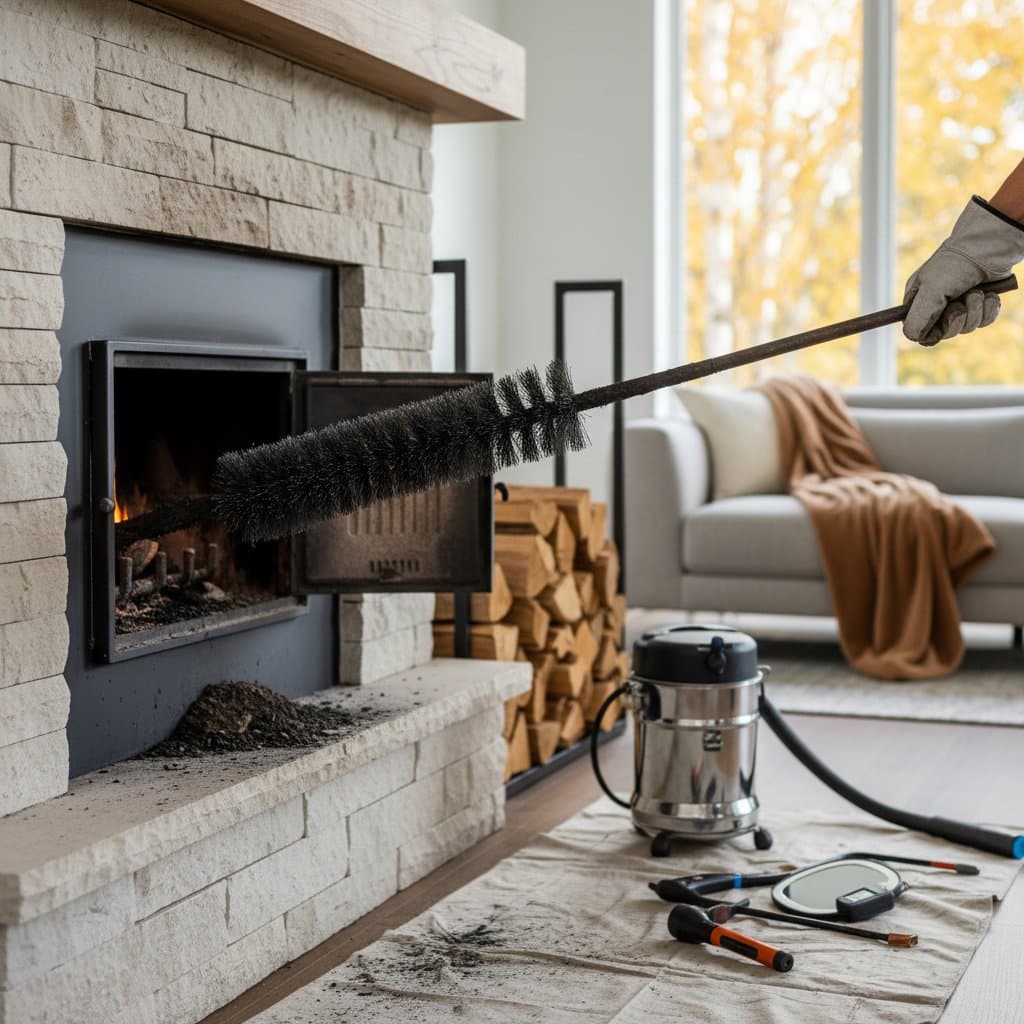
Essential Checks for Safe Fall Chimney and Fireplace Use
Cooler temperatures prompt many homeowners to anticipate relaxing evenings by the fireplace. Prior to igniting the initial fire, verify that the chimney and fireplace components function safely. Failure to maintain these elements risks smoke accumulation, reduced efficiency, or hazardous chimney fires. Simple inspections and preparations safeguard comfort and security throughout the season.
Inspecting and Cleaning Your Chimney
A properly maintained chimney facilitates the smooth exit of smoke and gases. Creosote, a highly flammable tar-like substance, accumulates within the flue over repeated uses. Without removal, this residue poses a significant ignition risk.
Key steps for chimney inspection and cleaning:
- Examine for creosote accumulation. Direct a flashlight into the flue from the firebox or roof access point. A light soot layer proves acceptable, yet a glossy, inch-thick deposit signals the need for immediate professional intervention.
- Search for obstructions. Debris such as animal nests, fallen branches, or accumulated leaves frequently blocks the passage. Such barriers impede airflow and force smoke back into living areas.
- Assess the chimney cap. This metal cover blocks entry by pests and weather elements. Confirm secure attachment, absence of corrosion, and intact mesh screening.
- Review the flue liner condition. Inspect clay tile or metal liners for fractures, spalling, or deterioration. Compromised liners permit toxic gases to infiltrate the home structure.
Upon detecting substantial creosote layers, structural damage, or impediments, engage a certified chimney sweep. Professionals employ rod-mounted brushes, high-powered vacuums, and cameras to clear deposits without dislodging loose materials.
Examining the Fireplace Structure
The indoor fireplace endures exposure to intense heat and humidity, which degrade surrounding materials over time.
Critical areas for evaluation:
- Firebox integrity: Scan for eroded mortar joints or displaced firebricks. Apply high-temperature mortar to mend any weaknesses prior to firing up.
- Damper functionality: Operate the damper control fully open and closed. Lubricate hinges if movement resists, as a malfunctioning damper confines smoke within the residence.
- Glass doors and spark screens: Wipe away accumulated soot on glass panels for clear visibility. Verify that screens seal tightly around the opening to contain flying embers.
- Hearth surroundings: Remove all combustible items, including carpets, curtains, or wooden mantels, from within 36 inches of the fireplace front.
These evaluations enhance fire containment and optimize combustion for better heat output.
Testing Airflow and Draft
Effective draft pulls combustion byproducts upward through the chimney, preventing room fill with smoke. To evaluate, position the damper fully open and ignite a tightly rolled sheet of newspaper in the firebox center. Observe smoke trajectory; upward movement confirms adequate draft. Downward flow or room spillover suggests obstructions, inadequate chimney height relative to roofline, or home pressurization issues.
Should draft remain suboptimal post-cleaning, summon a specialist to measure flue dimensions, verify cap placement, and adjust venting paths as necessary.
Verifying Smoke and Carbon Monoxide Alarms
Homes equipped with fireplaces demand operational smoke and carbon monoxide detection systems. Activate test buttons on all units at season start and install fresh batteries annually. These sensors alert occupants to smoldering fires or colorless, odorless gas releases from faulty burns. Install devices on every level, particularly adjacent to the fireplace and bedrooms, following manufacturer spacing guidelines.
Selecting and Preparing Firewood
Fuel quality directly affects creosote formation and burn cleanliness. Opt for seasoned hardwoods like oak or maple, dried to below 20 percent moisture content for intense, low-residue flames. Steer clear of green softwoods, pressure-treated lumber, or household waste, which generate heavy particulates and accelerate buildup. Elevate stacked cords on rails in a covered, ventilated shed to promote air circulation and deter pests.
Recognizing Chimney Problem Indicators
Monitor for these alerts that demand prompt action:
- Smoke infiltration into the living space during operation
- Musty or acrid smells emanating from the fireplace when cold
- Efflorescence, or white powdery deposits, on brick exterior indicating water penetration
- Debris such as chipped liner fragments dropping into the firebox
Early intervention averts extensive damage and mitigates fire dangers.
Guidance on Professional Inspections
Annual evaluations by qualified experts uncover issues invisible to untrained eyes, including internal corrosion or venting misalignments. Technicians also test for carbon monoxide leaks and confirm compliance with building codes. Inspection fees typically range from $100 to $300, far outweighing repair costs from overlooked defects.
When selecting a service provider, pose these inquiries:
- Do you hold certification from the Chimney Safety Institute of America or equivalent?
- What specific procedures does your inspection encompass?
- Can you furnish a detailed written summary of observations and recommendations?
Qualified professionals deliver reliable assessments for seasonal confidence.
Ensuring Secure Heating Practices
Proactive chimney and fireplace preparations at season onset foster risk-free enjoyment through winter. Clean flues, robust builds, and verified drafts minimize hazards while maximizing warmth distribution. Integrate these routines with mindful fuel choices to sustain efficient, inviting fireside gatherings.