
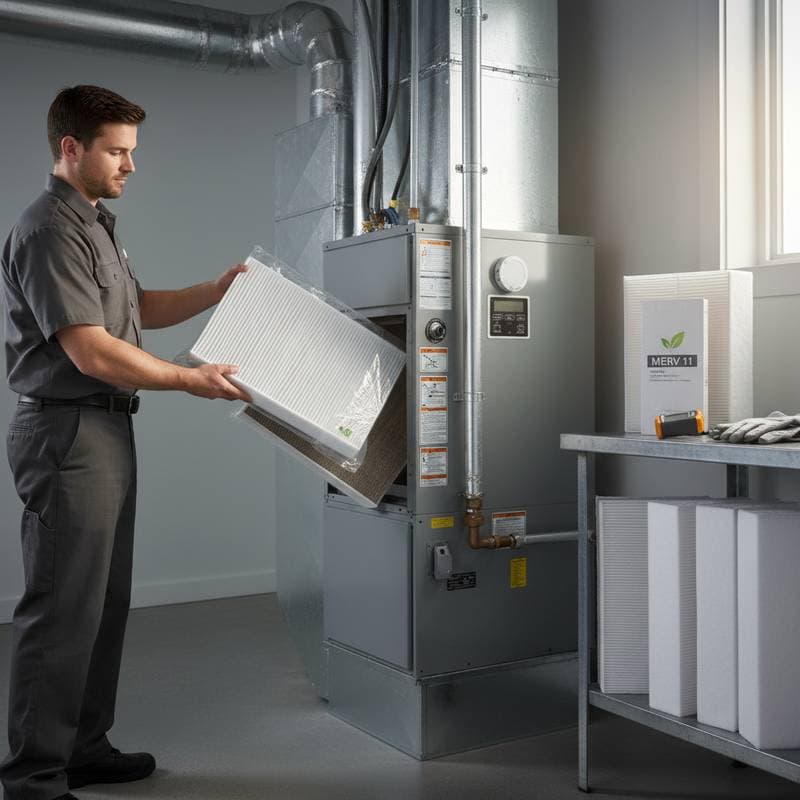
Fall HVAC Filter Swap: Timing and Top Choices
Homeowners often sense the shift to cooler weather through subtle changes in their living spaces. The air turns crisp, furnaces activate more frequently, and indoor environments may feel denser. This transition serves as an ideal cue to replace the HVAC filter, a straightforward maintenance step that yields substantial advantages in comfort, operational efficiency, and air purity. Precise knowledge of replacement timing and filter selection ensures optimal system performance throughout the season.
Why Fall Is the Right Time for a Filter Change
Replacing the filter in fall holds greater importance than many realize. Summer air conditioning draws in accumulations of dust, pollen, and pet dander, which obstruct the filter. As heating commences, this blockage impedes airflow, forcing the furnace to exert extra effort to distribute warm air, thereby increasing energy consumption and accelerating equipment wear.
The optimal timing involves replacement just prior to sustained heating periods. Systems with standard one-inch filters require changes every one to three months. Higher-quality thicker filters may endure six months or a full year, provided the home maintains low dust levels.
A clean filter promotes unrestricted air circulation, supports uniform heating, and captures fine particulates to prevent their spread indoors.
Understanding Filter Sizes and Ratings
Purchasing a replacement demands attention to two essentials: size and MERV rating.
Measuring Filter Size
Filters display nominal dimensions on their frames, such as 16 x 25 x 1 inches. Match these exact measurements for length, width, and depth. To confirm, extract the existing filter and measure it using a tape measure, recording both nominal and actual sizes due to potential minor variations. An ill-fitting filter creates gaps that allow unfiltered air to bypass or prevents secure installation.
Understanding MERV Ratings
MERV denotes Minimum Efficiency Reporting Value, a metric evaluating particle capture capability on a scale from 1 to 20.
| MERV Rating | Particle Capture Efficiency | Best For |
|---|---|---|
| 1 to 4 | Captures large dust and lint | Older systems with low airflow |
| 5 to 8 | Captures dust, pollen, mold spores | Standard residential systems |
| 9 to 12 | Captures smaller particles, including fine dust | Homes with pets or allergies |
| 13 to 16 | Captures bacteria and smoke | High-efficiency residential or commercial systems |
| 17 to 20 | HEPA-grade filtration | Hospitals or specialized facilities |
Homeowners typically benefit from MERV 8 to 12 filters, which provide effective filtration while preserving airflow. Ratings above MERV 13 may overburden standard residential blowers unless the system accommodates them.
Types of HVAC Filters and How to Pick the Right One
Filters vary by material and thickness, each offering distinct advantages. Selection hinges on desired comfort, financial considerations, and maintenance preferences.
1. Fiberglass Filters
- Thickness: Usually 1 inch
- Lifespan: 30 days
- Cost: $2 to $5
- Best For: Rental properties or low-use systems
These disposable, budget-friendly options shield the furnace from substantial debris yet offer minimal improvement to indoor air quality. They suit temporary needs but fall short for allergy management or air purification.
2. Pleated Filters
- Thickness: 1 to 4 inches
- Lifespan: 60 to 90 days for 1-inch, up to 6 months for 4-inch
- Cost: $8 to $40
- Best For: Most homes
Constructed from polyester or cotton with pleated designs, these filters increase surface area to trap finer contaminants such as dust mites and pollen. They maintain adequate airflow, making a 4-inch version an excellent choice for reliability and ease.
3. Electrostatic Filters
- Thickness: 1 to 4 inches
- Lifespan: Washable, reusable for years
- Cost: $20 to $60 upfront
- Best For: Long-term cost savings and eco-conscious homeowners
Static charge in these filters draws particles effectively. Monthly washing extends their utility, though complete drying before reuse prevents mold development.
4. High-Efficiency Filters (HEPA-like)
- Thickness: 4 to 5 inches
- Lifespan: Up to 12 months
- Cost: $40 to $100
- Best For: Allergy-sensitive households or homes with pets
These advanced options seize microscopic particles but may hinder airflow in incompatible systems. Consult the HVAC manual or a professional prior to adoption to ensure blower compatibility.
How to Replace Your HVAC Filter
Filter replacement demands care to safeguard system integrity and performance.
- Deactivate the system via the thermostat or power switch.
- Identify the access panel on the return air duct or furnace enclosure.
- Extract the old filter, observing the airflow direction arrow on its frame.
- Position the new filter with the arrow directed toward the blower motor or furnace.
- Reattach the panel securely and reactivate the system.
Verify a tight fit without deformation or openings. If the filter shifts loosely, opt for a thicker alternative.
Tools You Will Need
- Flashlight
- Tape measure
- Screwdriver (for certain furnace panels)
- Permanent marker (to note the installation date on the frame)
Marking the date facilitates adherence to replacement schedules.
Common Mistakes to Avoid
Simple tasks like filter changes invite errors that compromise results. Key issues include:
- Ignoring airflow direction, which diminishes efficiency and fosters blower dust accumulation.
- Selecting incorrect sizes, permitting unfiltered air leakage through gaps.
- Overlooking timely replacements, which burdens the motor and hastens failure.
- Failing to examine the housing, where plenum dust may signal the need for duct cleaning.
- Layering filters, which elevates resistance and risks fan damage.
Mitigate these by conducting monthly visual checks, particularly during high-shedding pet seasons or elevated dust conditions.
Cost and Efficiency Breakdown
Regular filter changes yield financial benefits through enhanced efficiency. Clean filters boost HVAC performance by 5 to 15 percent, reducing energy expenses. Consider this comparison of annual costs and benefits:
| Filter Type | Average Cost Per Year | Replacement Frequency | Energy Efficiency Gain |
|---|---|---|---|
| Fiberglass | $20 | Monthly | Low |
| Pleated | $40 | Every 2 to 3 months | Moderate |
| Electrostatic | $25 (after purchase) | Wash monthly | Moderate |
| High-Efficiency | $80 | Every 6 to 12 months | High |
A MERV 10 pleated filter delivers optimal value for typical households.
When to Call a Professional
Filter replacement qualifies as a basic DIY task, yet certain indicators warrant technician involvement:
- Persistent reduced airflow post-replacement.
- Rapid soiling of new filters within a month.
- Intent to install thicker or elevated-MERV options.
- Observations of inconsistent heating or cooling.
Technicians assess static pressure, confirm compatibility, and tailor recommendations to the blower motor.
Accessibility and Allergy Considerations
Individuals with allergies, asthma, or respiratory issues require targeted filter choices. MERV 11 to 13 pleated or 4-inch electrostatic models effectively snare pet dander and mold spores while sustaining airflow.
For mobility limitations, explore filter slot extensions or grill-mounted designs accessible from a step stool, avoiding confined furnace areas. Remote cabinets in hallways simplify maintenance for some configurations.
Seasonal Timing and Scheduling Tips
Integrate filter changes with seasonal shifts for consistency. Perform the fall swap ahead of heating demands and a spring update before cooling engages, fostering year-round efficiency.
Utilize phone reminders or calendar notations for reliability. Smart thermostats often track runtime hours to prompt changes, accommodating variable usage patterns.
In dusty locales or pet-heavy homes, adhere to shorter intervals: one-inch filters every 45 days, four-inch versions 120 to 180 days.
Pro Tips for Success
Adopt these practices to streamline maintenance:
- Purchase filters in bulk to ensure availability.
- Perform monthly inspections and replace based on condition.
- Vacuum vents and returns to minimize intake dust.
- Test airflow post-installation by placing a hand near vents.
- Log changes in a notebook or digital record near the furnace.
Such routines enhance efficiency and prolong system durability.
Sustaining System Longevity Through Routine Care
Consistent filter management protects your HVAC investment. By prioritizing timely replacements and informed selections, homeowners achieve lower costs, superior air quality, and extended equipment life. Implement these strategies to maintain a comfortable, efficient home environment across seasons.




