Essential AC Maintenance Checklist for Summer
Summer heat arrives swiftly, and a struggling air conditioner can disrupt comfort. Many homeowners face inefficiency or breakdowns during the first hot spell due to neglected upkeep. Early preparation with a thorough checklist keeps systems running smoothly, reduces operating costs, and maintains steady temperatures. This guide applies to central systems, ductless mini-splits, and window units, detailing steps to complete before temperatures peak.
Benefits of Regular AC Maintenance
Properly maintained air conditioners consume up to 15 percent less energy compared to neglected units. This leads to lower cooling expenses, fewer service calls, and extended equipment lifespan. A calibrated system operates with less strain on components such as compressors and fan motors, preserving their function over time.
View this checklist as essential preventive care. It identifies minor problems early, averting major repairs, and ensures reliable performance without unexpected failures.
Core Maintenance Steps Overview
Review this summary before proceeding to detailed instructions:
- Replace or clean air filters
- Clear debris from the outdoor condenser
- Inspect refrigerant lines for damage
- Test thermostat accuracy and batteries
- Clean vents and return grilles
- Clear condensate drain lines
- Examine electrical connections
- Arrange professional inspection as required
These actions enhance efficiency and dependability. The following sections explain execution.
Step 1: Replace or Clean Air Filters
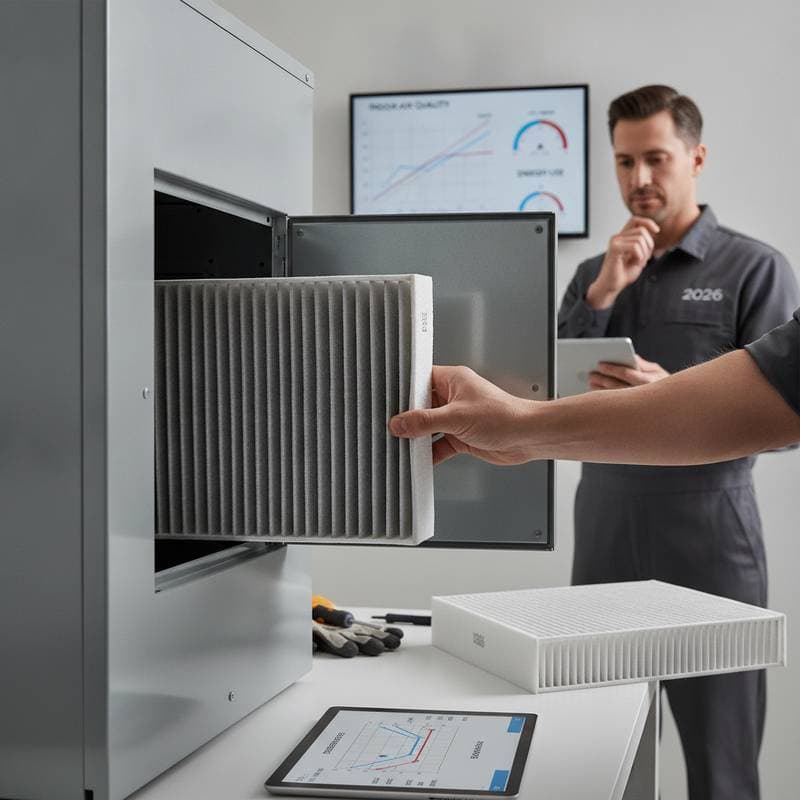
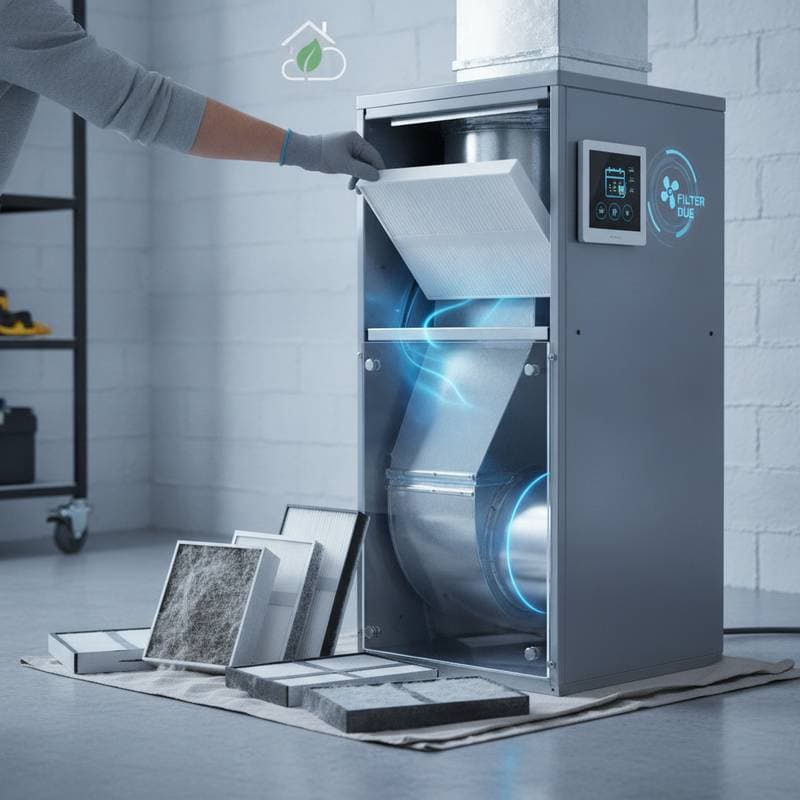
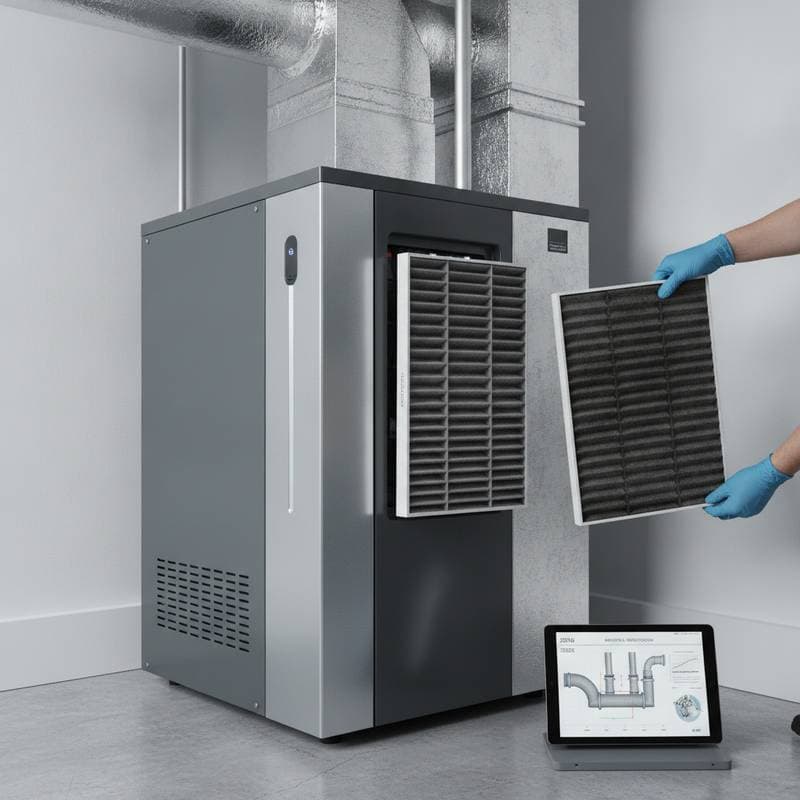
Clogged filters cause reduced airflow and elevated energy use, ranking as the primary issue for many systems. Filters capture dust, pollen, and particles, but accumulation increases resistance. Standard sizes include 16 by 25 inches or 20 by 30 inches; verify your current filter for exact dimensions.
Recommended Procedures
- Exchange disposable filters every 30 to 60 days.
- Rinse reusable filters monthly and allow full drying prior to reinstallation.
- Select MERV 8 to MERV 11 ratings for standard residences; higher ratings may impede flow in unmodified systems.
Clean filters enhance indoor air quality and shield evaporator coils from debris.
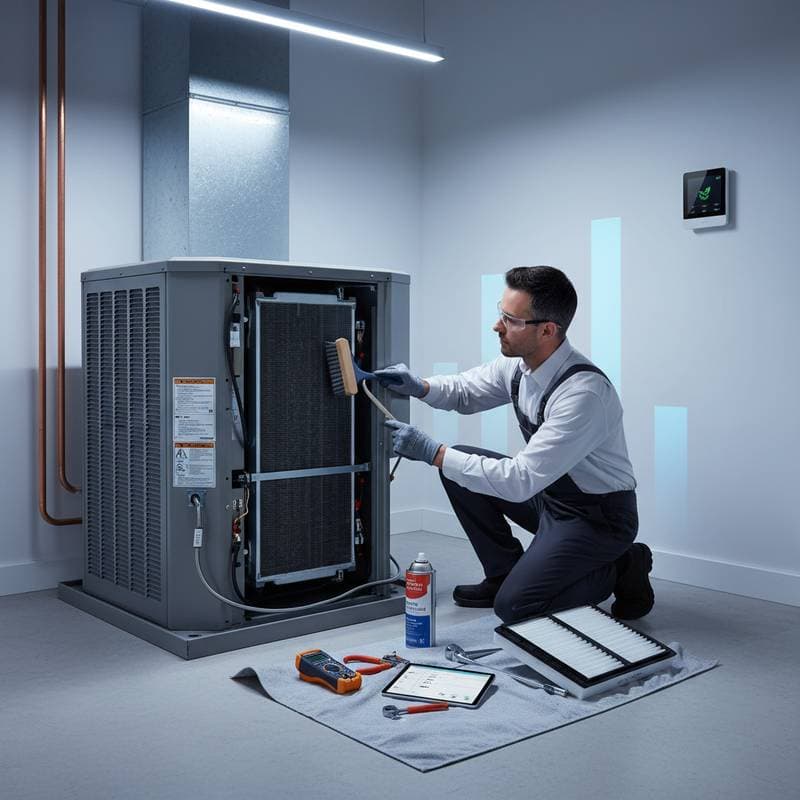
Step 2: Inspect the Outdoor Condenser Unit
The outdoor condenser, a prominent metal enclosure, expels absorbed heat. Dirt or obstructions hinder heat dissipation, reducing performance.
Cleaning Instructions
- Disconnect power via the switch or breaker.
- Remove leaves, branches, and debris within two feet.
- Brush or vacuum dirt from fins gently.
- Use a fin comb to straighten any bent sections.
- Rinse coils with a hose, directing water from inside outward.
Pressure washers risk damaging aluminum fins; apply low pressure if necessary. Ensure 24 inches of clearance around the unit by trimming vegetation.
Step 3: Examine Refrigerant Lines
Copper lines link the outdoor unit to the indoor evaporator, with one insulated to minimize condensation. Inspect insulation for tears or gaps, and apply matching sleeves where needed.
Oily spots or frost suggest leaks; professional intervention is essential. Technicians assess pressures, repair issues, and recharge refrigerant according to regulations.
Step 4: Clean Air Vents and Returns
Dust in vents compromises air quality and circulation. Inspect all supply vents and return grilles for openness, relocating blocking furniture or fabrics.
Vacuum covers with a brush tool; wash removable ones using mild soap, then dry thoroughly. For duct interiors showing dust or mold, engage a duct cleaning service.
Step 5: Test the Thermostat
The thermostat controls system activation; inaccuracies lead to excess cooling. Switch to cooling mode and reduce the setting by three degrees to verify prompt response.
Simple Adjustments
- Install fresh batteries if the display fades or fails.
- Compare readings with an independent thermometer, allowing a two-degree variance.
- Verify programmable schedules align with energy-efficient patterns.
Upgrading to a smart thermostat can cut costs by 10 percent through adaptive learning of usage patterns.
Step 6: Clear the Condensate Drain
Cooling dehumidifies air, channeling moisture via a PVC drain. Clogs from algae or sediment cause leaks and odors.
Locate the line near the indoor unit and introduce one cup of vinegar or diluted bleach solution to inhibit growth. For backups, apply a wet-dry vacuum to the exterior outlet.
Step 7: Inspect Electrical Components
Visual checks reveal potential issues without advanced skills. Power down, access the outdoor panel, and scan for loose wires, corrosion, or damage. Secure screws and ensure contactors and capacitors remain intact.
Buzzing, clicking, or frequent breaker trips signal professional evaluation. Early capacitor or contactor replacement prevents compressor failure from electrical faults.
Step 8: Assess Airflow Performance
Inadequate flow stems from leaks, blockages, or motor issues. Test by placing tissue near vents; it should flutter steadily. Uneven room temperatures may indicate closed dampers.
Seal duct leaks using foil tape or mastic for up to 20 percent efficiency gains. Professional sealing costs 300 to 700 dollars based on home scale.
Pitfalls to Sidestep in Maintenance
Homeowners often overlook key details, leading to inefficiencies.
- Neglect filter schedules, straining motors and capacity.
- Obstruct units with enclosures or nearby objects, retaining heat.
- Attempt refrigerant additions without tools, risking compressor harm.
- Overlook drains, inviting attic leaks.
- Skip post-maintenance tests; operate for 10 minutes to confirm function.
Avoiding these preserves system integrity and avoids repair expenses.
Signs That Require Professional Help
DIY covers basic tasks, but expertise is vital for complex problems. Seek a licensed technician when:
- Ice forms on lines.
- Cycles shorten or extend indefinitely.
- Noises like grinding or hissing occur.
- Vent air remains warm post-cleaning.
- Breakers trip often.
Tune-ups range from 90 to 200 dollars, encompassing refrigerant checks, coil cleaning, electrical reviews, and calibration to specifications.
Enhancing Accessibility and Comfort
For households with mobility challenges, integrate smart controls like voice thermostats or app-based systems. These enable operation without physical access.
Window units with front-loading filters simplify cleaning. Maintain 18 inches of clearance around controls and vents per accessibility standards, benefiting all residents.
Maintenance Cost Comparison
| Task | DIY Level | Professional Cost | Time Estimate |
|---|---|---|---|
| Filter Replacement | Easy | 10-30 dollars | 10 minutes |
| Outdoor Coil Cleaning | Moderate | 75-150 dollars | 45 minutes |
| Thermostat Check | Moderate | 80-200 dollars | 30 minutes |
| Drain Cleaning | Easy | 70-120 dollars | 20 minutes |
| Full Tune-Up | N/A | 90-200 dollars | 1-2 hours |
Self-performed basics save over 200 dollars annually. Annual professional service verifies critical elements like refrigerant and airflow.
Testing Readiness for Heat
After tasks, conduct a system trial. Lower the thermostat five degrees and monitor startup. Cool air should emerge from vents in two to three minutes, with smooth outdoor fan operation and no vibrations.
Successful tests prepare you for the season. Retain the checklist for periodic reviews amid dust or pollen surges.
Efficiency Upgrades Beyond Basics
For optimal performance, consider these enhancements.
- Install variable-speed blowers to match demand precisely.
- Add zoning systems for targeted cooling in used areas.
- Apply reflective window films to block solar heat gain.
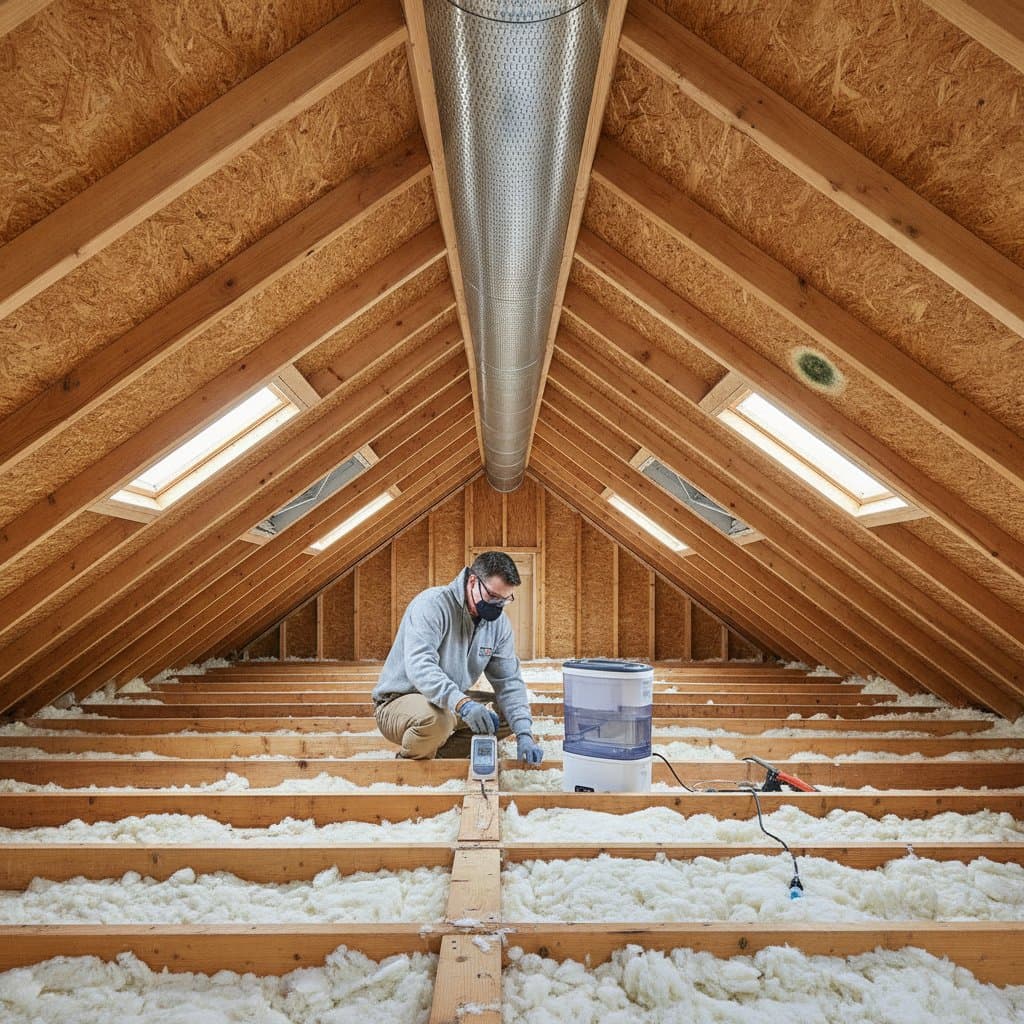
- Upgrade insulation in attics to retain cooled air.
These measures amplify savings and comfort year-round.
Sustaining Summer Comfort
Consistent maintenance transforms summer cooling into an effortless routine. Regular attention yields lower bills, cleaner air, and peace of mind, allowing focus on enjoyment rather than repairs.