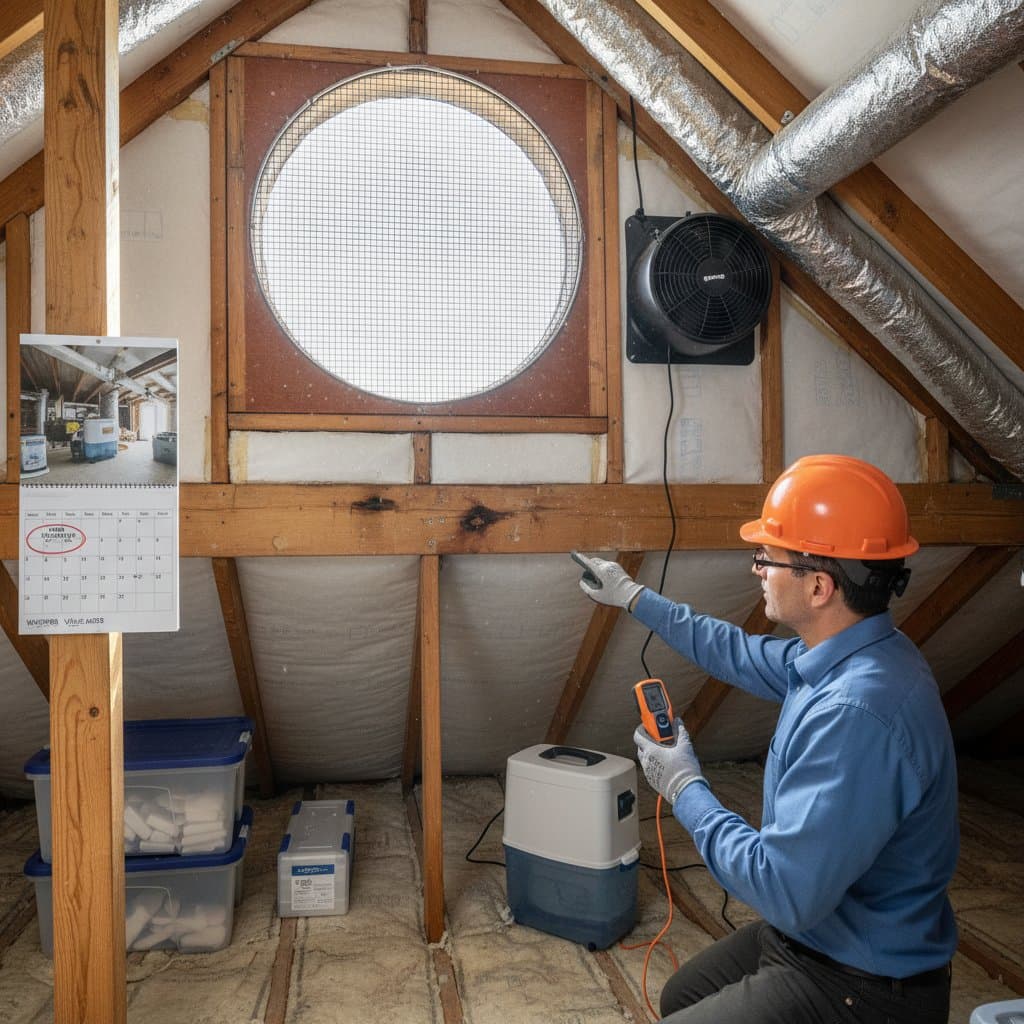
Understanding Attic Mold Prevention
A mold-free attic safeguards the roof framework, maintains superior indoor air quality, and avoids expensive remediation expenses. Mold develops subtly, often concealed within insulation or along roof decking, due to accumulated moisture. Seasonal maintenance provides the most effective prevention method. Homeowners adjust practices across seasons to regulate humidity and temperature, address minor leaks promptly, and sustain consistent airflow that dries surfaces.
Many homeowners overlook the rapid onset of mold. Mold growth initiates within days when moisture contacts organic materials in inadequately ventilated areas. Attics equipped with balanced ventilation and uniform insulation experience approximately 40 percent fewer mold occurrences compared to those lacking such features. Prevention proves far more economical than subsequent remediation efforts.
This guide details seasonal maintenance protocols to sustain a clean, dry attic annually.
Spring: Comprehensive Inspection and Ventilation Renewal
Spring offers optimal conditions for thorough attic inspections. Mild weather permits safe access without exposure to intense heat or cold.
1. Identify Leaks and Moisture Indicators
Examine roof decking, rafters, and insulation for dark discolorations or water stains. Focus on areas near chimneys, skylights, and vent pipes, common leak origins. Trace sources of soft or darkened wood to halt progression.
Flashlights reveal concealed moisture effectively. Minor leaks seep gradually through insulation, fostering mold beneath visible layers.
2. Verify and Enhance Ventilation
Effective ventilation expels humid air and introduces fresh circulation. Ensure soffit vents and ridge vents remain unobstructed by insulation or debris. Employ a small mirror or camera for inaccessible spaces.
Assess airflow by positioning tissue near vents; slight movement indicates proper function. Remove blockages or engage a ventilation expert if airflow stalls.
3. Perform Deep Cleaning
Vacuum accumulated dust and debris thoroughly. Relocate stored items impeding airflow. Cardboard boxes and fabrics retain moisture, promoting mold; opt for sealed plastic containers for storage.
4. Equalize Insulation Distribution
Inconsistent insulation generates thermal variations that condense moisture. Distribute insulation uniformly without compressing against vents. Spray foam or blown-in types demand consistent depth for optimal performance.
Fall: Readiness for Winter Conditions
Declining temperatures alter attic dynamics. Rising warm air from below encounters cold surfaces, leading to condensation. Fall preparation equips the attic against these challenges.
1. Evaluate Insulation and Moisture Barriers
Confirm insulation remains undisturbed and uncompressed. Supplement as necessary for uniform coverage. Install vapor barriers under insulation to block moisture migration from living spaces.
Proper insulation diminishes condensation risks by up to 35 percent, yielding reduced mold threats and improved energy performance.
2. Reassess Ventilation Systems
Autumn foliage and debris often obstruct soffit or gable vents. Clear them using a leaf blower or vacuum extension. Balanced ventilation facilitates warm air escape, preventing condensation on roof surfaces.
3. Review Roof Valleys and Drainage
Obstructed gutters cause water backup beneath shingles, infiltrating the attic. Clean gutters routinely and verify downspouts divert water from the foundation.
4. Check Attic Fans and Controls
Test attic fans prior to winter onset. Verify thermostat and humidistat accuracy. Faulty units retain humidity rather than expelling it effectively.
Indicators for Professional Intervention
DIY approaches suit minor concerns, yet certain scenarios demand specialist involvement.
- Persistent leaks or extensive staining on wood or insulation.
- Mold coverage exceeding a few square feet.
- Lingering odors despite cleaning and ventilation tweaks.
- Intricate ventilation challenges in aged structures.
Mold remediation professionals adhere to safety measures and deploy advanced tools for complete spore elimination. Certified specialists prevent recurrence, as noted by many homeowners in renovation communities.
Roofing and insulation experts detect structural flaws overlooked in self-inspections. Comprehensive evaluations expose concealed leaks, inadequate air sealing, or insulation voids contributing to moisture accumulation.
Financial Aspects and Planning
Preventive measures cost considerably less than remediation. Basic attic inspections require minimal tools and materials. Remediation, however, escalates to thousands of dollars based on damage extent.
Sample Budget Allocation:
- Tools for inspection and sealants: $50 to $200
- Dehumidifier or fan addition: $150 to $500
- Roof flashing repairs: $300 to $1,500, varying by materials
- Full professional remediation: $1,000 to $5,000
Allocate modest funds seasonally to preempt major issues.
Advanced Maintenance Techniques
- Record inspections meticulously. Capture images of leaks, stains, or ventilation modifications to monitor trends and recurring problems.
- Establish seasonal reminders. Checklists guarantee comprehensive coverage of essential tasks.
- Leverage natural illumination. Daylight highlights discolorations more distinctly than artificial sources.
- Don protective equipment. Gloves, goggles, and masks minimize contact with dust and spores.
- Maintain regularity. Sequential seasonal efforts compound to robust mold resistance.
Sustaining Attic Health for Home Longevity
A dry attic bolsters overall home stability. Routine seasonal attention preserves insulation, prolongs roof durability, and purifies indoor air. Consistent ventilation and moisture management correlate with reduced repair needs and enhanced energy savings.
Attic mold prevention demands ongoing commitment rather than isolated actions. Familiarity with key indicators streamlines the process. Through personal efforts or periodic professional oversight, vigilant maintenance secures property value and resident well-being.