Why Swapping Your HVAC Filter in Fall Protects Your Furnace
Heating and cooling systems in homes face peak demands during seasonal shifts. Fall provides an essential window to inspect and replace the HVAC filter before winter heating begins. A fresh filter maintains air quality, safeguards components, and trims utility costs. Homeowners often overlook this routine until reduced airflow or allergy symptoms emerge, yet proper timing and selection promote seamless operation throughout the heating period.
The Rationale for Fall Replacement
As temperatures drop, HVAC systems transition from air conditioning to heating. This changeover offers a strategic maintenance opportunity. Summer accumulation of dust and particles frequently obstructs filters, forcing the furnace to labor excessively. An early fall swap initiates the heating cycle with unobstructed flow. Such preparation eases the blower's workload and extends equipment durability.
The National Air Filtration Association advises monthly filter inspections and replacements every one to three months, based on filter design and system usage. Fall aligns perfectly for residential setups, establishing a pristine baseline ahead of sustained winter demands.
Selecting the Optimal Filter for Fall Use
For a direct recommendation, opt for a pleated filter rated MERV 8 to MERV 11 in most homes. This range delivers effective filtration while preserving adequate airflow to avoid motor strain. Households with pets or allergy sensitivities should select MERV 12 or MERV 13 options, which trap finer contaminants such as pet dander, pollen grains, and microbial agents. Reserve higher ratings for systems explicitly designed to handle them, as excessive restriction diminishes performance.
Standard Filter Dimensions
| Filter Size (inches) | Typical Application | Suggested MERV Range |
|---|---|---|
| 16 x 20 x 1 | Compact units or wall-mounted systems | MERV 8 to 10 |
| 20 x 25 x 1 | Conventional central air handlers | MERV 8 to 11 |
| 16 x 25 x 4 | Advanced setups with variable-speed fans | MERV 11 to 13 |
Verify dimensions by measuring the existing filter's length, width, and depth. Labels provide guidance, but confirmation guarantees a secure seal that blocks unfiltered air leakage around edges.
Step-by-Step Guide to Filter Replacement
- Power down the unit. Prioritize safety by deactivating the furnace or air handler via the thermostat or circuit breaker.
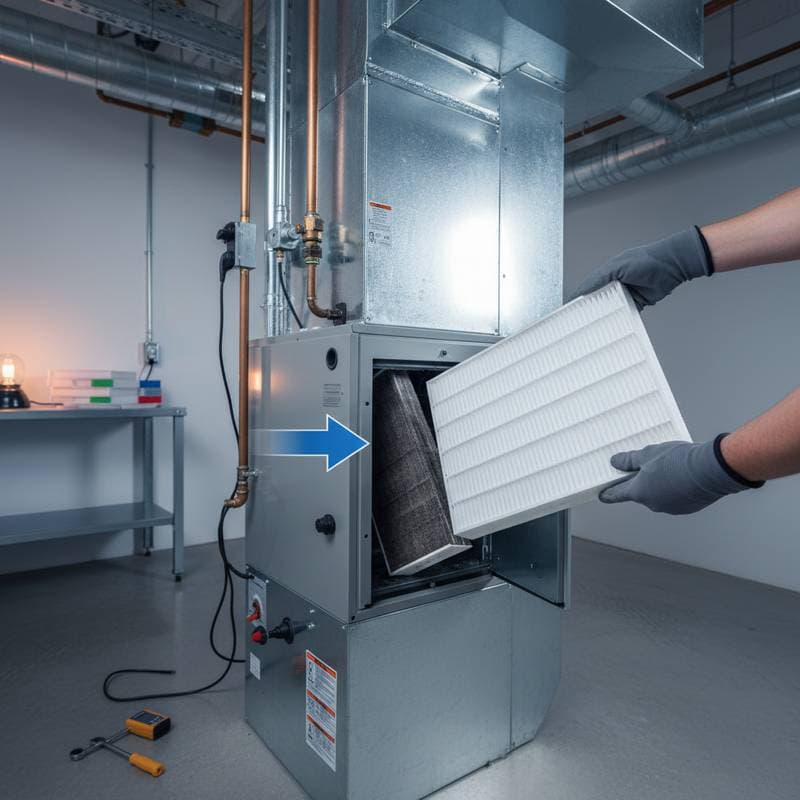
- Identify the filter compartment. Access occurs through a return vent panel or within the furnace enclosure adjacent to the blower section.
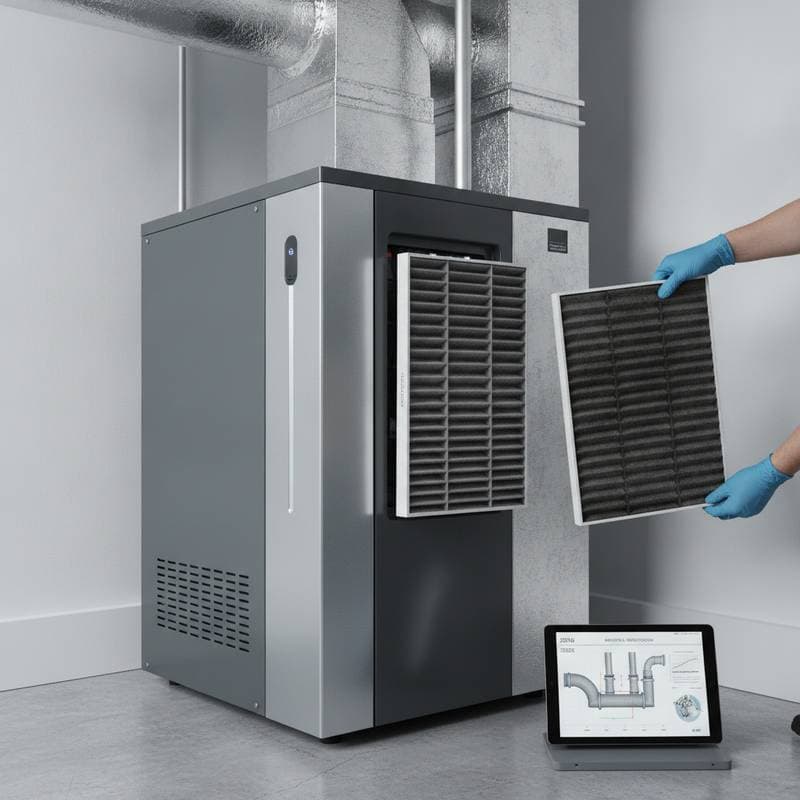
- Extract the used filter. Withdraw it gently to minimize dust dispersal into living spaces.
- Orient for correct airflow. Directional arrows on the filter indicate the path toward the blower assembly.
- Install the replacement. Position it firmly against the housing edges for complete coverage.
- Restore power. Reactivate the system and monitor for consistent operation sounds.
Note the installation date directly on the filter edge with a permanent marker. This practice simplifies future scheduling and eliminates reliance on memory.
Expenses and Durability Factors
Basic 1-inch pleated filters range from 8 to 25 dollars, varying by manufacturer and filtration level. Deeper 4-inch models, priced at 30 to 60 dollars, endure up to six months under normal conditions. Residences in high-dust environments or with animals require more frequent changes. Though initial outlays appear modest, maintained filters lower energy consumption by up to 15 percent, per U.S. Department of Energy estimates.
Pitfalls to Steer Clear Of
- Reversing airflow orientation. Incorrect placement hampers performance and generates unusual sounds.
- Selecting overly dense media. Elevated MERV values do not universally improve outcomes; consult the equipment specifications prior to upgrades.
- Neglecting routine evaluations. Extended-life filters still demand periodic review to detect premature clogging.
- Overlooking auxiliary components. Certain configurations include media in intake vents; address all for comprehensive coverage.
Should irregular operation persist post-replacement, engage a certified HVAC professional to assess static pressure or conduit blockages.
Health and Accessibility Insights
Individuals prone to allergies gain from MERV 12 or superior filters that seize submicron irritants like mite fragments and fungal elements. For asthma management, seek filters compatible with HEPA standards, which remove 99.97 percent of suspended particulates.
Establishing a Reliable Maintenance Routine
Incorporate filter swaps into an annual checklist alongside tasks such as testing alarms or clearing drains. Schedule for initial autumn and spring periods to bracket heating and cooling seasons. Stock an extra unit in storage to facilitate prompt action. Consistent practices yield superior indoor environments, fiscal savings, and minimized service needs.