The Seasonal Attic Check That Prevents Mold and Ice Dams
Every homeowner understands that the attic remains out of sight and often out of mind. This space plays a critical role in the overall health of the house. Moisture buildup, temperature fluctuations, and inadequate ventilation create ideal conditions for mold growth and ice dam formation. A seasonal attic inspection identifies these risks early, preventing expensive damage to the roof and interior.
Why the Attic Requires Seasonal Attention
The attic acts as a barrier between living areas and the roof. In winter, it contains rising heat from below. In summer, it protects rooms from excessive outdoor warmth. Failures in insulation, ventilation, or moisture management lead to condensation and heat retention, which foster mold and ice dams.
Regular inspections reveal how air and moisture circulate through the home. They maintain the integrity of the roof and insulation. These checks also safeguard indoor air quality for occupants.
Common Signs of Mold and Ice Dam Risks
Early detection relies on recognizing subtle indicators. These clues signal potential problems with airflow or insulation.
- Musty odors in upper rooms or near ceiling vents.
- Dark discoloration on rafters or insulation materials.
- Frost accumulation or condensation on nails and wood surfaces.
- Uneven melting of snow on the roof, indicating heat escape.
- Water seepage along exterior walls following freeze-thaw cycles.
Addressing these signs promptly avoids the need for major roof interventions.
Step-by-Step Guide to a Seasonal Attic Inspection
This process requires under an hour and yields significant long-term benefits. Perform it at the start of each season to stay ahead of issues.
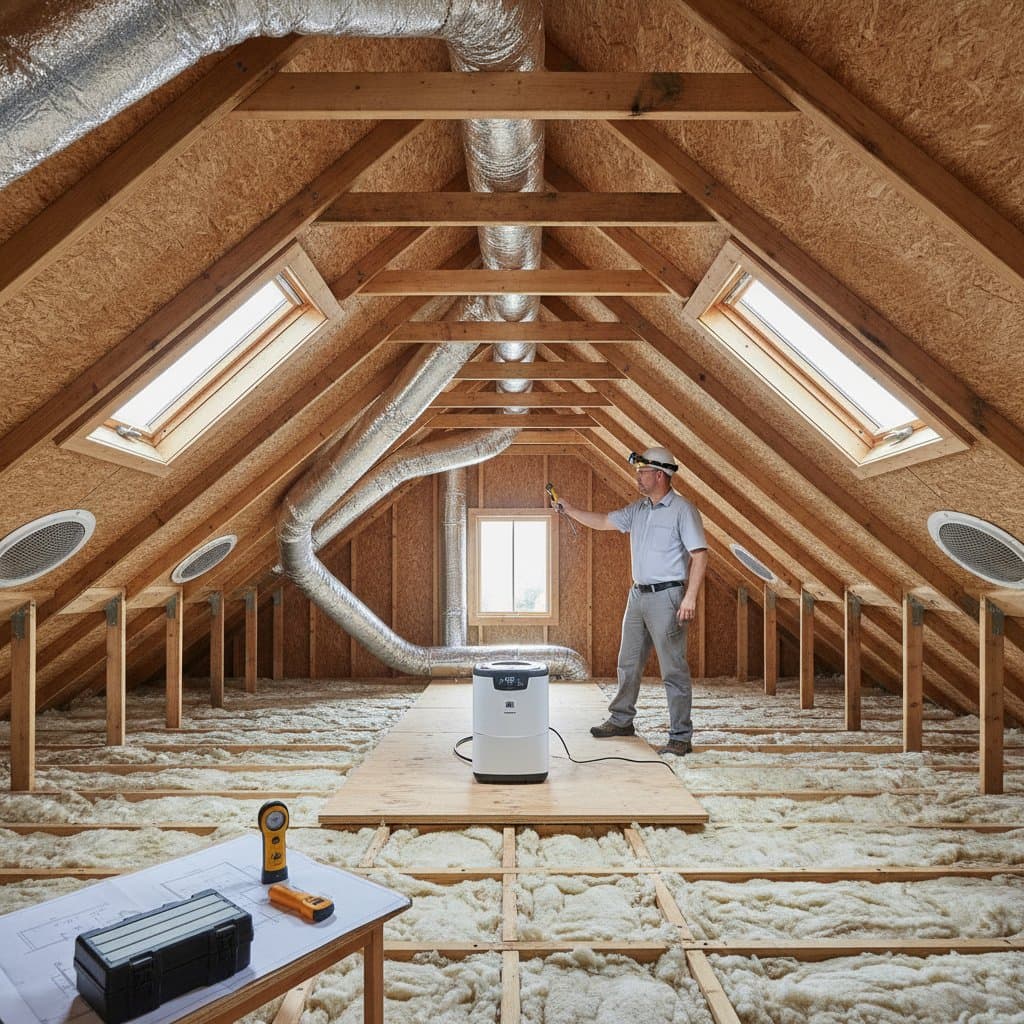
- Verify ventilation pathways. Examine soffit and ridge vents for blockages from insulation or debris. Ensure air flows freely from soffits upward to the ridge.
- Assess insulation coverage. Measure depth across the attic floor. Insulation must remain even and clear of vents. Gaps or thin areas permit heat loss and uneven roof warming.
- Search for moisture evidence. Employ a flashlight to inspect rafters, sheathing, and insulation for stains or marks. Test suspicious spots by touch for dampness.
- Review the roof underside. Frost or corroded nails indicate moisture trapping. Install vent chutes or enhance airflow as necessary.
- Inspect exhaust vent terminations. Confirm that bathroom and kitchen fans discharge outside, not into the attic. Terminated ducts under the roof invite mold development.
- Identify light leaks. Small beams of daylight reveal unsealed openings that admit cold air and humidity. Apply foam sealant or caulk to close them.
- Clear soffit vents. Remove dust and webs with a vacuum or soft brush to restore unrestricted airflow.
The Critical Role of Ventilation
Effective ventilation maintains attic temperatures aligned with exterior conditions. Warm indoor air rising to meet cold roof surfaces produces condensation. In winter, this freezes into frost, which melts and soaks insulation and rafters. In summer, retained heat accelerates roof deck deterioration.
Ventilation demands both intake and exhaust components. Soffit vents provide intake; ridge vents handle exhaust. Intake alone allows moisture to linger, while exhaust without intake fails to remove humid air. Together, they eliminate the conditions that cause mold and ice dams.
Cost Analysis and Potential Savings
Professional inspections cost far less than water damage remediation. DIY efforts involve only time and basic tools like a flashlight. A single prevented ice dam or mold incident avoids hundreds in repairs and replacements.
| Task | Typical Cost | Benefit |
|---|---|---|
| Seasonal attic check | Minimal if DIY | Early issue detection |
| Adding vent baffles | Moderate | Enhanced airflow prevents frost |
| Replacing wet insulation | High | Restores energy efficiency |
| Roof deck repair from ice dam | Very high | Avoids full roof section replacement |
Insights from Experts and Homeowners
Energy specialists emphasize attic ventilation as a frequently neglected aspect of home maintenance. Forum participants report that clearing obstructed vents or redirecting exhaust fans eliminates mildew smells. One contractor notes that routine vent cleaning halves attic humidity in days.
Homeowners incorporating seasonal checks experience reduced heating costs and fewer leaks. These accounts demonstrate how consistent practices safeguard substantial investments.
Safety Precautions During Inspections
Approach attic access with caution to avoid injury. Use sturdy ladders and ensure stable footing on joists, never stepping on insulation or between beams. Wear protective gear including gloves, a dust mask, and eye protection against fibers and debris. If the attic lacks flooring, limit movement to structural elements. In extreme temperatures, postpone inspections to prevent heat exhaustion or slips on icy surfaces.
Advanced Tips for Effective Maintenance
Install a humidity monitor to track attic conditions over time. Apply weatherstripping to attic hatches to block warm air infiltration. Position insulation away from soffit vents using cardboard or foam baffles. After heavy snow, inspect roof edges for ice accumulation and clear gutters in advance of winter. In warmer seasons, check for nests or dust obstructing vents.
Protecting Your Home Through Proactive Care
Seasonal attic inspections form a simple yet powerful defense against mold and ice dams. They preserve structural integrity, enhance energy efficiency, and maintain healthy indoor environments. By integrating these checks into routine home care, owners secure long-term comfort and financial savings.