
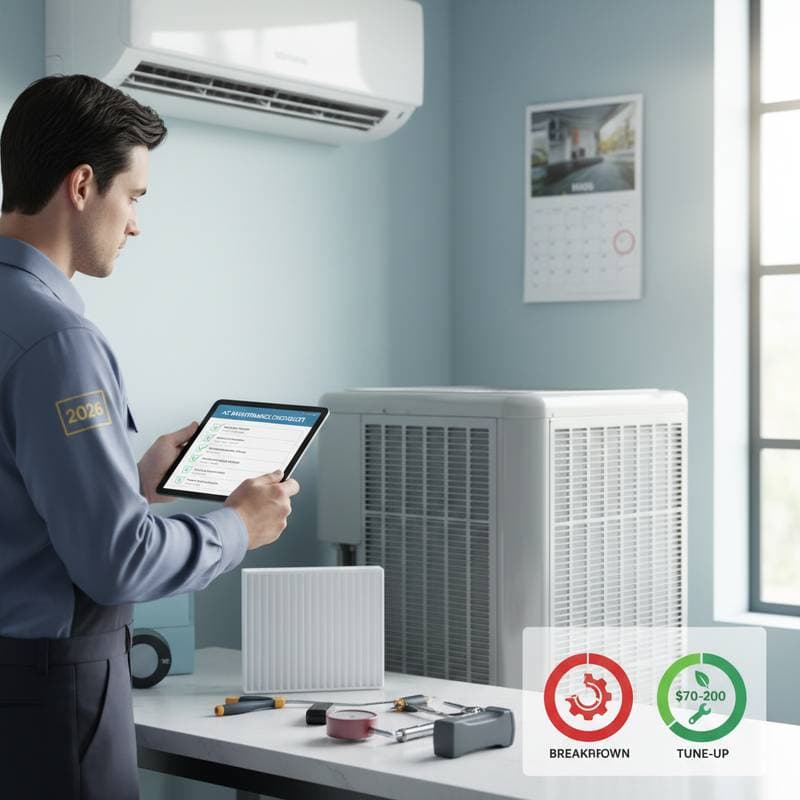
2026 AC Tune-Up: Checklist to Prevent Summer Breakdowns
Maintaining your air conditioner in optimal condition separates a comfortable home from an uncomfortable summer ordeal. A thorough tune-up averts expensive repairs, enhances operational efficiency, and prolongs equipment durability. This guide details essential checks, whether you perform basic tasks independently or engage a specialist, to ready your system before temperatures rise.
Importance of Regular AC Maintenance
Air conditioners endure intense operation during summer peaks. Neglect allows accumulation of dirt, deterioration of components, or refrigerant deficiencies to trigger failures. Routine tune-ups guarantee efficient performance, which controls energy expenses and sustains indoor comfort. Simple actions, such as filter cleaning or connection securing, forestall significant malfunctions.
Beyond cooling, a maintained system elevates air quality, manages humidity levels, and safeguards your financial commitment. Scheduled upkeep provides an economical alternative to urgent repairs amid high-demand periods.
AC Tune-Up Cost Breakdown
Tune-up expenses fluctuate based on unit dimensions, provider rates, and geographic factors. Homeowners typically allocate $70 to $200 for a specialist evaluation and adjustment. Such services encompass cleaning procedures, performance testing, and minor calibrations.
Expenses for Self-Maintenance
Opting for self-directed efforts involves $20 to $60 for items like substitute filters, coil detergents, and essential implements. The primary commitment involves personal time allocation. Completion of a standard tune-up requires one to two hours, contingent on expertise and unit status.
Fees for Expert Services
Specialists command higher fees due to in-depth examinations and advanced equipment usage. They identify subtle issues, including electrical faults, degraded belts, or refrigerant escapes. Certain providers propose yearly contracts encompassing dual seasonal services, yielding long-term savings.
Influencing Price Elements
Multiple variables affect the total expenditure:
- Unit age and configuration: Vintage or complex multi-zone setups demand extended care.
- Access ease: Confined or raised installations prolong service duration.
- Current state: Overlooked units necessitate additional decontamination or replacements.
- Local environment: Regions with high dust or moisture elevate upkeep needs.
Self-maintenance reduces labor outlays, yet overlooking concealed defects may incur greater future costs. Specialist knowledge frequently justifies the investment over time.
| Cost Type | Estimated Range | Includes |
|---|---|---|
| DIY | $20-$60 | Filters, cleaners, tools |
| Professional | $70-$200 | Inspection, cleaning, adjustments |
| Annual Plan | $150-$300/year | Two tune-ups, priority service |
Choosing Between Self-Maintenance and Professional Help
Selection hinges on personal proficiency, tool availability, and system intricacy.
Advantages of Self-Maintenance
- Labor expense reduction
- Flexibility for routine chores like filter servicing
- Enhanced familiarity with system functions
Limitations of Self-Maintenance
- Restricted problem detection
- Potential for component harm
- Hazards near electrical elements
Advantages of Professional Assistance
- Thorough review, encompassing electrical verification and refrigerant analysis
- Precise efficiency adjustments
- Recorded upkeep that supports warranty validity
Limitations of Professional Assistance
- Elevated initial outlay
- Availability challenges in busy seasons
A hybrid method suits many: manage routine tasks personally, then arrange annual specialist evaluations for comprehensive scrutiny and optimization.
Comprehensive AC Tune-Up Checklist
Full tune-ups address interior and exterior elements. Follow this list to cover all bases.
Interior Components
- Replace or cleanse filters to optimize airflow and lessen blower stress.
- Examine ductwork for leaks or obstructions that squander energy.
- Clean evaporator coils to avoid frost formation and maintain heat exchange.
- Verify drain lines for blockages that risk water intrusion.
- Evaluate thermostat precision and adjust as required for accurate control.
Exterior Components
- Remove debris surrounding the condenser to facilitate ventilation.
- Clean condenser coils with a gentle brush or approved cleaner for heat dissipation.
- Inspect fan blades for damage or misalignment that affects airflow.
- Assess refrigerant quantities and note oily residues indicating escapes.
- Secure electrical wiring and scrutinize capacitors for faults.
Overall System Evaluation
- Execute a complete cooling operation and monitor activation and deactivation sequences.
- Gauge temperature differential across intake and exhaust vents, targeting 14 to 20 degrees Fahrenheit.
- Detect atypical sounds signaling unsecured elements or mechanical strain.
Common AC Maintenance Inquiries
How frequently should one schedule an AC tune-up?
Experts advise annual intervals, preferably prior to summer onset, to identify issues promptly.
What consequences arise from omitting maintenance?
Expect elevated utility charges, diminished cooling output, and abrupt system collapses.
Do soiled filters truly provoke breakdowns?
Affirmative. Obstructed filters impede airflow, compelling the unit to labor excessively and risk overheating.
Is personal refrigerant level inspection advisable?
Negative. Refrigerant management demands certification; delegate to qualified technicians.
How does one recognize refrigerant deficiency?
Signs include warm vent output or coil icing, necessitating expert intervention.
Does professional cleaning justify the expense?
Yes, particularly for constant-operation units. Specialists eliminate inaccessible residues safely.
Is covering the exterior unit recommended?
Apply a permeable cover solely during inactive periods to avert rust from moisture entrapment.
What filter dimensions apply?
Consult the unit manual or measure the current filter; common sizes include 16x25x1 inches or 20x25x1 inches.
Do warranties encompass tune-ups?
Tune-ups themselves receive no direct coverage, but regular maintenance upholds warranty terms for manufacturers.
How does one prolong system durability?
Implement consistent tune-ups, ensure proper unit sizing, and maintain a debris-free surroundings.
Step-by-Step Decision Framework
- Evaluate unit performance. Indicators like uneven cooling or operational noises warrant specialist attention.
- Gauge personal capabilities. Routine cleansing suits self-efforts, while electrical or refrigerant tasks require experts.
- Compute comprehensive expenses. Factor in implements, effort, and hazard potentials prior to bypassing professionals.
- Prioritize safety protocols. Disconnect power sources before any unit interaction.
- Schedule proactively. Early reservations circumvent delays in high-demand phases.
Sustaining Peak AC Performance
Integrate tune-ups into your seasonal routine to maximize reliability and efficiency. This approach not only curbs immediate repair needs but also fosters long-term savings and comfort. Your proactive efforts ensure the system delivers consistent cooling when it matters most.




