Don't Get Burned: Chimney Inspection Costs Exposed
A warm fire on a cool evening feels perfect, but if your chimney has not been inspected recently, that comfort could turn costly. Hidden buildup, cracks, or blockages can transform a cozy fireplace into a safety hazard. Homeowners across the country are realizing how much a chimney inspection can reveal, and how much ignoring it can cost later.
Why Chimney Inspections Matter
Creosote, a flammable byproduct of burning wood, collects inside the flue each time you use your fireplace. Over time, this residue hardens into layers that can ignite under high heat, potentially sparking chimney fires that spread to the home's structure. Birds, leaves, or animal nests may also block airflow, forcing smoke and carbon monoxide back into your living area, which poses immediate health risks.
A yearly inspection helps prevent these risks and confirms that your chimney structure remains sound, including checking for mortar deterioration or flue liner cracks. According to the Chimney Safety Institute of America, most house fires related to fireplaces start due to neglected maintenance. A certified inspection not only protects your property, but it also supports better heating efficiency by ensuring optimal draft and preserves indoor air quality by reducing pollutant leakage.
What a Chimney Inspection Includes
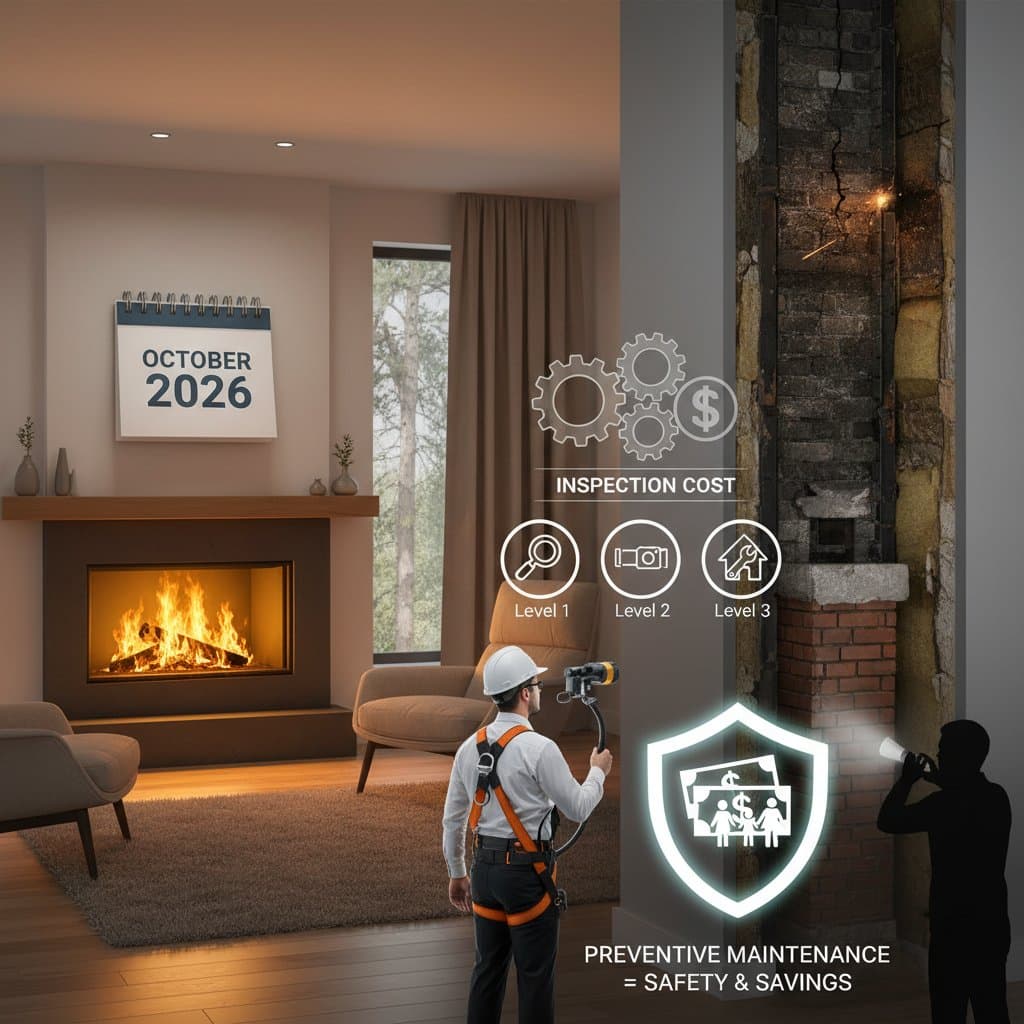
Chimney inspections typically fall into three levels, each designed to address specific needs with increasing thoroughness.
-
Level 1: A basic visual inspection of accessible parts of the chimney and fireplace. It checks for soot buildup, structural issues like leaning bricks, and proper clearances from combustible materials. This option suits homeowners who use their fireplace regularly and have had no major changes or problems, such as recent renovations.
-
Level 2: A more detailed review that includes video scanning or inspection of hidden areas within the flue. It is recommended when buying or selling a home, after a major event such as a storm that could dislodge masonry, or following a chimney fire to assess internal damage.
-
Level 3: A full structural evaluation that may require removing portions of the wall or chimney material to examine the interior fully. This level is used when serious damage or safety concerns exist, like extensive water infiltration or earthquake-related shifts.
Professional services often combine levels depending on what they find during the initial visit. A reputable company will explain what type of inspection is necessary, outline the process, and provide a written report with photos or videos of any issues discovered.
Breaking Down the Cost
Homeowners can expect to pay different amounts based on the type of inspection, property size, and accessibility. For 2026, a Level 1 visual inspection typically ranges from $150 to $300, depending on location and provider. Level 2 inspections with camera technology often cost $300 to $600, while Level 3 evaluations can exceed $1,000 if invasive access is needed.
Expect higher rates for chimneys with multiple flues, those in multi-story homes requiring ladders or scaffolding, or in urban areas with stricter regulations. Many local chimney professionals share that inspection prices have risen slightly due to fuel, insurance, and equipment costs, with an average increase of 5 to 10 percent annually. Still, an inspection remains far cheaper than repairing water damage, which can run $2,000 to $5,000, or rebuilding a cracked flue, which may reach several thousand dollars. For reference, a major chimney rebuild can reach $5,000 to $10,000, while an inspection usually costs a small fraction of that amount.
DIY vs. Professional Inspections
Checking a chimney yourself might seem appealing to save money, but most homeowners lack the tools to assess internal damage effectively. Creosote buildup often hides behind bends in the flue, and structural cracks are easy to miss without proper lighting, mirrors, or specialized cameras. Professionals use high-resolution cameras, moisture meters, and gauges to detect small gaps that can leak smoke, allow moisture entry, or compromise stability.
DIY cleaning kits can help maintain a chimney between professional visits by removing surface creosote, but they should never replace inspections. The National Fire Protection Association recommends an annual inspection by a certified technician, even if you rarely use the fireplace or rely on gas logs. Early detection of wear, such as rust on metal components or efflorescence on bricks, can prevent expensive repairs later and avoid insurance claim denials due to neglect.
Seasonal Timing and Maintenance Tips
The best time for a chimney inspection is before the heating season begins, ideally in late summer or early fall. This ensures your fireplace is ready when cooler weather arrives and allows time for any necessary repairs. Early scheduling also helps avoid the busy season from October to December, when service providers book weeks in advance and rates may increase due to demand.
To maintain your chimney between inspections, adopt these practical steps:
- Burn only dry, seasoned wood with less than 20 percent moisture content to limit creosote buildup and improve burning efficiency.
- Install a chimney cap with a spark arrestor to keep rain, animals, and debris out while allowing proper ventilation.
- Watch for white stains on the exterior brick, which indicate moisture problems from leaks or poor flashing, and address them promptly to prevent further deterioration.
- Check the damper seal annually to confirm it opens and closes smoothly, preventing drafts in summer and backdrafts in winter.
Small habits like these reduce wear, extend the life of your chimney by years, and minimize the need for frequent professional interventions.
Safeguard Your Home Through Consistent Care
A clean, well-maintained chimney adds safety, efficiency, and value to your home, potentially increasing resale appeal by demonstrating proactive upkeep. Regular inspections prevent serious hazards like carbon monoxide poisoning or structural fires and help your fireplace perform better by optimizing heat output. When comparing service providers, ask about certification from organizations like the Chimney Safety Institute of America, proof of insurance, and whether they provide detailed reports with recommendations.
Look for companies with verified reviews on platforms like the Better Business Bureau and transparent pricing that includes travel fees. Keeping your chimney in good shape is not simply about avoiding fires. It is about preserving comfort, protecting your home from long-term damage, and saving money over time through prevented repairs. By scheduling a professional inspection and staying consistent with maintenance, you ensure that every fire you light remains a source of warmth, not worry.