Fall HVAC Filter Swap: Ideal Timing and Types
A home achieves true comfort only when the HVAC system maintains clean air and consistent temperatures. As cooler weather arrives, indoor air circulation decreases, placing greater demands on the filter. Neglecting the fall replacement leads to diminished air quality, elevated energy expenses, and excessive system stress. Precise knowledge of replacement timing and filter selection ensures seasonal comfort and equipment reliability.
Why Fall Serves as the Optimal Replacement Period
Fall provides a strategic transition from intensive cooling to demanding heating. Summer operations accumulate dust, pollen, and pet dander on the filter, reducing its effectiveness. A timely swap equips the system for winter, where sealed windows and frequent heater activation concentrate indoor pollutants.
The National Air Filtration Association advises monthly inspections and replacements at least quarterly. Schedules vary by household dynamics. Residences with pets, allergy sufferers, or smokers require changes every 30 to 60 days. Low-dust, low-traffic homes may extend to 90 days.
This seasonal action enhances air purity and operational efficiency during peak heating reliance.
Essential Guidance: Timing and Selection
Follow this straightforward protocol: replace the filter at fall's onset and inspect midway through the season. Select filters rated MERV 8 to MERV 13 for typical homes, striking a balance between filtration and airflow.
- MERV 8: Captures dust, lint, and pollen; appropriate for standard households.
- MERV 11: Traps mold spores and pet dander; ideal for moderate sensitivities.
- MERV 13: Filters smoke and bacteria; suited for advanced needs.
Opt for MERV 13 in high-efficiency or allergy-focused setups. Limit older systems to MERV 8 or 11 to prevent airflow limitations.
Decoding Filter Ratings and Construction
Filters differ significantly in performance. Grasping their mechanics aids informed choices aligned with system capabilities.
MERV Ratings Demystified
MERV stands for Minimum Efficiency Reporting Value, quantifying particle capture efficiency. Elevated ratings indicate superior filtration yet increased airflow resistance. Residential systems thrive with MERV 8 to 13.
| MERV Rating | Particle Size Captured (microns) | Common Applications |
|---|---|---|
| MERV 6-8 | 3 to 10 | Fundamental defense against dust and allergens |
| MERV 9-11 | 1 to 3 | Enhanced capture for pet-owning or allergy-affected homes |
| MERV 12-13 | 0.3 to 1 | Advanced filtration approaching medical standards |
| MERV 14+ | 0.1 to 0.3 | Reserved for sterile or industrial settings |
Filter Construction Options
Various materials dictate filtration quality and durability.
- Fiberglass Filters: Budget-friendly with basic capture; usually MERV 4 or below.
- Pleated Filters: Feature folded polyester or cotton for expanded surface; MERV 8 to 13, offering cost-effective efficacy balance.
- Electrostatic Filters: Employ static attraction for particle adhesion; washable models reduce long-term costs with diligent upkeep.
- HEPA Filters: Achieve 99.97 percent particle removal; require system modifications for standard residential use.
Consult the owner's manual or a certified technician for compatibility before upgrades.
Accurate Measurement and Replacement Procedures
Filter swaps demand precision to sustain performance. Incorrect installation diminishes efficiency or permits dust evasion.
Sizing the Filter
Examine the current filter's edge for dimensions like 16x20x1 or 20x25x4 inches. The initial figures denote length and width; the final indicates thickness. Verify against HVAC specifications. Thicker options, such as 4-inch models, extend lifespan and filtration when compatible.
Detailed Replacement Steps
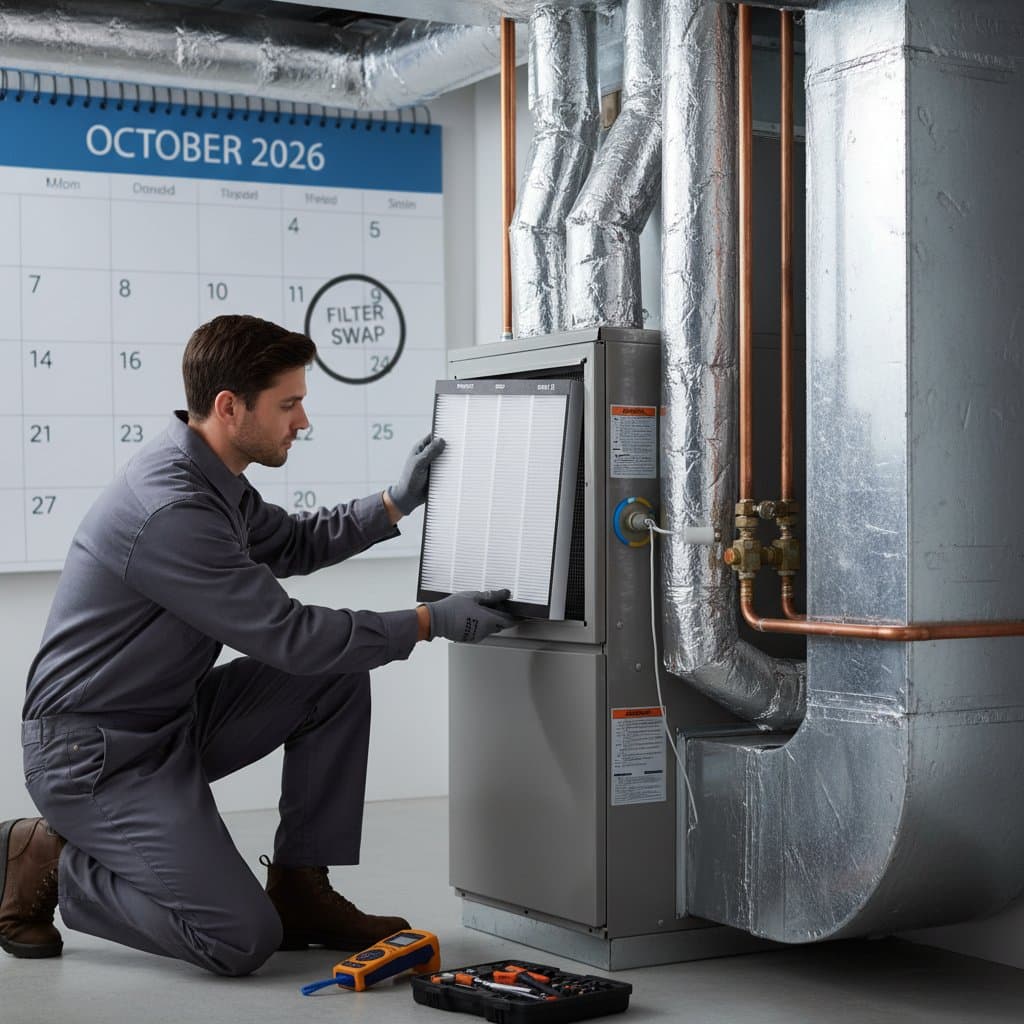
- Power down the HVAC system to halt dust intake.
- Identify the filter slot, often behind a return grille or within the furnace enclosure.
- Extract the old filter, observing the airflow arrow's orientation.
- Position the new filter with the arrow directing toward the blower or air handler.
- Reattach the cover and reactivate the system.
Inscribe the installation date on the filter frame for tracking purposes.
Pitfalls to Evade
Minor oversights compromise filtration and system integrity. Steer clear of these prevalent errors:
- Mismatched sizing: Gaps allow air leakage and unfiltered passage.
- Reversed orientation: Align the airflow arrow toward the furnace or blower.
- Overdue changes: Prolonged use hampers airflow, escalating energy demands.
- Excessive MERV selection: Dense filters strain incompatible systems, risking overheating.
- Overlooking reusables: Clean and dry washable filters completely to prevent mold growth.
Addressing these ensures protective function for health and hardware.
Financial Analysis and Benefits
Routine filter maintenance yields multifaceted savings. The U.S. Department of Energy indicates that clean filters lower energy use by up to 15 percent, translating to notable annual reductions.
- Fiberglass filters: $2 to $5 per unit; monthly replacement.
- Pleated filters: $10 to $30 per unit; every 2 to 3 months.
- Electrostatic filters: $40 to $100 initial investment; multi-year reusability.
- MERV 13 filters: $25 to $60 per unit; quarterly replacement.
Pleated MERV 8 to 11 variants deliver optimal value for most users. Electrostatic options suit those prioritizing longevity, provided monthly cleaning occurs.
Tailoring for Accessibility and Air Purity
Specialized households benefit from customized approaches to filtration and upkeep.
- Allergy-sensitive environments: Employ MERV 11 to 13 for finer allergen control.
- Families with elders or youth: Refresh filters every 45 to 60 days for sustained purity.
- Mobility-limited residents: Position accessible grilles 36 to 48 inches from the floor.
- Asthma households: Supplement with portable HEPA units in bedrooms.
For challenging self-maintenance, integrate filter service into professional seasonal tune-ups.
Self-Installation Versus Professional Assistance
Homeowners handle most replacements with basic tools. Complex configurations warrant expert intervention.
Engage professionals when:
- Filters reside in confined attics or crawl spaces.
- Airflow irregularities persist post-replacement.
- Systems feature intricate media cabinets.
- Ductwork shows design flaws or leaks.
Experts assess airflow, seals, and compliance with manufacturer guidelines.
Winter Preparation Strategies
The fall swap integrates into comprehensive maintenance for winter reliability.
Complete this fall checklist:
- Swap or clean filters.
- Vacuum vents and returns.
- Clear dust from the blower area.
- Test thermostat functionality and batteries.
- Arrange annual professional evaluation if overdue.
These measures avert failures and elevate indoor air during extended indoor periods.
Anticipating and Mitigating Issues
Filter neglect extends beyond air quality concerns to mechanical risks. Obstructions overtax the blower, promoting wear and overheating. They may induce coil freezing in cooling or limit switch activations in heating.
Address weak airflow, odd sounds, or temperature variances by inspecting the filter first. Such checks resolve many issues economically.
Expert Recommendations for Reliability
- Bulk purchasing: Stock a year's supply to maintain consistency.
- Scheduled alerts: Program calendar notifications or label the thermostat.
- Proper storage: Keep filters flat to preserve integrity.
- Routine checks: Monthly visual inspections detect rapid accumulation.
- Judicious upgrades: Adopt 4-inch pleats in supportive systems for superior performance.
Consistent practices simplify ongoing care.