2026 AI Lawn Care: Costs, Innovations, and Smart Features
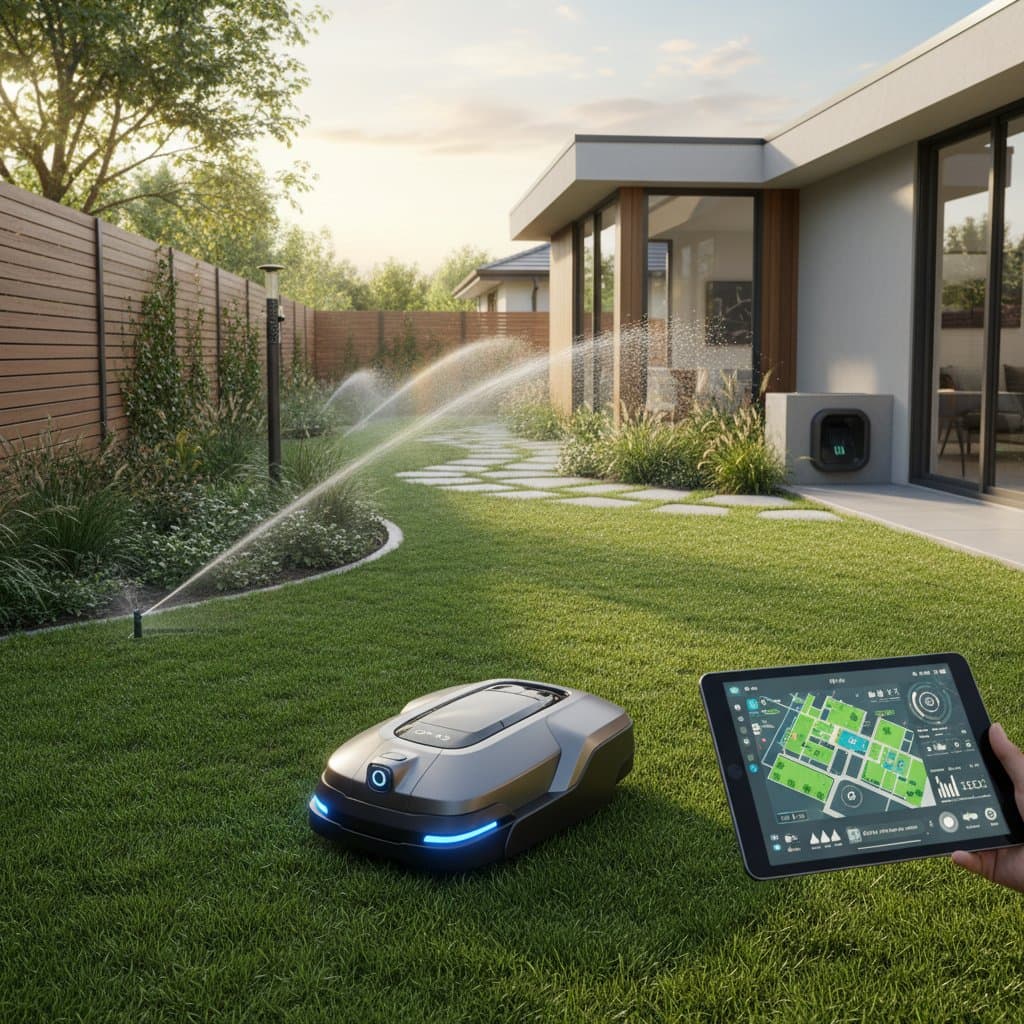
Homeowners experience a profound transformation in lawn maintenance as smart technology integrates into outdoor spaces. These advancements alter traditional tasks like mowing, watering, and soil oversight. AI systems learn the specific characteristics of individual properties and refine operations accordingly. Robotic mowers map terrain precisely, while irrigation controllers forecast weather patterns, establishing new benchmarks for ease and effectiveness.
Evolution of AI in Lawn Management
AI lawn care merges robotics, sensors, and forecasting algorithms to handle maintenance with limited oversight. Advanced robotic mowers employ satellite navigation and visual recognition to traverse intricate landscapes without perimeter wires. Intelligent irrigation units modify schedules using real-time soil data and meteorological predictions. This interconnected network sustains lush, vital grass while minimizing water and power consumption.
Individuals who previously dedicated hours to yard work now rely on automation for core functions. Leading manufacturers such as Husqvarna, Worx, and Gardena incorporate machine learning into their equipment. Devices collect insights on vegetation growth, ground composition, and cutting intervals to generate tailored routines suited to diverse lawn requirements.
Detailed Cost Analysis
Expenses for AI lawn care depend on property dimensions, included capabilities, and equipment categories. Current trends provide these approximate ranges:
- Robotic mowers: Entry-level options begin at $900, escalating to $3,000 for advanced models featuring GPS navigation and mobile application oversight.
- Intelligent irrigation controllers: Prices fall between $150 and $400, influenced by the number of controlled zones and compatibility with monitoring sensors.
- Comprehensive AI lawn packages: Integrated solutions combining mowing and watering automation span $2,000 to $6,000, encompassing setup and initial programming.
Power demands remain low relative to conventional fuel-based machinery. Electric mowers incur roughly $10 to $20 monthly in electricity, varying by lawn area and operational cadence. Ongoing expenses decrease due to simplified mechanics and absence of fuel needs. Principal recurring costs involve blade renewals, firmware enhancements, and power cell replacements, totaling $100 to $200 annually.
Initial investments appear substantial, yet reductions in water, fuel, and manual labor often recoup expenses rapidly. Industry analysis indicates that calibrated automated irrigation can diminish water usage by as much as 30 percent.
Key Smart Capabilities in Modern Systems
Contemporary AI lawn products distinguish themselves through intelligent functionalities that evolve with usage. These exceed basic scheduling or remote operation by incorporating ongoing adaptation.
Adaptive Mowing Strategies
Units detect grass thickness and expansion velocity to modulate cutting intervals independently. This approach curbs excessive trimming and conserves power. Certain models pinpoint low-light zones with reduced growth and bypass them selectively.
Forecast-Based Watering
Controllers access current atmospheric information and on-site humidity measurements. Anticipated precipitation triggers automatic suspension of irrigation cycles. Such precision averts excess moisture and preserves optimal lawn conditions.
Zoned Management Options
Users designate distinct protocols for various yard sections, accommodating differences in sunlight or terrain. This customization suits properties with diverse environmental factors.
Seamless Device Connectivity
Systems integrate with vocal interfaces and dedicated applications. Commands to initiate tasks, revise hydration plans, or review status updates occur via simple interactions.
Advanced Protection Measures
Enhanced mowers feature collision avoidance, elevation detectors, and location monitoring to mitigate risks. Families with children or animals particularly appreciate these safeguards.
Installation Choices: Self-Guided or Expert-Assisted
Implementation of smart lawn setups varies in complexity based on terrain scale. Self-installation proves feasible for compact areas below a quarter acre. Manufacturers supply intuitive application tutorials for robotic units.
For expansive grounds or segmented designs, expert involvement ensures precision. Specialists adjust detectors, synchronize zones, and optimize layouts. Fees for such services typically range from $300 to $800. This expenditure enhances reliability and facilitates unified control across components.
Ongoing Care and Issue Resolution
Automation demands occasional intervention to sustain peak operation. Renew mower blades every two to three months according to activity levels. Clear sensors of obstructions and apply software patches promptly. Applications notify users of required actions.
Address irregular patterns by verifying unobstructed routes or active connections. Diagnostic resources and support interfaces guide basic fixes. Professional assistance handles intricate problems like power failures or glitches.
Sustainability Gains and Daily Advantages
Beyond ease, AI lawn care advances ecological responsibility and turf vitality. Battery-operated mowers emit no exhaust and consume minimal electricity versus combustion engines. Precision watering limits surplus flow and safeguards aquifers. These elements enable appealing landscapes with reduced ecological footprint.
Practical benefits include recovered time from routine chores. One online commenter noted, “My robotic mower does a better job than I ever did, and I get my weekends back.” Such outcomes accelerate widespread integration in residential areas.
Strategies for Long-Term Reliability
Durable construction defines AI systems, yet diligent practices prolong service life. Shelter mowers from severe conditions and position stations on stable, arid bases. Evaluate watering probes seasonally for accuracy. Swap power sources proactively to maintain efficiency.
Select expandable elements compatible with emerging enhancements via wireless networks. Modular designs safeguard prior purchases and align with technological progress. As AI influences residential care, yards emerge as highly autonomous domains, converting labor-intensive duties into efficient, self-regulating processes.