Tank vs. Tankless Water Heaters: A 2026 Cost Comparison
Selecting the appropriate water heater influences daily comfort, utility expenses, and future repair needs. Homeowners frequently weigh tank water heaters against tankless alternatives to identify the superior long-term investment. Although both deliver hot water, they vary in heating mechanisms, initial expenses, and operational reliability. Grasping these distinctions aids in preparing for replacements or enhancements.
How Each System Functions
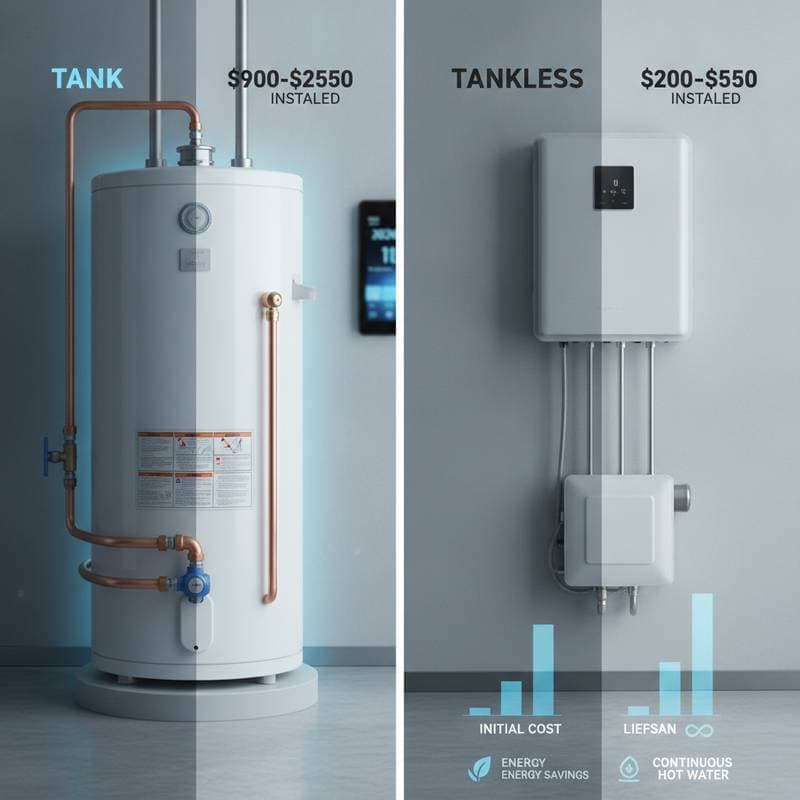
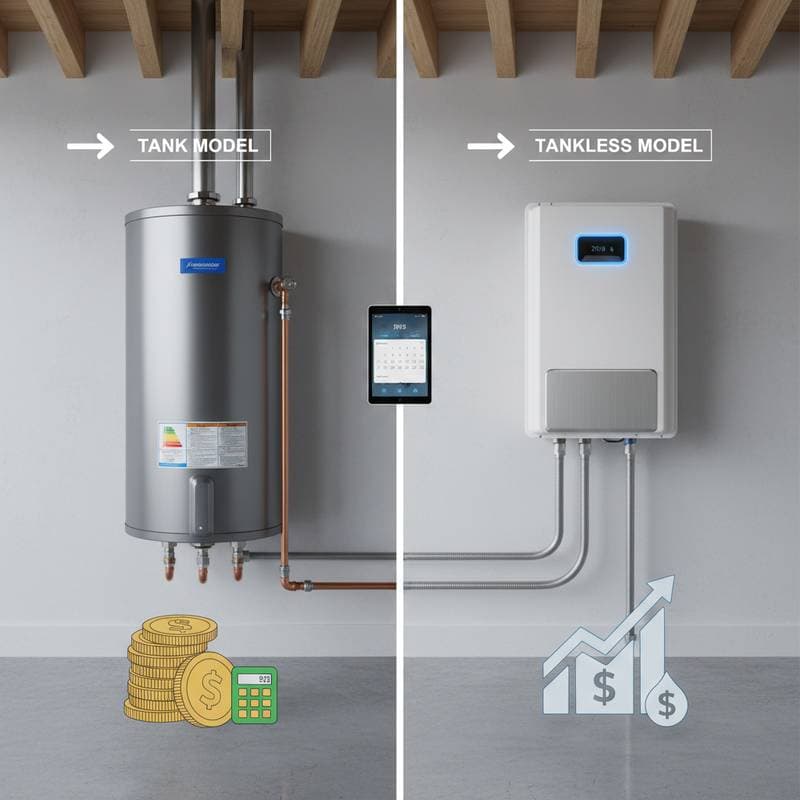
Tank water heaters hold a substantial volume of preheated water within an insulated reservoir, ensuring immediate availability. As hot water exits, cold water enters, and the unit reheats the supply. This approach proves straightforward and dependable, yet it consumes energy continuously to sustain warmth.
Tankless water heaters, also known as on-demand units, activate heating solely upon request. Incoming cold water flows past a gas burner or electric coil for instant warming, eliminating the need for storage. Such configuration conserves area and minimizes energy consumption, although it involves greater initial outlay.
Installation Expenses and Preparations
Installation expenses diverge significantly from the outset. Replacing a tank water heater typically aligns with existing infrastructure, requiring minimal plumbing and venting modifications. Labor costs remain moderate, often completing within a single day.
Tankless installations demand more intricate preparations. Units frequently necessitate reinforced gas lines or electrical upgrades to accommodate elevated demands. Venting configurations may require complete overhauls for compliance with safety regulations, potentially increasing expenses by several hundred dollars. One homeowner shared on a home improvement forum that their tankless project cost almost double a standard tank swap due to electrical and venting revisions, a scenario common in retrofits.
In new builds, tankless systems integrate seamlessly with planned utilities. For existing homes, tank heaters generally incur lower installation fees.
Energy Efficiency and Bill Reductions
Efficiency advantages propel many toward tankless selections. Tank units expend energy to heat stored water around the clock, leading to standby losses that elevate yearly bills. Tankless models circumvent this by activating only during use.
The U.S. Department of Energy reports that tankless heaters achieve up to 30 percent greater efficiency in homes consuming under 40 gallons daily. Larger households see reductions nearer 10 percent, yet savings persist. Manufacturers like Rheem and Rinnai engineer units with advanced burners that optimize fuel use and eliminate idle consumption.
Although appealing, these reductions build gradually. Based on regional rates, recouping the premium for tankless purchase and setup may span years. Individuals committed to extended residency often deem the exchange beneficial.
Durability and Upkeep Routines
Longevity further distinguishes the systems. Properly serviced tank water heaters endure 10 to 12 years. Tankless counterparts extend to 20 years or beyond, reducing replacement frequency and enhancing overall worth.
Upkeep protocols vary. Annual flushing clears sediment from tanks, preserving efficiency and prolonging service. Inspect and replace anode rods routinely to combat corrosion. Tankless units require periodic descaling to eliminate mineral accumulation, particularly in hard water regions, maintaining optimal flow and heat output.
Professionals advise pairing tankless heaters with water softeners or filters to mitigate scaling. This supplementary expense safeguards performance and averts diminished capacity.
Spatial and Aesthetic Aspects
Tankless designs excel in compact environments, mounting flush to walls without bulky reservoirs. They suit apartments, tight utility spaces, or even exterior placements in temperate zones. Tank heaters demand ample floor area, including clearance for servicing.
During renovations or basement completions, tankless options liberate space for storage, appliances, or shelving. Where room abounds, conventional tanks offer unpretentious utility.
Delivery and Supply Reliability
Effectiveness hinges on usage patterns. Tank systems dispense a predetermined hot water volume; depletion necessitates waiting for replenishment and reheating. Multiple simultaneous demands, such as successive showers in busy households, may cause interruptions.
Tankless units supply unending hot water within their rated limits. Concurrent high-flow activities can temper output, underscoring the importance of proper sizing. Engage a specialist to assess flow needs based on fixtures and bathrooms. Navien and Noritz provide sizing tools to facilitate accurate selections.
Expense Analysis: Acquisition, Setup, and Running
Average 2026 market figures illustrate the contrasts:
Tank Water Heater
- Acquisition: Economical entry point, typically $500 to $1,500.
- Setup: Straightforward, often under $1,000 in labor.
- Upkeep: Routine flushing and component swaps.
- Durability: 10 to 12 years, prompting regular renewals.
- Operation: Consistent yet higher due to standby losses.
Tankless Water Heater
- Acquisition: Premium range, $1,000 to $3,500.
- Setup: Elaborate, potentially $1,500 to $3,000 including modifications.
- Upkeep: Scheduled descaling and inspections.
- Durability: 20 years plus, minimizing interventions.
- Operation: Reduced through on-demand efficiency.
A Quora contributor noted their tankless conversion slashed gas expenses by about 20 percent versus a prior tank. Such outcomes align with findings from plumbing organizations, though individual results depend on habits and locales.
Selecting Tank for Your Needs
Opt for a tank water heater when prioritizing modest initial investments and effortless integration. This choice aligns with regions featuring low energy tariffs, where tankless efficiencies yield marginal returns. Short-term residents or those preparing to relocate benefit from tanks' reliable, cost-effective performance without extensive commitments.
Selecting Tankless for Your Needs
Tankless heaters appeal to enduring homeowners seeking sustained efficiencies and uninterrupted supply. They prove advantageous in confined spaces or high-demand settings. Cumulative savings and extended reliability often eclipse upfront premiums.
Security and Ecological Impacts
Safety profiles differ. Tanks risk pressure accumulation if relief valves malfunction; routine checks mitigate hazards. Tankless models forgo storage perils but mandate precise venting for gas variants to prevent carbon monoxide risks. Expert installation and yearly tune-ups ensure compliance.
Environmentally, tankless systems curb emissions via minimized waste. Eligible models attract rebates that lessen acquisition costs. Electric variants integrate with solar setups, fostering reduced-carbon households.
Strategizing Your Water Heater Transition
Assess family size, usage routines, and financial scope when contemplating upgrades. As your existing unit approaches obsolescence, weigh comprehensive ownership costs. Consult a certified plumber for tailored estimates, regulatory insights, and infrastructure evaluations.
Investigate regional rebates or brand incentives. Utilities may subsidize efficient installations, shortening payback periods for tankless choices.
Sustaining Peak Performance
Post-installation, vigilant care safeguards value. Adhere to flushing or descaling schedules, monitor for leaks, and verify temperature stability. Consistent attention maximizes efficiency, whether opting for a tank's simplicity or tankless innovation, ensuring reliable hot water for years ahead.