
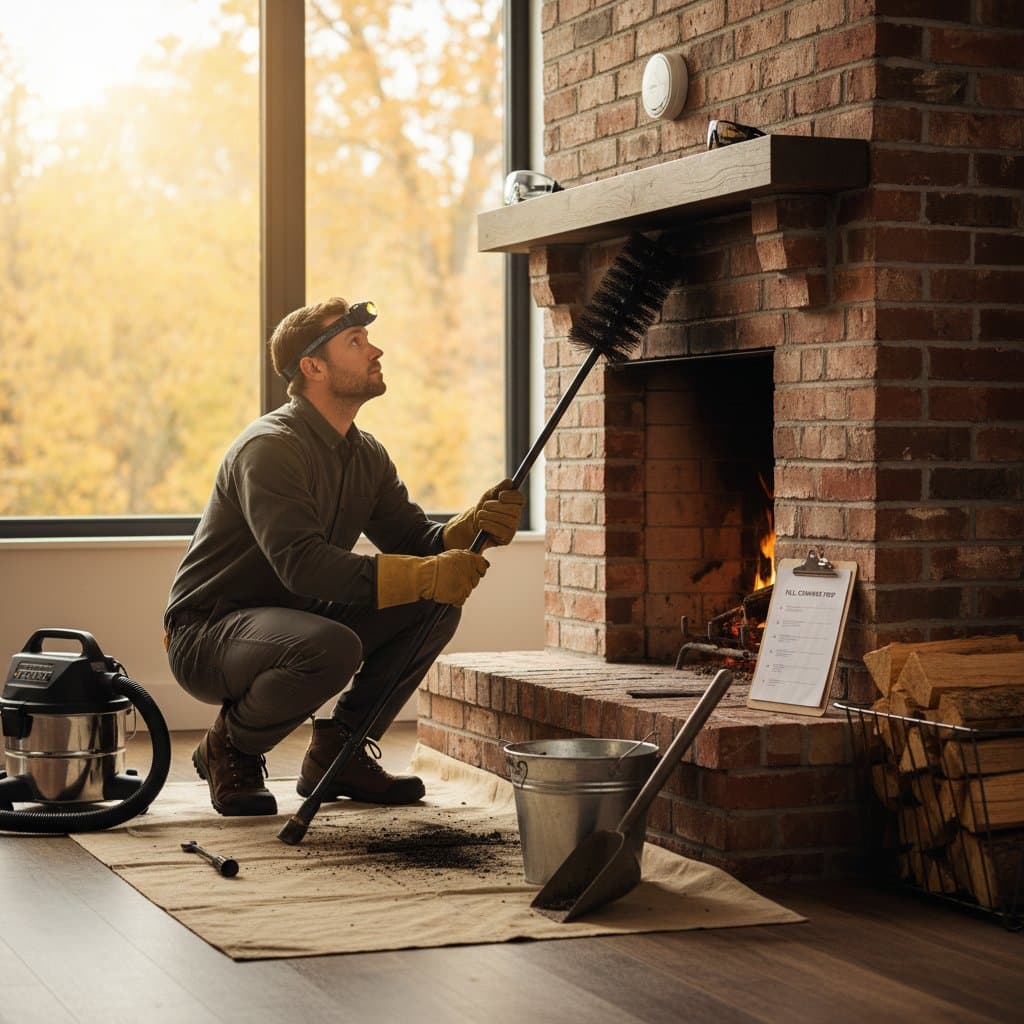
Essential Fall Checklist for Chimney Safety
Cooler temperatures signal the return of fireplace use for many homeowners. Prior to igniting the first fire, inspect the chimney thoroughly. Neglected chimneys lead to smoke accumulation, compromised indoor air quality, and potential fire hazards. Follow this structured checklist to avert damage, promote efficient operation, and maintain a secure environment.
Inspect the Chimney Exterior
Start the process with a ground-level visual examination of the chimney structure. Identify loose bricks, fractured mortar joints, or absent flashing where the chimney intersects the roof. Such defects permit water infiltration, which accelerates internal decay during freezing conditions. White powdery deposits on bricks indicate efflorescence, a clear marker of moisture penetration in the masonry.
Address minor cracks using high-quality masonry caulk applied with a steady hand. For significant damage, consult a certified chimney specialist. Minor repointing tasks typically cost between one hundred and three hundred dollars, whereas comprehensive repairs may exceed several thousand dollars based on height and access challenges.
Clean Creosote and Soot Buildup
Creosote develops as wood smoke cools and adheres to chimney interiors. This substance thickens over time and poses a severe fire risk. The National Fire Protection Association advises annual professional cleaning, particularly for frequently used wood-burning fireplaces.
Hire a qualified chimney sweep to brush the flue, vacuum debris, and assess the liner for fractures or deterioration. Standard single-flue cleanings range from one hundred fifty to three hundred dollars. In homes with daily fireplace use during winter, schedule an additional cleaning midway through the season.
Seasoned hardwoods produce less creosote than unseasoned varieties. Nevertheless, regular residue removal remains essential prior to each heating period.
Examine the Chimney Cap and Crown
The chimney cap serves as primary protection against precipitation, falling debris, and animal intrusion. A damaged or absent cap exposes the flue to water, which combines with soot to form corrosive acids that erode metal liners. Check the mesh screen for perforations or corrosion, and confirm a secure fit.
Ensure the concrete crown slopes away from the center to direct water runoff. Seal minor cracks with a durable waterproof concrete patch. Professional crown replacement becomes necessary for widespread damage, preventing escalation to costly masonry failures.
Evaluate the Chimney Liner
Liner materials such as clay tile, stainless steel, or cast-in-place cement shield chimney walls from heat and corrosive byproducts. Age and wear cause liners to crack or displace, risking heat transfer to adjacent wood framing. Engage a certified professional for a video camera inspection to pinpoint vulnerabilities.
Liner replacement expenses vary from one thousand to five thousand dollars, influenced by material choice and flue length. A reliable liner mitigates fire risks and optimizes heat retention. In older residences, install an insulated stainless steel liner to enhance draft and minimize creosote formation if the existing clay liner shows signs of failure.
Test the Damper Mechanism
The damper regulates airflow from the fireplace to the chimney. In the closed position, it retains indoor warmth; when open, it expels smoke effectively. Verify smooth operation without binding from rust, debris, or soot accumulation. Use a wire brush to clean contact edges and assess the seal integrity.
Replace any warped or fractured dampers promptly. Consider a top-sealing model installed at the flue entrance for superior airtight performance and reduced heat loss. Installation fees generally fall between three hundred and six hundred dollars.
Confirm Smoke and Carbon Monoxide Detector Functionality
Install operational smoke and carbon monoxide detectors in proximity to every fireplace. Exchange batteries at the onset of heating season and conduct thorough tests. Units over several years old require full replacement to ensure reliability.
Carbon monoxide remains undetectable by scent and builds up from blocked flues or poor drafting. Functional detectors deliver critical alerts before concentrations reach hazardous levels.
Select and Store Firewood Properly
Choose seasoned hardwoods such as oak, maple, or birch, dried for a minimum of six months, to optimize chimney health. Green or freshly cut wood generates excessive smoke and accelerates creosote deposits.
Elevate firewood storage on racks at least six inches above ground level, positioned several feet from home exteriors to deter pests. Secure the stack with a tarp over the top while allowing side ventilation. Test dryness by tapping logs; they produce a hollow sound and display end cracks when ready.
Arrange a Professional Chimney Inspection
Exterior appearances often mask internal chimney problems. Certified professionals adhere to national standards, scrutinizing the flue, smoke chamber, and firebox for stability.
Select from three inspection tiers: a basic visual review of visible areas, a detailed camera-assisted examination, or an advanced assessment involving disassembly for recently modified homes or appliances. Each level ensures comprehensive safety validation.
Prepare the Fireplace Interior
Remove accumulated ash from the firebox and inspect refractory panels for cracks exceeding one-eighth inch in width; replace compromised panels immediately. Scrutinize the grate for rust or distortion, confirming it elevates several inches above the hearth floor to facilitate air circulation.
For gas log systems, clear burner ports of obstructions and test connections with a soapy water mixture for leaks. Bubbles signal gas escape, necessitating urgent intervention by a licensed technician.
Sustain Chimney Health for Lasting Protection
Consistent adherence to this fall inspection plan fortifies your chimney against seasonal threats. These measures not only prevent fires but also extend the lifespan of your fireplace system. Enjoy reliable warmth and peace of mind by integrating annual professional services into your home maintenance routine.




