Greywater System Costs: Permits and Installation Breakdown
Greywater systems recycle wastewater from sinks, showers, and washing machines for reuse in irrigation or toilet flushing. These systems reduce household water consumption and lower utility bills. The total cost of installation depends on system type, region, and regulatory requirements. Homeowners who understand these variables can plan budgets accurately and select systems that align with their property and sustainability goals.
Greywater Cost Fundamentals
National averages for greywater system installation range from $500 to $10,000, depending on scale and features. A basic setup that diverts water from one laundry machine might cost $500 to $1,500, including simple piping. In contrast, a comprehensive whole-house system with advanced filtration and pumps can exceed $8,000.
Regional differences affect pricing significantly. In coastal areas like California, strict water regulations lead to permit fees of $200 to $500 and higher labor rates of $100 to $150 per hour. Rural Midwest locations often see lower costs, with labor at $75 to $100 per hour, though contractors may add travel fees for distant sites. Drought-prone states such as Arizona offer rebates up to $1,000, which reduce the net investment.
Seasonal factors play a role as well. Demand peaks in summer, pushing installation costs up by 10 to 20 percent due to high project volume. Economic trends, including rising material prices for PVC pipes or filters, influence annual costs; for instance, supply chain issues in 2023 increased pump prices by 15 percent.
Pricing Models and Structures
Greywater installations use various pricing approaches based on the provider and project details.
-
Hourly Rates vs. Flat Fees: Contractors often bill $75 to $150 per hour for design and setup phases. Flat fees, ranging from $2,000 to $6,000 for standard systems, provide cost certainty and suit straightforward projects.
-
Per Unit or Project-Based Pricing: Simple diversions charge $200 to $400 per fixture, such as a sink or washer. Complex projects quote $4,000 to $10,000 based on overall scope, including multiple integrations.
-
Bundle or Package Pricing: Providers package design, labor, and materials for $3,000 to $7,000. Upgrades like surge tanks add $500 to $1,000, streamlining the process for homeowners.
-
Subscription vs. One-Time Service Costs: Maintenance plans cost $200 to $500 annually for filter changes and inspections. These options extend system lifespan beyond 10 years and prevent efficiency losses.
Service Tiers and Their Price Points
Greywater systems divide into tiers that match different needs and budgets.
-
Basic Systems: Gravity-fed lines route laundry water to garden beds with minimal alterations. Installation costs $500 to $2,000, ideal for small yards.
-
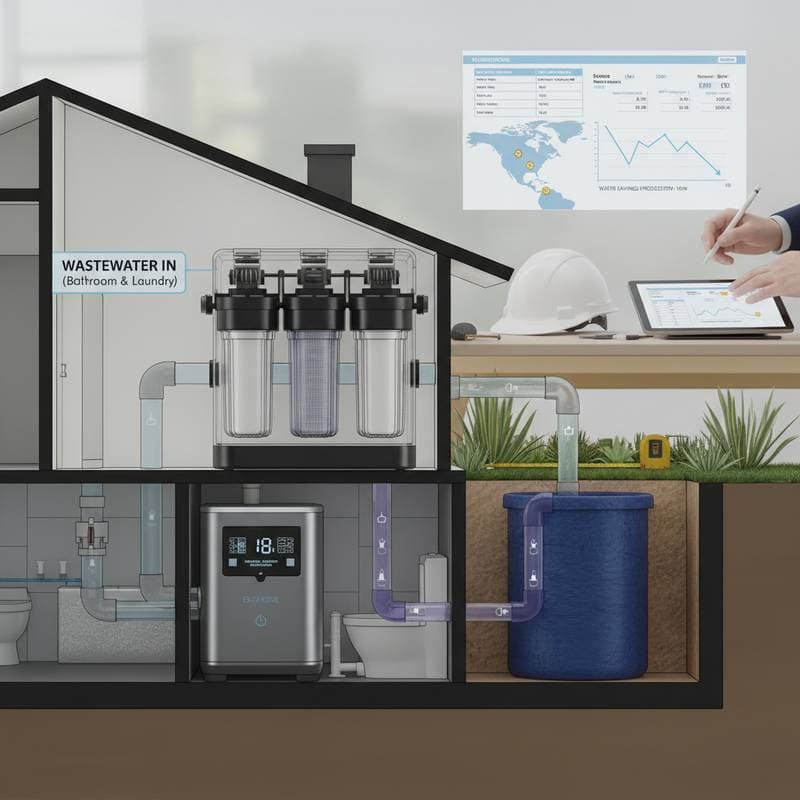
Standard Systems: These incorporate basic filters, pumps, and valves for sinks and showers. Expect $2,500 to $5,000, suitable for average homes with moderate water reuse.
-
Premium Systems: Automated controls and treatment for toilet flushing push costs to $6,000 to $10,000. They demand professional setup for optimal performance.
-
Specialized Systems: Custom builds for estates include sensors and zoned irrigation, priced from $10,000 upward. Engineering consultations ensure seamless integration.
Key Variables Influencing Greywater Pricing
Multiple elements determine the final price tag.
-
Project Scope: Retrofitting one bathroom costs $1,000 to $3,000, while full-home setups require $5,000 to $15,000 for extensive piping.
-
Complexity and Skill Level: Integrating with existing plumbing needs certified experts, adding $1,000 to $2,000 in labor. Compliance with codes demands specialized knowledge.
-
Installation Time: Basic jobs finish in 4 to 8 hours, but advanced ones span 2 to 5 days, multiplying labor charges.
-
Materials Quality: Economy filters cost $100 each, while durable UV-treated tanks run $800 to $1,500. High-end choices resist corrosion for 15-plus years.
Add-on Services and Supplemental Charges
Beyond core installation, additional fees arise.
-
Permit Fees: Jurisdictions charge $100 to $400 for plumbing approvals, varying by local water boards.
-
Inspection Costs: Post-install checks cost $150 to $300 to verify code adherence and safety.
-
Design Consultations: Engineers charge $500 to $1,500 for site assessments and blueprints.
-
Expedited Services: Rush scheduling adds 20 to 30 percent premiums for quicker timelines.
Optional maintenance, such as quarterly filter swaps at $100 per visit, sustains water purity and avoids clogs.
Steps to Install and Budget Effectively
Begin by reviewing local codes through your city's building department website. Identify rebates via state environmental agencies, which can cover 20 to 50 percent of costs in qualifying areas.
Solicit quotes from three licensed installers, specifying your home size and reuse goals. Verify certifications in plumbing and greywater handling to ensure reliability.
“A licensed contractor familiar with greywater regulations can help avoid costly rework,” said Karen Lewis, a water systems consultant with more than two decades of experience in residential installations. She advises prioritizing durability and compliance over the lowest price.
Factor in maintenance budgets of $200 to $400 yearly. Initial outlays recover through 30 to 50 percent water bill reductions, often within 5 to 7 years, alongside ecological gains like conserved aquifers.
Selecting a greywater system means weighing upfront costs against enduring benefits. A tailored approach guarantees reliable operation, regulatory approval, and substantial resource savings for your household.