Introduction to Greywater Systems
Greywater systems capture and repurpose mildly used household water from sources such as showers, sinks, and washing machines. This recycled water supports irrigation or toilet flushing, reducing reliance on municipal supplies. As water scarcity intensifies and utility rates climb, these systems offer a practical path to sustainability and cost reduction.
Homeowners frequently discuss payback periods on platforms like Reddit and Quora, noting returns between five and ten years based on local water rates. One participant in a sustainable living forum reported halving irrigation expenses after installing a mid-tier setup.
Calculating Costs and Maintenance
Initial expenses for greywater systems range from $1,000 for basic diversion models to $5,000 or more for advanced configurations with pumps and filtration. Factor in ongoing maintenance, such as filter cleaning every three to six months and pump servicing every two to three years, which adds $100 to $300 annually.
To estimate total investment, assess household water usage and local rates. For instance, a family consuming 400 gallons daily might save $500 yearly in a high-cost area, accelerating return on investment.
Permits and Local Regulations
Greywater reuse involves public health and plumbing standards, so most areas mandate permits. Regulations differ by location and system complexity.
- Simple diversion setups often require only a notification or basic plumbing permit.
- Systems involving storage, pumps, or indoor applications demand comprehensive building or plumbing permits, along with inspections.
- Many codes specify backflow prevention to isolate recycled water from potable lines.
Contact your local building department early for guidelines. Several cities provide rebates; one California resident shared on LinkedIn that their municipality reimbursed 30 percent of costs for code-compliant installations.
DIY Versus Professional Installation
Selection between self-installation and hiring experts hinges on technical expertise, finances, and regulatory demands.
DIY Installation
Suitable for straightforward projects like laundry-to-landscape conversions, DIY involves routing the washing machine hose to a diverter valve connected to irrigation lines. Essential items include basic plumbing tools, PVC pipes, and a mesh filter.
Advantages:
- Reduced expenses, often under $500.
- Tailored to modest landscapes.
- Rapid implementation, typically in a weekend.
Disadvantages:
- Potential non-compliance with permits.
- Restricted to exterior uses.
- Lacks advanced features like automated filtration.
Professional Installation
Opt for certified plumbers on systems with indoor distribution or storage to guarantee safety and adherence to codes.
Advantages:
- Dependable operation and warranty coverage.
- Full regulatory compliance.
- Inclusion of smart features, such as scheduled watering.
Disadvantages:
- Elevated initial outlay, starting at $2,500.
- Possible need for service agreements.
Essential Materials and Tools
Basic diversion systems comprise:
- Diverter valve.
- PVC piping.
- Mesh screen or filter.
- Drip irrigation tubing.
- Mulch basins for even plant watering.
Advanced setups incorporate:
- Storage tank.
- Circulation pump.
- Multi-stage filtration.
- Backflow preventer.
- Digital controller for irrigation timing.
Kits from reputable providers like Oasis Design or Greywater Action include verified components and instructions, simplifying assembly.
Planning Your Greywater Layout
Begin by identifying sources: prioritize bathrooms and laundry for diversion. Evaluate yard topography; gravity systems excel on downward slopes from the home.
For distribution, employ mulch basins or subsurface drip lines to avoid aerosolized contaminants. Select robust plants like fruit trees and shrubs that benefit from recycled water. Reserve highly filtered subsurface methods for edibles such as herbs.
Align output with plant requirements to prevent overwatering or nutrient imbalances.
Key Safety Measures
Prioritize separation of greywater from drinking water supplies at all times. Select biodegradable, low-sodium, low-boron detergents to safeguard soil health.
Limit storage to 24 hours without treatment to curb bacterial growth. Flush lines regularly against clogs, and restrict access to tanks or outlets for children and pets.
Achieving Savings and Long-Term Benefits
Effective greywater systems reclaim up to 40 percent of domestic water, translating to hundreds in yearly savings where rates exceed $0.01 per gallon. This approach also curtails runoff and preserves aquifers.
Additional gains include lower energy demands from reduced municipal treatment. A YouTube case study by a sustainability expert highlighted a suburban household saving 25,000 gallons annually through greywater irrigation, equivalent to multiple families' routine consumption.
Addressing Common Challenges
Maintenance and odors deter some users, but proactive care resolves these. Stagnation in tanks causes smells; schedule weekly flushes and filter rinses.
Clogged pipes lead to inconsistent watering; install coarse pre-filters to sustain flow.
If vegetation wilts, analyze soil salinity and adjust to compatible cleaners.
Return on Investment Projections
Payback varies with rates, scale, and habits. A $3,000 system saving 30 percent on a moderate bill might recoup in six to eight years.
High-irrigation properties recover faster, often in three years. Emerging codes for new builds with greywater provisions enhance resale appeal; a podcast featuring a realtor noted premiums from eco-aware purchasers.
Synergies with Complementary Systems
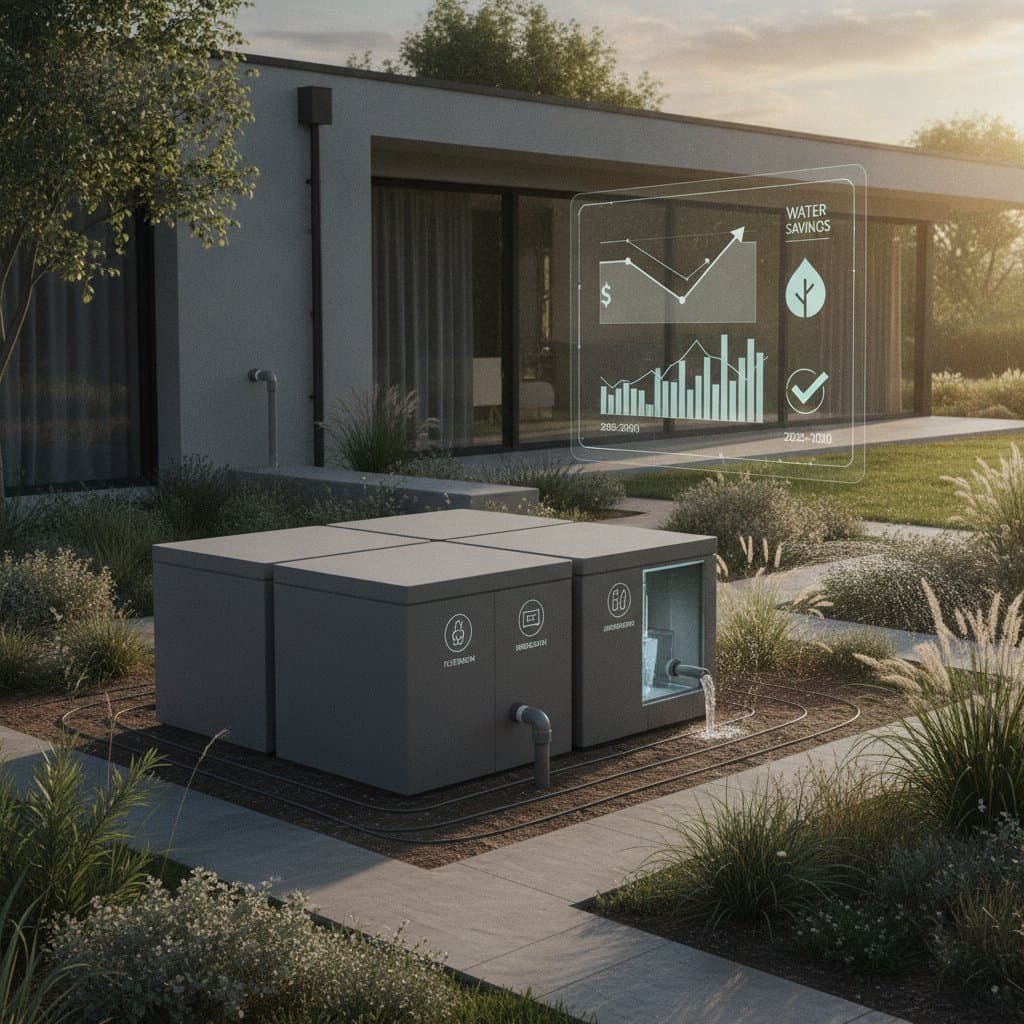
Pair greywater with rainwater collection: the latter supplies potable or clean irrigation water, while greywater handles routine reuse, creating efficient cycles.
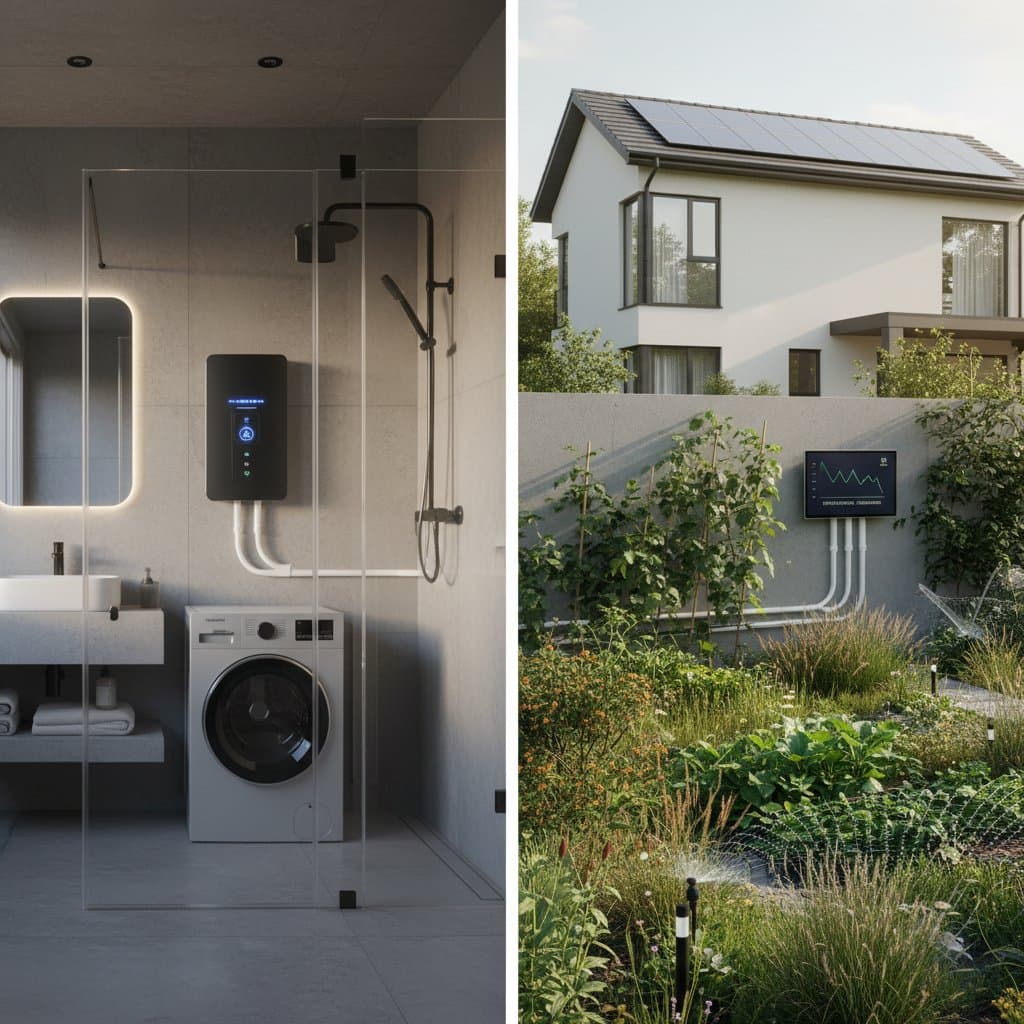
Incorporate solar power for pumps and sensors to minimize electricity. Intelligent controls optimize delivery, aligning with plant cycles for maximal efficiency.
Such integrations build durable, low-impact residences.
Cost-Reduction Strategies
- Initiate with one source, such as laundry, and scale up.
- Leverage gravity by aligning pipes with terrain, bypassing pumps.
- Tap into current plumbing to minimize disruptions.
- Apply for local rebates from water districts.
- Incorporate approved recycled materials for components.
Scenarios Requiring Professional Help
Engage experts for:
- Tank storage.
- Toilet flushing applications.
- Elaborate filtration or treatment.
- Mergers with established irrigation.
- Backflow safeguards.
Specialists assist with permits and designs, ensuring swift approvals and avoiding redo expenses.
Ongoing Maintenance Practices
Sustain performance through routine tasks: filter cleaning quarterly, valve leak checks monthly, and line inspections seasonally. Apply vinegar solutions for scale removal.
Install a flow meter for monitoring; abrupt drops signal blockages, enabling prompt fixes.
Document all activities in a log for inspections and enhancements.
Future Outlook for Residential Adoption
As shortages and costs escalate, greywater transitions to standard practice. Early adopters gain from immediate reductions and enduring resilience.
Thoughtful design with safe practices ensures longevity, blending utility with environmental stewardship for enhanced home equity and community support.