Key Fall Chimney Checks to Avoid Winter Woes
A fireplace transforms a chilly evening into a welcoming retreat. However, the chimney that delivers this comfort can harbor hidden dangers if neglected before winter arrives. Surface-level observations from the ground often miss internal issues like blockages or deterioration that lead to smoke backups, drafts, or fires. Fall provides an ideal window to assess and prepare your chimney for reliable performance. Through targeted inspections, homeowners secure safety, efficiency, and enjoyment throughout the heating season.
Why a Fall Chimney Inspection Matters
As temperatures fall, demand for chimney services surges, delaying repairs for those who wait. Minor flaws, such as a hairline fracture or partial obstruction, escalate into hazards during frequent use. The National Fire Protection Association advises yearly inspections to mitigate fire risks and carbon monoxide exposure. Creosote, the flammable byproduct of wood combustion, ignites at 451 degrees Fahrenheit; even modest accumulations pose ignition threats if unaddressed.
Fortunately, many issues reveal themselves through systematic checks. Proactive maintenance enhances home insulation, improves indoor air quality, and reduces energy expenses by optimizing draft control.
Step 1: Check the Exterior Structure
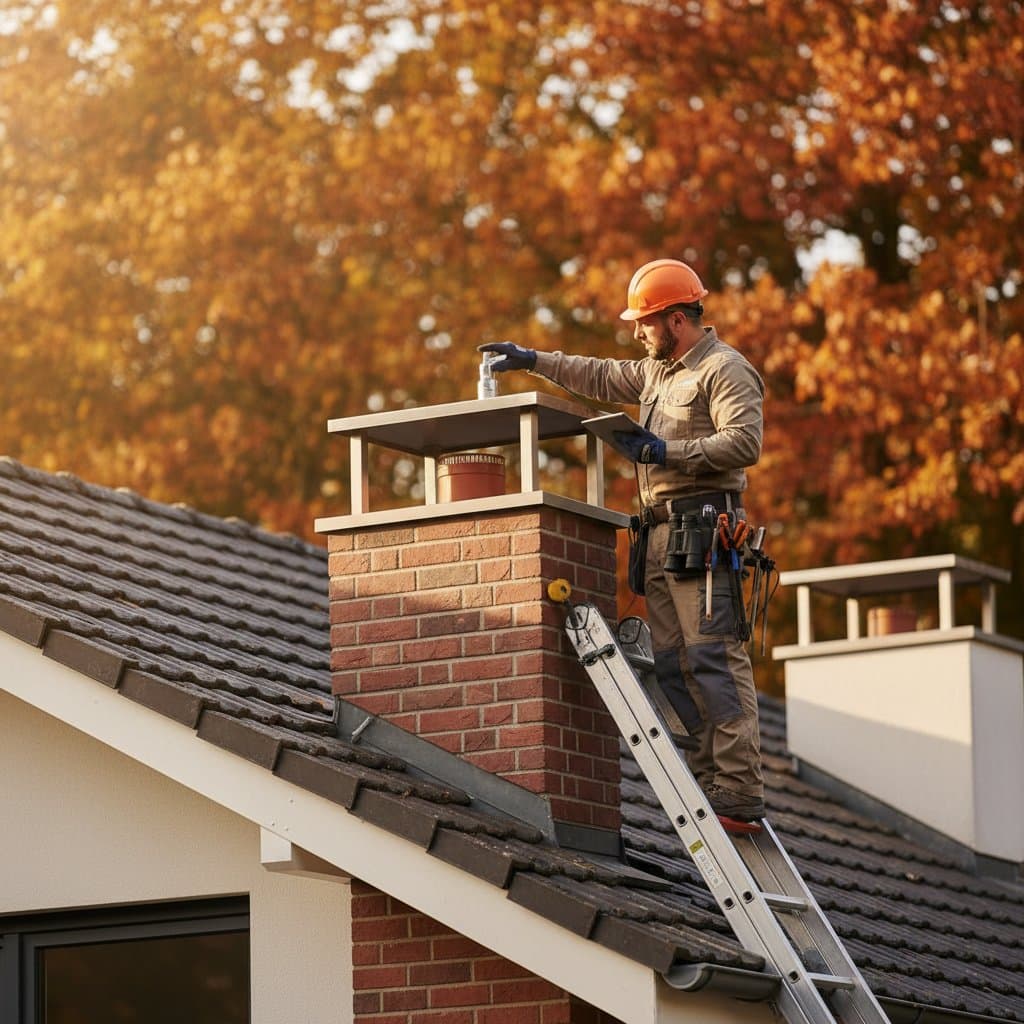
Begin your evaluation outdoors, progressing upward for a comprehensive view. Employ binoculars for safe assessment of elevated or sloped roofs to avoid unnecessary risks.
What to Look For
- Cracked or missing mortar joints: These openings permit water infiltration, which expands upon freezing and exacerbates damage. Verify that joints appear uniform and intact without separations.
- Loose or spalling bricks: Flaking or absent sections indicate prolonged moisture exposure. Prompt replacement prevents further structural compromise.
- Leaning or uneven stack: Any deviation from vertical alignment suggests shifting foundations or erosion. Consult a structural expert immediately for diagnosis.
- Crown condition: This sloped concrete seal directs water away from the flue. Repair pooling areas or fissures using specialized, heat-resistant sealants to maintain waterproofing.
Quick Tip
Probe mortar with a sturdy screwdriver; powdery disintegration signals the need for repointing to restore joint integrity and weather resistance.
Step 2: Inspect the Chimney Cap and Spark Arrestor
The cap serves as a barrier against precipitation, falling leaves, and wildlife intrusion. Its absence invites internal corrosion and airflow restrictions that compromise safety.
- Cap mesh: Openings must measure no more than one-half inch to contain sparks without impeding ventilation.
- Secure fit: Ensure the assembly withstands gusts; tighten or replace loose hardware to prevent dislodgement.
- Rust or corrosion: Opt for stainless steel models over galvanized alternatives for extended durability against elemental wear.
Install a replacement cap prior to initial seasonal firing if current protection proves inadequate. Budget approximately 150 to 400 dollars for parts and installation, factoring in chimney dimensions and access challenges.
Step 3: Examine the Flue Interior
The flue channels combustion byproducts upward and away from living spaces. Obstructions or wear here account for the majority of residential chimney incidents.
How to Check
- Direct a powerful flashlight into the flue from the firebox opening to illuminate the interior.
- Identify glossy, resinous coatings; these signify creosote deposits requiring expert removal.
- Detect powdery white efflorescence, which indicates chronic dampness and potential liner degradation.
- Confirm the integrity of the flue liner, typically clay or metal, free from fractures or separations that could leak gases.
Schedule a certified sweep for accumulations exceeding one-eighth inch in depth. Standard cleaning services run between 150 and 300 dollars, depending on flue configuration and accessibility.
Step 4: Test the Damper and Smoke Chamber
The damper controls air circulation and conserves energy by sealing the system when idle. Effective operation demands precise alignment and sealing.
- Open and close the damper: Operation must proceed fluidly, free from binding or resistance.
- Check for gaps: In the closed position, no illumination should penetrate from the flue above.
- Inspect the smoke chamber: This transitional zone directs gases efficiently; surfaces require smoothness, absent of heavy soot or structural flaws.
Apply high-temperature lubricant to metal components for smoother action. For top-mounted dampers, verify cable tension and ensure the sealing plate aligns perfectly upon closure.
Step 5: Clear the Surrounding Area
Vegetation and debris near the chimney top disrupt ventilation or fuel unintended ignitions. Prune branches extending within 10 feet of the stack to maintain clearance. Sweep leaves and accumulations from the roof base to prevent nesting or blockages. For prefabricated metal chimneys, inspect brackets for secure attachment and absence of oxidation.
Common Mistakes to Avoid
- Skipping professional cleaning: Visual cleanliness overlooks microscopic creosote that sustains slow-burning fires.
- Using household cleaners: Abrasive or acidic agents erode masonry; select products formulated for chimney restoration.
- Ignoring small cracks: Freezing cycles amplify imperfections, leading to extensive repairs.
- Burning softwood exclusively: Resins in pine or fir accelerate creosote formation; incorporate dry hardwoods such as oak or maple for reduced residue.
Accessibility and Safety Considerations
In homes with multiple stories or pitched roofs, engage professionals certified by the Chimney Safety Institute of America. These experts utilize safety gear, specialized brushes, and inspection cameras for complete analysis. Individuals with limited mobility should avoid ladder work; always enlist assistance for elevated tasks.
Tools You Will Need for a DIY Check
- Flashlight or headlamp for internal visibility
- Binoculars for distant observations
- Screwdriver or small hammer for testing surfaces
- Sturdy outdoor-rated ladder for access
- Dust mask and gloves for protection
- Wire brush or chemical cleaning log for minor upkeep
Making It Happen
After confirming your chimney's readiness, schedule a follow-up inspection midway through winter. This interim review catches emerging concerns like fresh debris or condensation buildup. Document all evaluations, interventions, and services to track maintenance history and inform future care.
A meticulously maintained chimney extends beyond mere heating; it safeguards your household, enhances architectural appeal, and delivers consistent comfort. Dedicate time this fall to these essential verifications for peace of mind through the coldest months.