
The Pre-Season AC Tune-Up That Prevents Summer Breakdowns
Summer heat brings discomfort when an air conditioner fails at the worst moment. A pre-season AC tune-up stands as the most effective strategy to maintain reliability and efficiency in your cooling system. Homeowners who adopt this annual practice sidestep expensive emergency repairs and benefit from reduced energy costs throughout the season.
This service extends beyond a simple check. Technicians execute a comprehensive procedure that readies the unit for intense operation. Familiarity with the process reveals the substantial advantages of booking this maintenance before temperatures rise.
What Happens During a Professional AC Tune-Up
Professionals conduct a detailed tune-up through testing, cleaning, and calibration. This methodical approach guarantees safe and optimal performance from the system.
1. System Inspection and Safety Checks
The process starts with a full examination of the cooling setup. Technicians review the outdoor condenser, indoor air handler, thermostat, and electrical links. They identify issues such as frayed wiring, unsecured connections, or corrosion. Safety mechanisms receive tests to verify automatic shutdown in cases of overheating or electrical problems.
2. Cleaning the Condenser and Evaporator Coils
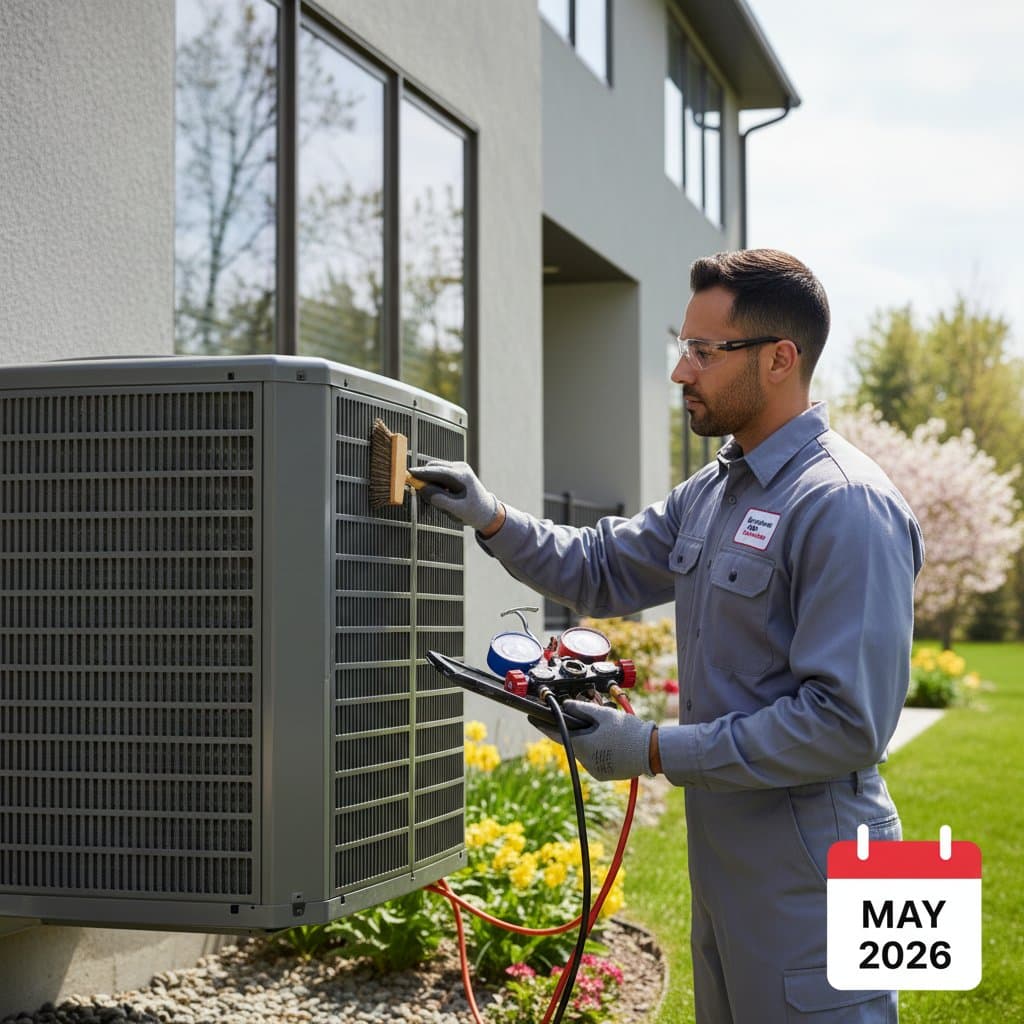
Coils facilitate heat transfer in the air conditioner. Dirt accumulation hinders this process, forcing the unit to operate longer for equivalent cooling. Cleaning addresses both the indoor evaporator coil and outdoor condenser coil thoroughly. This action alone recovers efficiency and lowers immediate energy consumption.
3. Checking Refrigerant Charge
Refrigerant requires exact levels for proper function. Insufficient amounts limit heat absorption, while excess generates pressure that burdens the compressor. Technicians employ gauges to assess and adjust the charge according to manufacturer guidelines. Detection of leaks prompts source identification and repair recommendations prior to replenishment.
4. Testing Electrical Components
Components like capacitors, contactors, and relays manage motor and compressor operations. Repeated cycles degrade these parts over time. Professionals evaluate voltage and functionality in each. Replacement occurs for any defective elements to avert seasonal disruptions.
5. Measuring Airflow and Checking Duct Integrity
Restricted airflow undermines even superior air conditioners. Technicians gauge pressure and volume across ducts to detect obstructions, leaks, or deterioration. Sealing identified leaks enhances overall performance and ensures even comfort distribution.
6. Lubricating Moving Parts and Tightening Connections
Motors, fans, and belts demand regular lubrication to minimize friction and sound. Vibrations arise from loose fasteners, accelerating wear. The tune-up incorporates lubrication and securing of all dynamic elements for seamless function.
7. Calibrating the Thermostat
Thermostats may deviate from accurate readings with age. Technicians cross-check the display against actual room conditions and adjust for precision. For outdated units, recommendations include programmable or smart models to improve regulation and conserve energy.
Timing Your Tune-Up for Maximum Benefit
Optimal scheduling occurs ahead of initial warm weather. Early appointments secure availability and allow resolution of repairs without system strain. HVAC providers frequently present pre-season incentives, yielding savings in time and expense.
Delaying until peak heat leads to overwhelmed service schedules and elevated fees. Implement annual spring reminders to align maintenance with cooling demands.
Professional vs. DIY Maintenance
DIY efforts suit basic upkeep, yet comprehensive tune-ups necessitate expert tools and expertise. Individuals handle filter replacements, surface cleaning, and preliminary reviews. Professionals utilize advanced diagnostics for precise measurements of voltage, pressure, and flow.
Their training uncovers subtle indicators overlooked by novices. Combine personal efforts with yearly professional service to maximize longevity and control repair expenses.
Cost Considerations and Long-Term Savings
Tune-up fees remain far below those of urgent fixes. Preventive care cuts energy expenses and adds years to equipment durability. Industry statistics indicate regular maintenance reduces lifetime cooling costs by up to 30 percent.
Service agreements often cover biannual visits for heating and cooling, with perks like expedited service and repair reductions. These options provide economical, continuous protection.
Safeguard Your Comfort with Ongoing Care
A pre-season AC tune-up serves as essential protection for a vital home system. Consistent attention sustains efficiency, prolongs service life, and eliminates summer crisis risks.
Act promptly each spring by booking service, changing filters routinely, and clearing debris from the outdoor unit. These measures, paired with expert intervention, deliver unwavering comfort during intense heat.




