Basement Dehumidifier Systems: A Cost Comparison
Moisture accumulation in basements often results in mold growth, structural deterioration, and persistent odors that compromise livability. Dehumidifiers offer an effective method to regulate humidity levels, safeguarding the home's foundation, improving air quality, and preserving stored items. Homeowners must evaluate available system types, performance capabilities, and associated expenses to make an informed selection. This analysis compares key basement dehumidifier options, highlighting pricing structures, essential features, and enduring value.
Primary Types of Basement Dehumidifier Systems
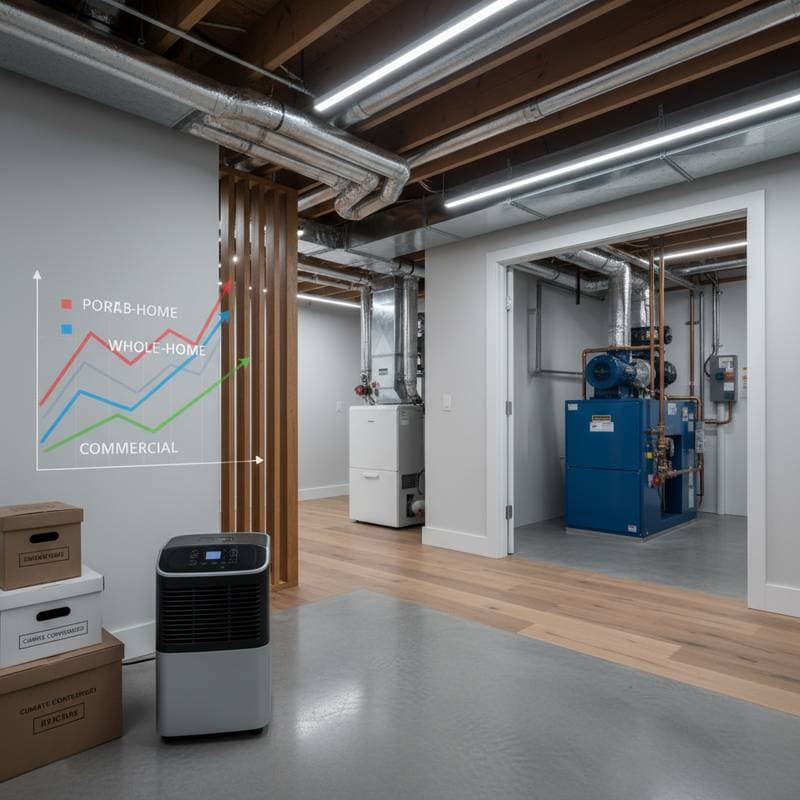
1. Portable Basement Dehumidifiers
Portable dehumidifiers represent the most straightforward option for targeted moisture reduction. These units demand no fixed installation and can be repositioned as needed to address specific areas of dampness. They typically include an internal reservoir for water collection, which requires periodic emptying, or provisions for a continuous drain hose.
Typical Price Ranges:
- Unit acquisition: $200 to $600
- Monthly energy consumption: $15 to $30, influenced by ambient humidity and local electricity rates
- Upkeep: Filter replacement or cleaning and reservoir disinfection every two to four weeks
Benefits:
- Modest initial investment
- Flexibility in placement and straightforward replacement
- Ideal for minor or intermittent moisture concerns
Limitations:
- Restricted capacity for expansive areas
- Necessitates regular oversight
- Produces audible operational noise
Portable models prove suitable for homeowners addressing light dampness or assessing humidity control needs prior to investing in more comprehensive solutions.
2. Whole-Home Basement Dehumidifiers
Whole-home systems integrate seamlessly with central HVAC setups, providing uniform humidity control throughout the residence while prioritizing basement conditions. These units draw in moist air via existing ductwork, process it for moisture removal, and recirculate drier air to maintain balanced indoor environments.
Typical Price Ranges:
- Unit acquisition: $1,000 to $3,000
- Installation expenses: $500 to $1,500, depending on duct modifications
- Monthly energy consumption: $20 to $50, with efficiencies that offset higher capacities
- Upkeep: Annual filter changes and professional inspections
Benefits:
- Comprehensive coverage for the entire home
- Enhanced energy efficiency through HVAC synergy
- Quiet operation with minimal visual impact
Limitations:
- Elevated upfront costs
- Requires compatible HVAC infrastructure
- Professional installation is essential
Whole-home dehumidifiers benefit households in moderately humid climates or those seeking integrated climate control without dedicated basement equipment.
3. Commercial-Grade Basement Dehumidifiers
Basements repurposed for storage, workshops, or recreational spaces often require robust moisture management. Commercial-grade units are engineered for prolonged use and substantial coverage, featuring reinforced components to withstand demanding conditions.
Typical Price Ranges:
- Unit acquisition: $2,000 to $5,000
- Installation expenses: $500 to $1,000 for ducted configurations
- Energy consumption: Elevated compared to residential units, yet optimized for moisture extraction efficiency
- Upkeep: Biannual servicing and component checks
Benefits:
- Capable of managing expansive or intensely humid areas
- Extended durability for reliable performance
- Compatibility with HVAC systems or standalone operation
Limitations:
- Substantial initial expenditure
- Potential need for electrical system enhancements
- Increased noise levels during operation
These systems excel in larger residences, multi-level basements, or environments with persistent high humidity where unwavering control is paramount.
Essential Installation Factors
Optimal Placement and Drainage Solutions
Effective placement enhances a dehumidifier's functionality. Position portable units in the dampest basement zones, ensuring at least six inches of clearance from walls for unrestricted airflow. Whole-home installations connect to return air ducts, paired with dedicated drainage lines or pumps to manage condensate. Proper drainage prevents water stagnation, which could otherwise elevate humidity levels.
Electrical Specifications
Portable dehumidifiers operate on standard 120-volt outlets. Larger whole-home or commercial models may necessitate a dedicated 240-volt circuit to support sustained power demands. Professional electricians ensure compliance with safety codes during wiring for high-capacity systems.
HVAC System Integration
Homes equipped with central air conditioning benefit from dehumidifier integration into ductwork, which optimizes moisture removal and air distribution. Installers configure dampers and airflow patterns to achieve consistent humidity reduction across floors. This approach minimizes energy waste and promotes even indoor comfort.
Influences on Overall Costs
Multiple elements determine the total investment in a basement dehumidifier:
-
Basement Dimensions and Configuration
Expansive layouts or divided spaces demand units with greater capacity and sophisticated airflow distribution. -
Severity of Moisture and Underlying Causes
Persistent flooding or seepage requires preliminary waterproofing measures, which supplement dehumidifier expenses. -
Regional Climate and Usage Patterns
In perpetually humid areas, systems operate year-round, elevating energy bills. -
Installation Intricacies
Custom ductwork or structural adaptations incur additional labor charges, often ranging from $300 to $800. -
Advanced Features
Options such as Wi-Fi controls, automated sensors, and energy-tracking apps increase costs by 10 to 20 percent while enhancing usability.
Selecting the Appropriate System
Begin the selection process by pinpointing moisture origins and assessing basement utilization frequency.
- Infrequent Access or Storage Zones: Opt for a medium-capacity portable unit equipped with drainage capabilities.
- Developed Living Spaces: Choose whole-home or high-output ducted systems for consistent air quality and comfort.
- Extensive Properties or Chronic Issues: Employ commercial-grade models for robust, uninterrupted performance.
Evaluate specifications including daily pint removal capacity, decibel ratings for noise, and energy factor for efficiency. For basements slated for renovation into habitable areas, prioritize scalable solutions that accommodate evolving needs.
Expert Recommendations and User Perspectives
HVAC professionals advise calculating dehumidifier size based on cubic footage to account for ceiling heights and air volume. Technicians measure baseline humidity and suggest capacities from 50 to 100 pints daily for standard basements. This precise approach avoids under- or over-sizing, which impacts both efficacy and costs.
Homeowners frequently report that transitioning to whole-home systems alleviates upstairs discomfort caused by rising basement vapors. Independent assessments illustrate how HVAC-linked dehumidifiers enhance circulation, cutting odor issues by over 50 percent in affected homes. Such experiences underscore the system's role in holistic home wellness.
Sustaining System Performance
Incorporate dehumidifier care into seasonal maintenance routines. Regularly examine and clean filters, verify drainage functionality, and calibrate humidity settings to sustain optimal operation. Affordable hygrometers or integrated monitors provide data on performance trends and energy patterns, enabling proactive adjustments.
Steps to Implement Effective Moisture Control
Assess your basement's current humidity with a simple gauge to establish baseline needs. Consult a local HVAC specialist for a customized evaluation, including capacity recommendations and cost estimates. Proceed with installation from a reputable provider, then monitor results over the first month to confirm desired outcomes. This methodical approach secures long-term protection and efficiency for your home.