What to Expect and When for Fall Chimney Inspections
As cooler weather approaches, homeowners begin to anticipate cozy fires and warm evenings by the hearth. Before lighting that first fire, place a chimney inspection at the top of the fall maintenance list. A clean, structurally sound chimney protects the home from smoke damage, carbon monoxide, and potential fires. Understanding what to expect from a professional inspection, when to schedule it, and how to prepare ensures a safe season without unexpected emergencies.
Why Fall Is the Right Time for Chimney Inspections
Chimneys endure significant wear from rain, wind, and temperature fluctuations throughout the year. These elements cause damage that often remains hidden from ground level. Schedule an inspection in the fall to allow time for necessary repairs before the fireplace season starts. Professional chimney sweeps note that many homeowners delay until the first cold snap, resulting in extended wait times and hurried service. Early booking provides a thorough evaluation and ample opportunity for fixes prior to the initial fire.
Common discoveries include soot accumulation, animal nests, and deteriorating mortar. The Chimney Safety Institute of America indicates that even minimal creosote buildup poses an ignition risk under intense heat. Fall inspections identify these concerns before they escalate into serious hazards.
Understanding the Three Levels of Chimney Inspection
Professional chimney inspections adhere to three standardized levels. Knowledge of these levels assists in budgeting and planning maintenance effectively.
Level 1: Routine Maintenance Check
A Level 1 inspection suits chimneys used regularly without apparent problems. The technician inspects accessible areas of the chimney, flue, and fireplace for blockages, buildup, and visible damage. This process typically lasts one hour and ranges from 100 to 250 dollars, varying by location and chimney height.
Level 2: Real Estate or Post-Damage Assessment
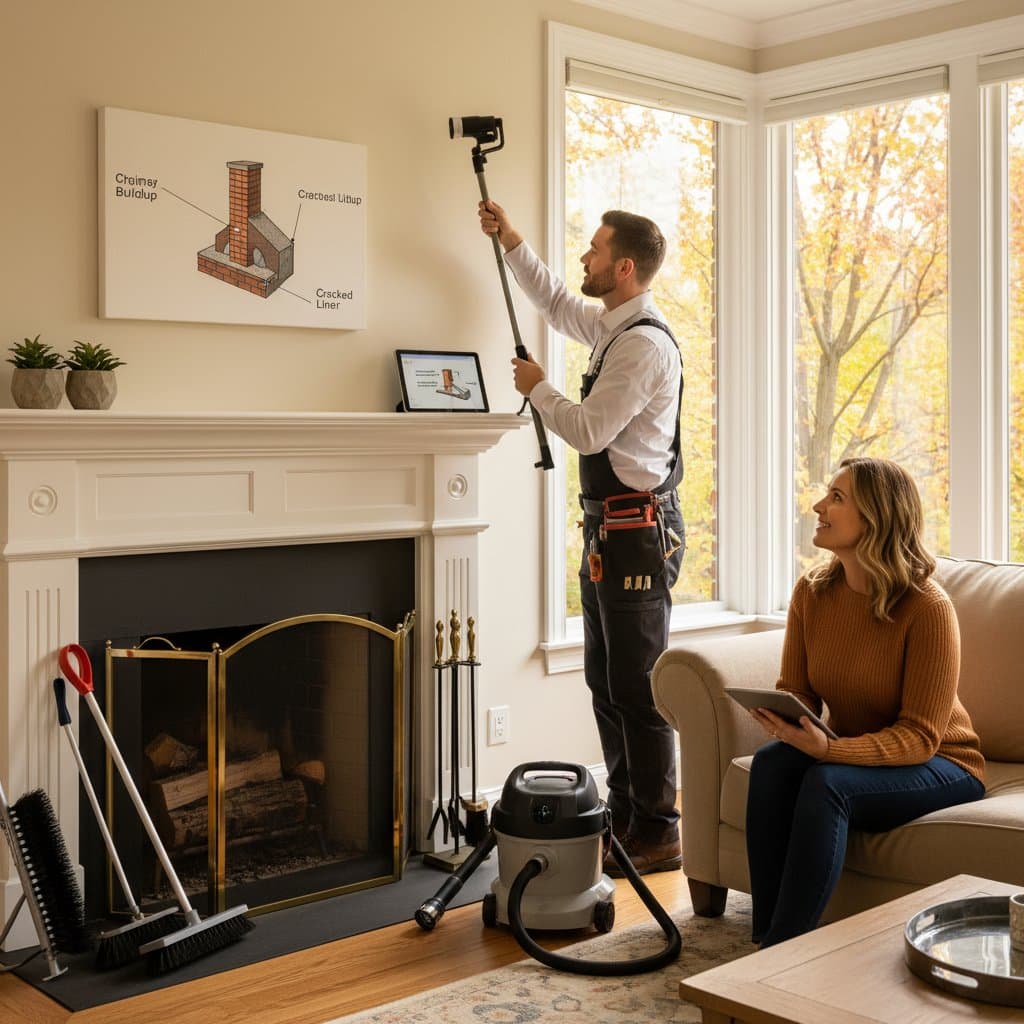
A Level 2 inspection offers greater detail, often required for home sales, transfers, or after severe weather. It encompasses all Level 1 elements, plus video scanning of the flue and examination of interior surfaces. Costs fall between 200 and 500 dollars, with the inspection taking two to three hours.
Level 3: Structural Investigation
Severe deterioration may necessitate a Level 3 inspection. This involves dismantling portions of the chimney or adjacent walls to evaluate structural integrity. The labor-intensive nature leads to costs of 1000 dollars or higher. Homeowners encounter this level only in cases of significant safety risks.
Signs That You Need a Chimney Inspection
Certain indicators signal the need for professional attention, even absent obvious damage:
- Smoke enters the room during fire ignition
- Strong smells emanate from the fireplace following rain
- Fragments of broken tile or brick collect in the firebox
- Birds or small animals appear to nest near the chimney cap
- Soot marks stain the ceiling or walls adjacent to the fireplace
Address any of these signs by scheduling an inspection without delay. Neglect may result in expensive repairs down the line.
Preparing Your Home for the Inspection
Simple preparations streamline the inspection and enhance efficiency:
- Clear the space around the fireplace by relocating furniture, rugs, and decorations at least six feet away.
- Refrain from using the fireplace for twenty-four hours prior to the appointment to allow complete cooling.
- Ensure straightforward access to the roof or attic, as technicians frequently examine exterior masonry and the chimney crown.
- Pose questions during the visit regarding maintenance advice, repair choices, and cleaning timelines.
These steps enable the technician to work promptly and minimize dust or debris distribution throughout the home.
Common Issues Found During Fall Inspections
Fall inspections frequently uncover weather-related or maintenance-neglected problems. Key concerns include:
- Creosote buildup: A sticky, flammable deposit from wood smoke that ignites easily, even in thin layers.
- Cracked flue liners: These permit heat and gases to penetrate walls, heightening fire danger.
- Missing or damaged chimney caps: Absence of a cap allows rainwater and debris to infiltrate the flue, leading to internal harm.
- Spalling bricks or mortar: Water enters fissures, freezes, and causes surface crumbling.
- Obstructions: Leaves, twigs, or animal nests impede airflow and confine carbon monoxide.
Early detection of these issues controls repair expenses. A straightforward fix now averts the need for extensive reconstruction later.
Cost Factors and Budget Planning
Inspection expenses vary based on level, chimney height, flue count, and local labor rates. Taller or older chimneys incur higher fees due to access difficulties. Bundled inspection and cleaning services from most providers offer savings of 10 to 20 percent over individual bookings.
Allocate funds for an annual professional inspection and cleaning, along with potential minor repairs. Chimney liner replacement ranges from 1000 to 4000 dollars, while mortar joint repointing costs 300 to 800 dollars. Proactive spending safeguards the investment and prolongs chimney longevity.
When DIY Is Enough and When to Hire a Professional
Homeowners manage basic tasks like ash removal and glass door cleaning. For soot clearance, flue checks, or elevated work, engage a certified sweep for safety. Professionals employ specialized cameras, brushes, and vacuums, backed by insurance and adherence to National Fireplace Institute standards.
Online DIY kits support interim maintenance but cannot substitute yearly inspections. No homeowner, regardless of experience, views the entire flue interior without proper equipment.
Troubleshooting Common Issues
Post-inspection problems like weak draft or smoke spillover warrant these initial verifications:
- Confirm the damper opens fully.
- Preheat the flue by igniting a rolled newspaper before the main fire.
- Ensure nearby exhaust fans or HVAC units do not draw air from the room.
- Inspect exterior vents for leaf or snow blockages.
Contact the chimney professional if issues continue. Ongoing backdrafting often indicates a clogged flue or compromised liner.
Extending Chimney Longevity Through Regular Care
A properly maintained chimney endures for decades. Maintain records of inspections, cleanings, and repairs to track wear patterns and facilitate insurance claims. Apply waterproof sealant to exterior masonry to block moisture ingress. Renew chimney caps periodically to exclude wildlife and debris.
Annual inspections reduce long-term repair costs for diligent homeowners. The assurance of a secure, effective fireplace justifies the commitment.