Key Checks for Your Fall Chimney Inspection
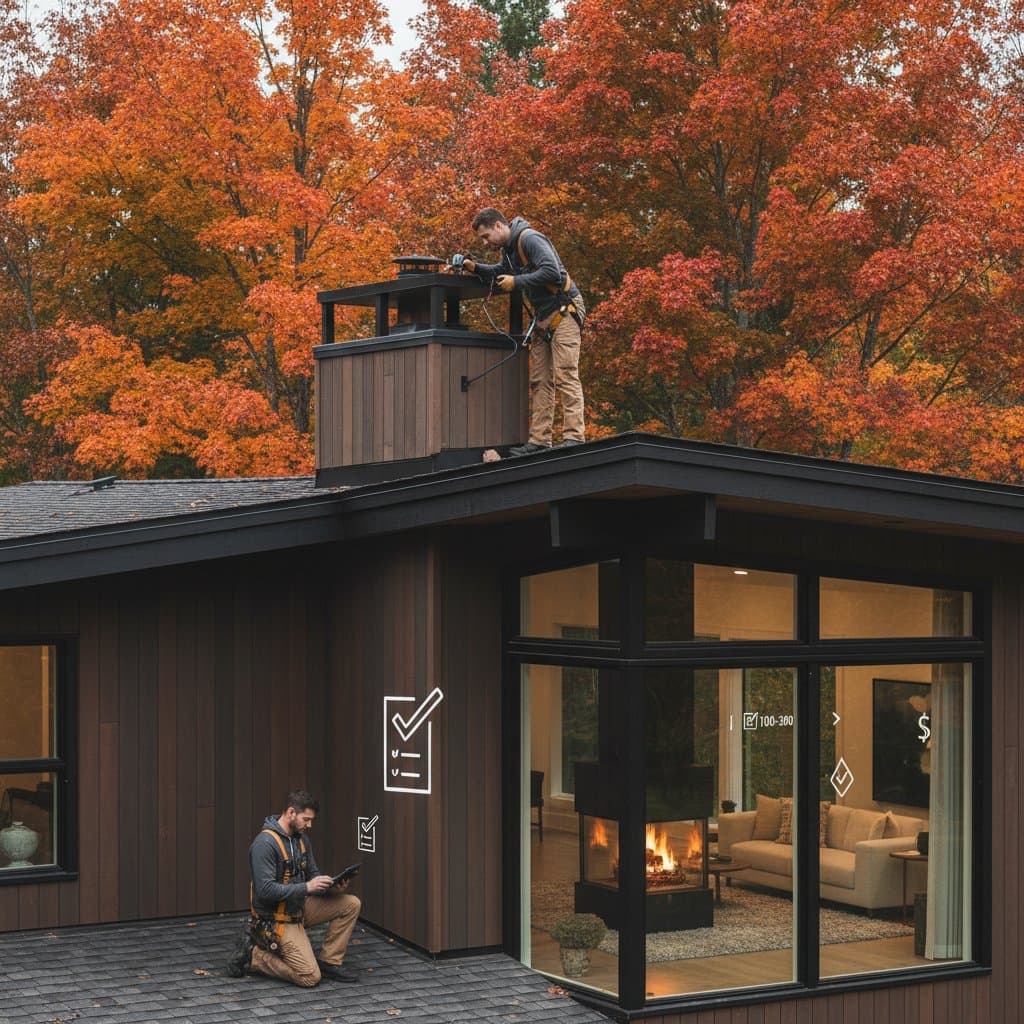
A fall chimney inspection stands as a critical preparation step for colder weather. This process confirms that your fireplace functions safely and efficiently, while safeguarding your home against concealed damage. Applicable to wood-burning, gas, or pellet systems, a thorough examination averts expensive repairs and minimizes fire risks. Homeowners often arrange this service prior to initial seasonal use, verifying that all components remain clear, sealed, and equipped for regular operation.
Understanding Chimney Inspection Costs
Professional chimney inspection expenses fluctuate based on geographic location, chimney type, and service depth. In most areas, a basic inspection falls between $100 and $300. Urban settings command higher fees owing to elevated labor costs and operational overhead, whereas rural locations generally provide more modest rates.
Demand peaks during fall, prompting professionals to book appointments quickly. Early scheduling secures optimal timing and potentially lower costs. Providers may adjust rates in response to fluctuating fuel prices, insurance premiums, and regional economic shifts.
Common Pricing Models
Chimney experts adhere to three inspection levels established by national safety guidelines. Level one involves a visual examination of readily accessible chimney and flue areas, ideal for well-maintained systems without recent modifications. Level two employs camera technology and access to attics or crawl spaces to detect concealed cracks or weaknesses. Level three requires dismantling portions of walls or masonry to address severe structural issues.
Level one services command a straightforward flat rate. Levels two and three typically incur hourly or project-specific charges due to increased effort and specialized tools. Many firms propose package deals that integrate inspection with cleaning or basic repairs, delivering enhanced value for seasonal preparations.
Service Tiers and Cost Ranges
Basic inspections, centered on visual assessments for soot accumulation, creosote layers, and obstructions, average $100. Standard inspections, which incorporate camera evaluations and external reviews, span $150 to $250. Comprehensive inspections for aged or intensively used chimneys surpass $300 when advanced testing or internal access proves necessary.
Inspections for historic properties or intricate venting configurations demand premium pricing because of specialized knowledge. Certified technicians justify elevated fees through dependable reports that meet insurance and regulatory standards.
Factors That Influence Chimney Inspection Pricing
Multiple elements determine inspection expenses. Chimney height and construction material dictate labor demands; taller edifices or stone builds extend evaluation time. Accessibility plays a pivotal role; steep roofs or remote positions necessitate safety gear, thereby increasing duration and fees.
Chimney condition further impacts costs. Substantial creosote deposits, wildlife intrusions, or water-related deterioration prolong assessments and might necessitate subsequent visits. Regular maintenance routines enable early issue detection, resulting in reduced overall expenditures.
Add-on Services and Supplemental Fees
Inspections often reveal opportunities for supplementary services that enhance safety and longevity. These include:
- Chimney sweeping to eliminate soot and creosote, priced at $100 to $200.
- Cap or crown repairs, ranging from $150 to $400 based on material choices.
- Waterproofing applications for masonry surfaces, averaging $200.
- Priority scheduling during high-demand periods, adding $50 to $100.
Such enhancements mitigate moisture intrusion and corrosion, preserving structural integrity over time.
Key Inspection Points to Verify
Professionals conduct essential evaluations to uphold safety and functionality:
- Flue liner condition, ensuring no fractures permit gas leakage into habitable areas.
- Creosote accumulation levels, as excess material poses ignition risks.
- Chimney cap integrity, preventing entry by pests or precipitation.
- Masonry joint stability, where deteriorated mortar invites water penetration.
- Damper functionality, requiring seamless movement for effective airflow control.
- Smoke chamber and shelf clearance from debris or residue.
- External framework for signs of tilt, brick spalling, or flashing wear.
Detailed records from each inspection facilitate ongoing monitoring and streamlined upkeep schedules.
Choosing a Qualified Professional
Select inspectors accredited by bodies like the Chimney Safety Institute of America or the National Fireplace Institute. These credentials confirm expertise in prevailing safety protocols and evaluation techniques. Established providers maintain liability coverage and furnish comprehensive written summaries of observations.
Advanced options, such as video recordings or thermal scans, provide visual proof of chimney status. This level of detail fosters confidence and aids in deciding on essential interventions.
Steps to Maintain Chimney Performance Year-Round
Regular inspections form the foundation of a reliable heating system. By addressing issues promptly, homeowners avoid emergencies and optimize energy use. Invest in professional care to enjoy safe, warm fires throughout the season without unexpected disruptions.