Factors Influencing Installation Costs
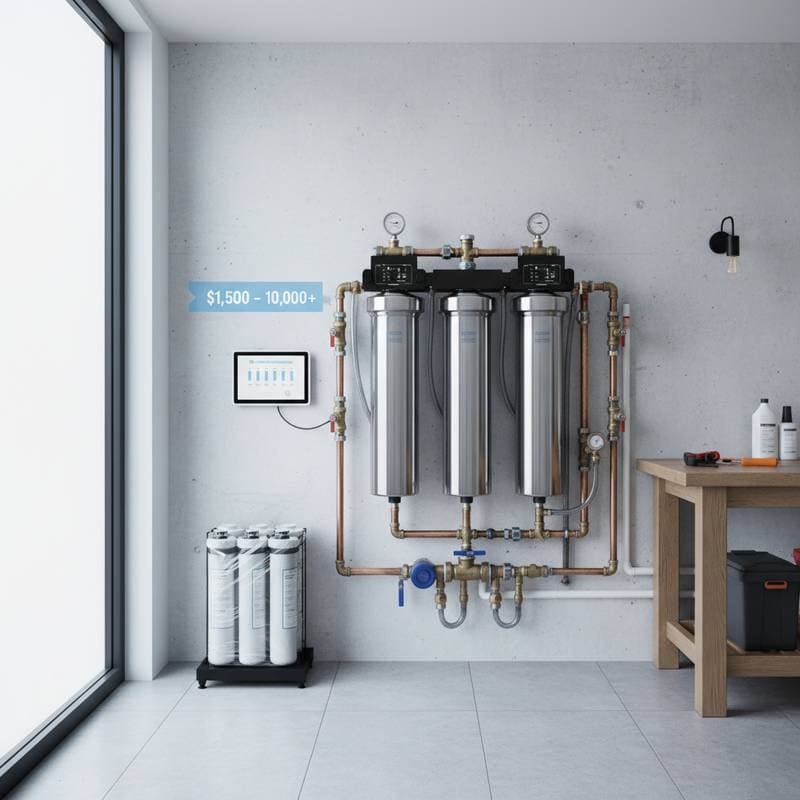
Whole-home water filtration installation costs depend on several key elements. Basic systems start at $1,500, while comprehensive units with multiple stages can exceed $5,000. Local conditions and home specifics play a major role in final pricing.
1. System Type and Capacity
The core filtration method determines the base price. Carbon block systems, effective for removing chlorine and sediments, cost $800 to $1,500. Reverse osmosis or multi-stage units, which target heavy metals and microbes, range from $2,000 to $4,000. Larger homes require higher-capacity models to maintain water pressure across multiple fixtures.
2. Complexity and Required Skill Level
Systems integrated with multi-zone plumbing or those needing electrical connections for UV purification require specialized technicians. Standard setups suit licensed plumbers, but advanced configurations demand certified water treatment experts. This expertise ensures proper integration without compromising existing pipes or electrical systems.
3. Time Required for Completion
A straightforward installation takes about three hours for a single-point entry. Complex retrofits, involving pipe rerouting or wall modifications, may span two full days. Technicians assess site conditions beforehand to provide accurate timelines and avoid unexpected delays.
4. Materials or Equipment Needed
Durable components like stainless steel fittings and reinforced piping add to expenses but enhance longevity. High-capacity resins for ion exchange systems improve performance in hard water areas. Homeowners should discuss material options during consultations to balance cost and reliability.
5. Local Water Testing and Certification
Pre-installation testing identifies contaminants and hardness levels, costing $100 to $250. Post-installation verification confirms system efficiency and qualifies for warranties. These steps prevent under- or over-speccing the equipment, saving money in the long term.
Add-On Services and Supplemental Charges
Many homeowners customize their systems with extras for targeted protection. These options address specific water issues but increase upfront and ongoing expenses.
Filter Replacement Fees
Filters require replacement every six to twelve months to sustain water quality. Costs vary from $30 for basic cartridges to $200 for multi-stage sets. Proprietary designs from certain manufacturers can elevate prices, so review long-term expenses during selection.
Water Softener Integration Costs
Integrating a water softener addresses mineral buildup in regions with elevated calcium or magnesium. This addition runs $1,000 to $2,500, depending on capacity. It protects appliances from scale and extends their lifespan, though it demands salt refills and periodic regeneration.
UV Purification Add-On Prices
UV units eliminate bacteria and viruses through ultraviolet exposure. Retrofitting one costs $500 to $1,200, with low energy use. Bulb replacements occur yearly at under $100, making this a cost-effective safeguard against pathogens.
Expedited or Priority Service Rates
Urgent services, such as same-day or weekend installs, incur 25 to 40 percent surcharges on labor. Planning ahead during standard business hours minimizes these fees. Early scheduling also secures preferred technician availability.
Choosing the Right Provider
A skilled provider ensures proper installation and ongoing support. Seek certifications from the Water Quality Association or state-recognized plumbing licenses. Request detailed estimates covering equipment, labor, and warranties from established brands like Pelican Water, SpringWell, and Aquasana.
Reviews highlight higher satisfaction with providers who conduct initial testing and outline maintenance routines. This approach clarifies filter lifespans, replacement schedules, and coverage terms, building trust from the start.
Realistic Maintenance Expectations
Consistent care keeps systems operating efficiently. Clogged filters reduce flow and effectiveness over time. Many units feature pressure gauges to signal service needs, with annual costs averaging $150 to $300 for parts and labor.
Digital monitoring in premium models notifies users of capacity limits via apps or displays. These features prevent contamination risks and justify the higher initial outlay through enhanced reliability.
Steps to Secure Clean Water for Your Home
Begin with a professional water test to pinpoint contaminants and hardness. Select a system matched to your needs, whether a simple carbon filter or advanced multi-stage setup.
This investment yields savings on bottled water, fewer repairs from scale damage, and healthier hydration. Enjoy the assurance of pure water from every tap, supporting family well-being and home efficiency.