Sewer Line Repair Costs in 2025: Identify Warning Signs to Prevent Disaster
A deteriorating sewer line can transform a minor drainage problem into a significant home crisis. Repair or replacement expenses may vary from several hundred dollars for basic fixes to tens of thousands for comprehensive overhauls. Homeowners benefit from recognizing early indicators, grasping typical 2025 cost projections, and exploring repair alternatives to intervene promptly and limit damage.
How Your Sewer Line System Functions
The primary sewer line links your home's plumbing fixtures to the municipal sewer network or a septic setup. This essential component manages wastewater from every sink, shower, and toilet without drawing attention. Residential lines typically measure four to six inches in diameter and consist of materials such as PVC, clay, cast iron, or ABS plastic. Properties with older construction may feature clay or cast iron pipes, which face higher risks of corrosion and root penetration.
The distance from the house foundation to the street connection usually spans 40 to 100 feet. Repair or replacement pricing hinges on this length, the chosen pipe material, and the ease of access to the line. Understanding these elements allows for more accurate budgeting during planning.
Primary Causes of Sewer Line Deterioration
Multiple elements contribute to the degradation or obstruction of sewer lines over time. Key culprits include the following:
- Tree root intrusion: Seeking water and nutrients, roots penetrate pipe joints or exploit minor fissures.
- Material aging: Cast iron or clay pipes in established homes often corrode or fragment with age.
- Soil shifts: Settling ground or seismic activity can fracture or displace pipe segments.
- Accumulated grease: Fats, soaps, and particulates build up, impeding wastewater flow and causing overflows.
- Flawed initial setup: Inadequate pitch or sealing during installation diminishes performance and invites leaks.
These problems often begin subtly yet intensify rapidly without attention. Prompt identification through routine checks can avert extensive digging and subsequent property restoration.
Key Indicators of Emerging Sewer Line Issues
Detecting problems at their onset proves essential for minimizing financial impact. Remain vigilant for these common symptoms:
- Delayed drainage across multiple areas. When several fixtures, such as sinks, bathtubs, or toilets, exhibit sluggish draining simultaneously, a main line blockage may be present.
- Unusual sounds from drains. Bubbling or gurgling noises arise from air trapped by impeded water or gas flow.
- Persistent sewage smells. Foul odors inside the home or in the yard suggest leaks or ventilation failures.
- Unusually vibrant lawn areas. Patches of excessively green or soggy grass often reveal subsurface pipe seepage.
- Cracks in foundations or ground depressions. Leaking sewage erodes surrounding soil, leading to shifts in structural elements or sinkhole formation.
- Recurring clogs. Blockages that reappear shortly after clearing indicate underlying line obstructions.
Homeowners who ignore these cues frequently face escalated emergencies. Proactive monitoring empowers timely professional consultation.
Professional Inspection Techniques
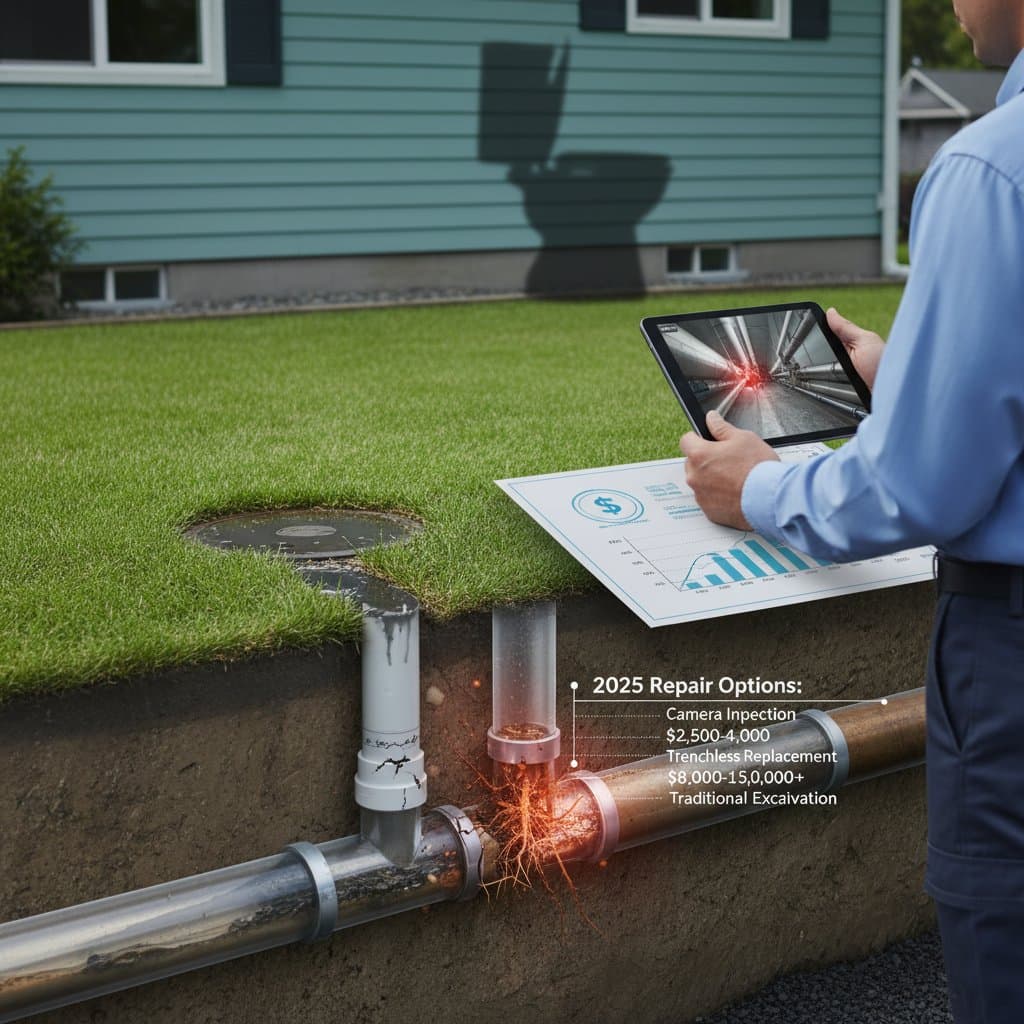
Engaging a qualified plumber for an evaluation offers the most reliable assessment of sewer line health. Technicians commonly employ video camera inspections, threading a durable camera via an access point to pinpoint fractures, root growth, or structural failures. This diagnostic tool incurs fees of $150 to $400 in 2025, influenced by line extent and site conditions.
For further analysis, experts might conduct a hydrostatic pressure test to detect leaks or apply smoke testing to identify gas escapes. These approaches deliver detailed insights that inform targeted repair strategies. Schedule inspections annually in high-risk properties to maintain system integrity.
Available Repair and Replacement Approaches
After pinpointing the issue, select from various techniques suited to the damage extent and financial constraints.
- Localized repairs: Suitable for isolated defects, these interventions cost $300 to $1,000 for affected segments in 2025.
- Cured-in-place pipe (CIPP) lining: Professionals insert a resin-impregnated liner into the existing pipe, forming a seamless interior barrier. Expect expenses of $80 to $250 per linear foot, varying by pipe size and burial depth.
- Pipe bursting: This method shatters the old pipe while installing a new one in its place, typically at $60 to $200 per foot.
- Complete line replacement: Severe deterioration necessitates trenching and new pipe installation, with totals reaching $4,000 to $15,000 based on length, material selection, and site restoration needs.
Trenchless options, including lining and bursting, reduce landscape disturbance and complete within one to two days. Conventional digging projects extend over multiple days and often involve extra charges for repairing surfaces like driveways or turf.
Elements Influencing 2025 Repair Expenses
Numerous factors determine the overall price tag for sewer work:
- Material selection: Replacing with PVC proves more affordable than upgrading to cast iron equivalents.
- Burial depth: Lines positioned deeper demand additional equipment and labor for safe access.
- Site challenges: Pipes beneath slabs or paved areas escalate costs due to demolition requirements.
- Regulatory fees: Permits and official reviews add $100 to $500 in most locales.
- Post-work restoration: Rehabilitating yards, patios, or plantings contributes another $500 to $2,000.
Many overlook the full scope of recovery efforts following disruption. Factor in soil leveling, grass replanting, or hardscape reconstruction to achieve a realistic project estimate.
Strategies for Ongoing Sewer Line Care
Consistent upkeep prolongs sewer line durability and thwarts abrupt breakdowns. Implement these measures:
- Refrain from disposing non-degradables. Steer clear of flushing wipes, oils, or bulky items, as they foster blockages despite marketing claims.
- Add backflow prevention devices. These installations block reverse sewage flow into living spaces.
- Arrange periodic professional cleanings. High-pressure water jetting every two to three years removes buildup effectively.
- Control vegetation proximity. Maintain a buffer of at least 10 feet between mature trees and known line routes.
- Track drainage trends. Investigate any emerging slowdowns immediately to halt progression.
For older residences, biennial professional reviews represent a worthwhile precaution. Maintenance packages from reliable providers often bundle inspections and cleanings at reduced rates.
Safeguarding Your Property Against Sewer Failures
Early detection of sewer line concerns routinely prevents exorbitant crisis responses. An initial camera scan uncovers threats prior to widespread harm. During repair planning, weigh excavation against innovative trenchless solutions to optimize expense and convenience.
Vigilance toward drainage lags, scents, or yard anomalies enables preemptive action. Committing to regular care, though it requires upfront effort, secures long-term home stability and tranquility.