Upcoming MERV Rating Changes: Safeguard Your HVAC System
The forthcoming updates to MERV ratings will influence HVAC filter performance and availability. Homeowners who prepare in advance can maintain optimal air quality and system efficiency. Review your current setup to align with these changes before they take effect in Fall 2026.
Understanding MERV Ratings
MERV represents Minimum Efficiency Reporting Value, a standard that evaluates a filter's ability to capture airborne particles. Ratings span from 1 to 20, with higher numbers indicating capture of smaller particles. Residential HVAC systems typically accommodate filters rated between MERV 8 and MERV 13.
A MERV 8 filter effectively removes larger contaminants such as pollen, dust mites, and lint. In contrast, a MERV 13 filter targets finer particles including smoke, bacteria, and certain viruses. While elevated ratings enhance indoor air quality, they increase airflow resistance, which demands careful selection to avoid system strain.
Homeowners frequently believe that the highest rating provides the greatest benefit, yet this assumption overlooks compatibility issues. A filter with an excessively high MERV rating may impede airflow, overwork the blower motor, and elevate energy consumption. The impending MERV standard revisions will refine testing protocols, ensuring filters align with both efficiency and safety for household use.
Implications of MERV Shifts for Homeowners
New standards prompt manufacturers to recalibrate testing and materials, potentially reclassifying existing filters. For instance, a product previously rated MERV 12 might register as MERV 11 under updated methods, reflecting greater precision rather than diminished performance. These adjustments ensure more accurate representations of filtration capabilities.
Homeowners must verify filter compatibility with their systems amid these changes. Legacy or generic replacements may fall short of emerging air quality benchmarks. Professional insights from online forums highlight widespread confusion during past transitions, where unfamiliar labels on trusted brands led to suboptimal purchases.
To navigate this, consult your HVAC manual or engage a technician prior to selecting new filters. This step confirms alignment with duct dimensions and filtration objectives, preventing mismatches that compromise system function.
Evaluating Your HVAC System for Upgrades
Successful filter upgrades require a prepared HVAC system. Begin by measuring the filter slot to match the dimensions indicated on the frame, as improper fits cause air leaks and reduce effectiveness.
Next, verify the airflow direction marked by an arrow on the filter; incorrect orientation diminishes filtration and burdens the fan motor. Inspect the blower motor and evaporator coils for dust accumulation, scheduling professional cleaning if necessary to support enhanced filtration.
Consider the system's age and configuration, as older models often require modifications to handle higher MERV ratings. Technicians recommend measuring static pressure to quantify airflow resistance. Elevated readings signal the need for duct modifications or a variable-speed blower to preserve performance.
Performing Filter Upgrades: DIY or Professional Assistance
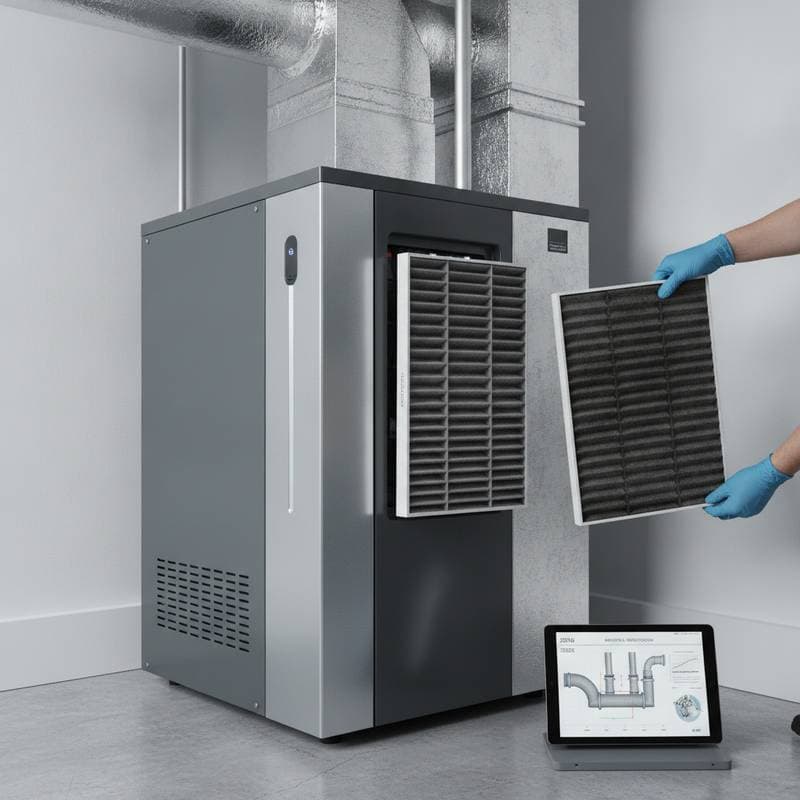
Routine filter replacement involves straightforward steps suitable for most homeowners. First, power down the HVAC system to safely extract the old filter, minimizing dust dispersal.
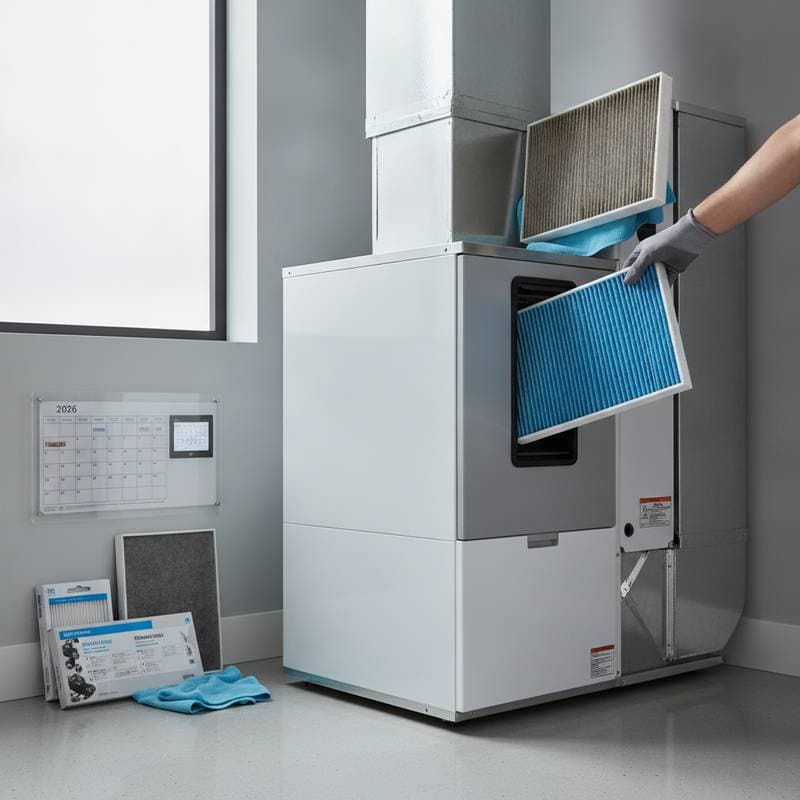
Vacuum the adjacent area to remove debris, then install the new filter ensuring the airflow arrow points toward the blower compartment. Document the installation date and establish reminders for future replacements every one to three months.
Transitioning to a significantly higher MERV rating, such as from 8 to 13, warrants professional evaluation. A licensed technician can determine if the blower withstands added resistance, potentially recommending fan upgrades or vent redesigns for sustained efficiency.
Balancing Costs and Energy Efficiency
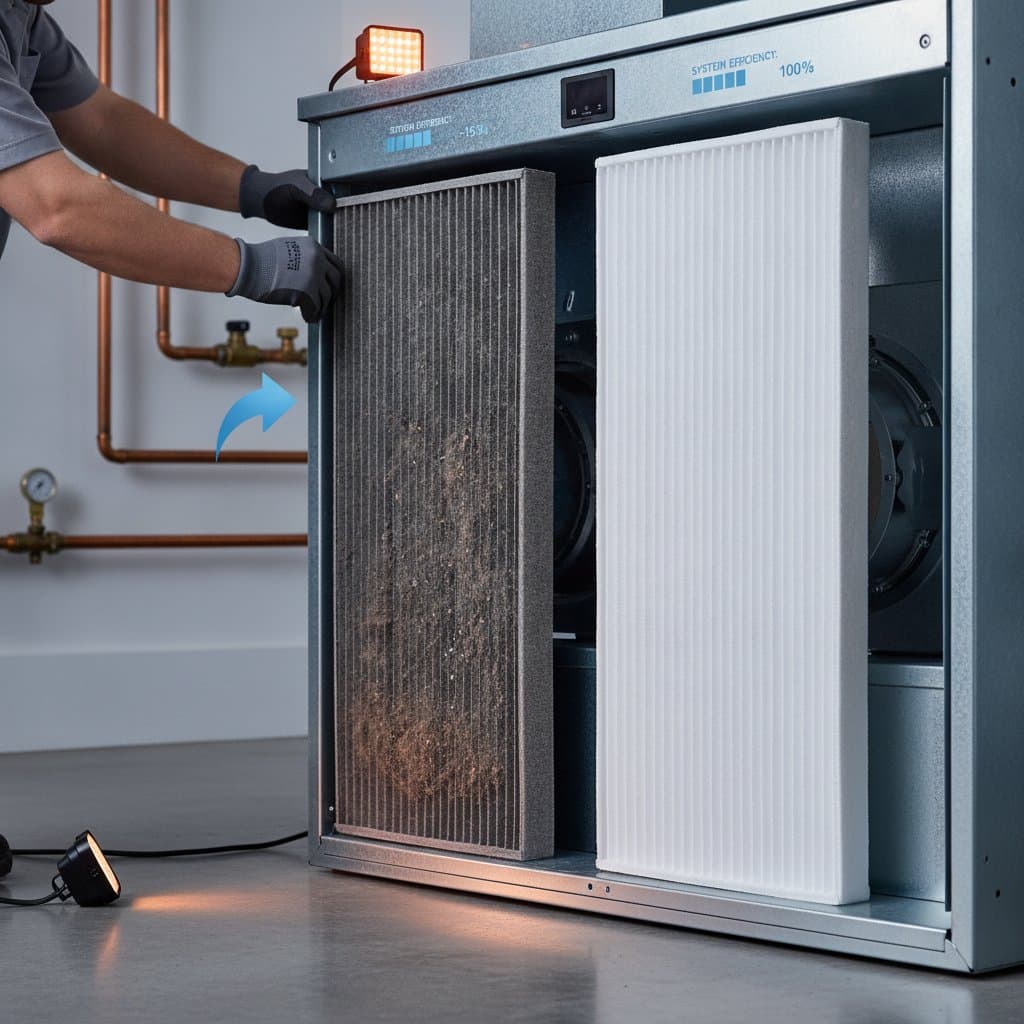
Filters with higher MERV ratings command premium prices, yet they yield long-term savings through reduced maintenance. Cleaner filtration minimizes dust on internal components, allowing the system to operate with less effort and lower energy demands.
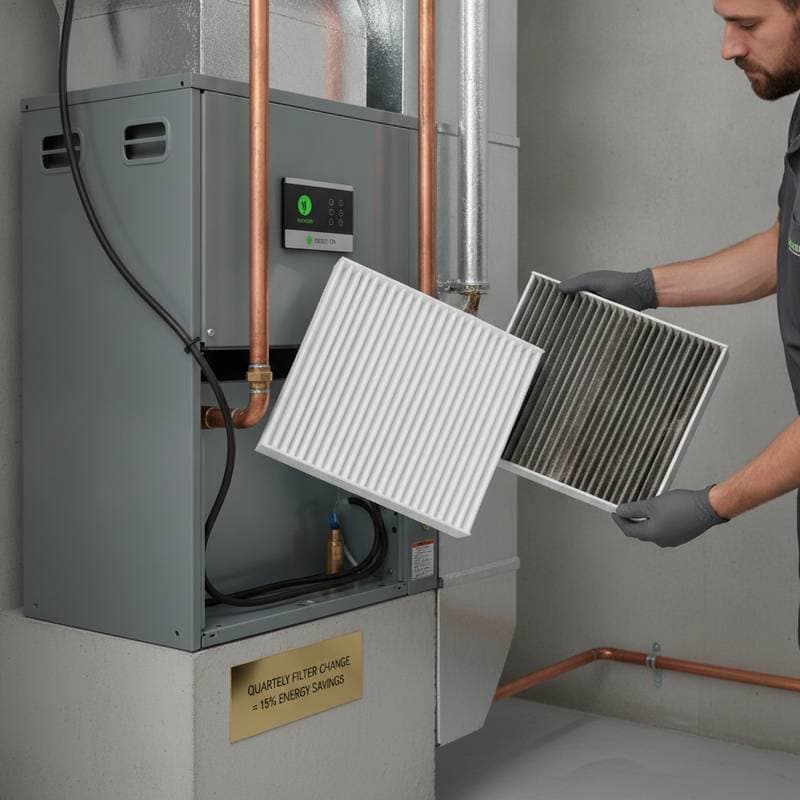
The U.S. Department of Energy reports that well-maintained filters can decrease energy usage by up to 15 percent relative to clogged alternatives. For homes without severe air quality challenges, a MERV 10 or 11 filter offers economical performance without excessive resistance.
Prioritize regular replacements to stabilize energy costs and extend equipment lifespan. Consistent upkeep transforms the HVAC investment into a reliable asset for year-round comfort.
Indicators Requiring a Filter Upgrade
Observe these signals to identify the need for improved filtration, even prior to standard changes:
- Persistent dust on surfaces or vents despite diligent cleaning.
- Allergy-like symptoms that subside outside the home environment.
- Inconsistent airflow or diminished suction from return vents in specific areas.
- Abnormal sounds from the blower, suggesting excessive workload.
- Unexplained increases in utility bills.
Multiple indicators point to inadequate particle capture or airflow obstruction. Adopting filters compliant with updated MERV standards addresses these concerns effectively.
Professional Perspectives on MERV Enhancements
Industry experts emphasize that revised standards promote uniform testing and detailed labeling. Future filters will display airflow resistance metrics, suggested replacement timelines, and authenticated efficiency data, empowering informed decisions.
Analyses from home improvement sources indicate that high-efficiency filters substantially elevate indoor air quality, particularly in polluted urban settings. Long-term system success hinges on comprehensive maintenance practices beyond mere filter selection.
Aligning Maintenance with Evolving Standards
Updated MERV protocols may accelerate filter saturation due to enhanced particle capture. Adjust replacement intervals based on household factors:
- Presence of pets, which introduce additional dander and hair.
- Allergy sufferers, benefiting from more frequent changes to curb irritants.
- Continuous system operation during extreme seasons.
- Proximity to dust-generating sites like construction areas or highways.
Implement a dedicated calendar or digital reminders to track replacements, recording brand, rating, and performance observations. This tracking refines choices for optimal cost-performance balance.
Ensuring a Seamless Transition to New Standards
Retailers may discount legacy inventory during the shift, presenting opportunities for cost savings on compatible stock. Verify that purchased filters adhere to airflow and labeling requirements to avoid compatibility issues.
For those with maintenance contracts, request updates to incorporate the new standards. Service providers are equipping teams with training and adjusted supplies to facilitate smooth adaptations.
Optimizing Long-Term HVAC Performance
Proactive alignment with MERV changes preserves system reliability and enhances living conditions. Regular evaluations and timely upgrades mitigate risks, ensuring efficient operation and superior air purity. This approach safeguards your HVAC investment while delivering consistent comfort.