Fall Checklist to Safeguard Your Chimney and Fireplace
As autumn arrives, the chimney and fireplace reclaim their role as central features in many homes. Before igniting the first log, conduct a comprehensive review to confirm all components function safely. Proper maintenance ensures efficient smoke expulsion, retained indoor heat, and protection against concealed dangers such as blockages or structural weaknesses.
Why Fall Preparation Matters
Over the summer months, chimneys accumulate soot, creosote, and debris from prior use or environmental exposure. These substances, if ignored, obstruct airflow or ignite unexpectedly. Additional threats include moisture infiltration, animal nests, and deteriorating masonry, all of which intensify during cold weather. A systematic fall inspection and cleaning regimen mitigates smoke accumulation, carbon monoxide infiltration, and expensive future interventions.
Property owners who address these tasks promptly avoid urgent service fees and sustain optimal fireplace operation. Consistent upkeep prolongs the durability of the chimney liner and damper mechanisms, reducing long-term replacement needs.
Step-by-Step Chimney and Fireplace Checklist
1. Inspect the Chimney Exterior
Circumambulate the property and scrutinize the chimney structure closely.
- Examine for fissures or absent mortar in brick or stone joints. Water penetrates these openings and expands upon freezing, exacerbating structural harm.
- Evaluate the flashing at the roof-chimney junction. Deteriorated flashing permits water entry, resulting in ceiling discoloration or mold proliferation.
- Assess the chimney cap for stability and absence of corrosion or deformation. An absent or compromised cap exposes the flue to precipitation, avian intruders, and rodents.
Should you observe tilting or disintegration, summon a certified chimney professional immediately. Such defects pose risks of collapse or internal water intrusion.
2. Examine the Chimney Interior
Direct a flashlight into the flue from the firebox opening.
- Identify glossy black accumulations known as creosote, which ignite at elevated temperatures and constitute a primary chimney fire trigger.
- Detect dislodged debris, foliage, or nesting residues that impede ventilation.
- Employ a mirror or inspection camera if visibility to the summit proves limited.
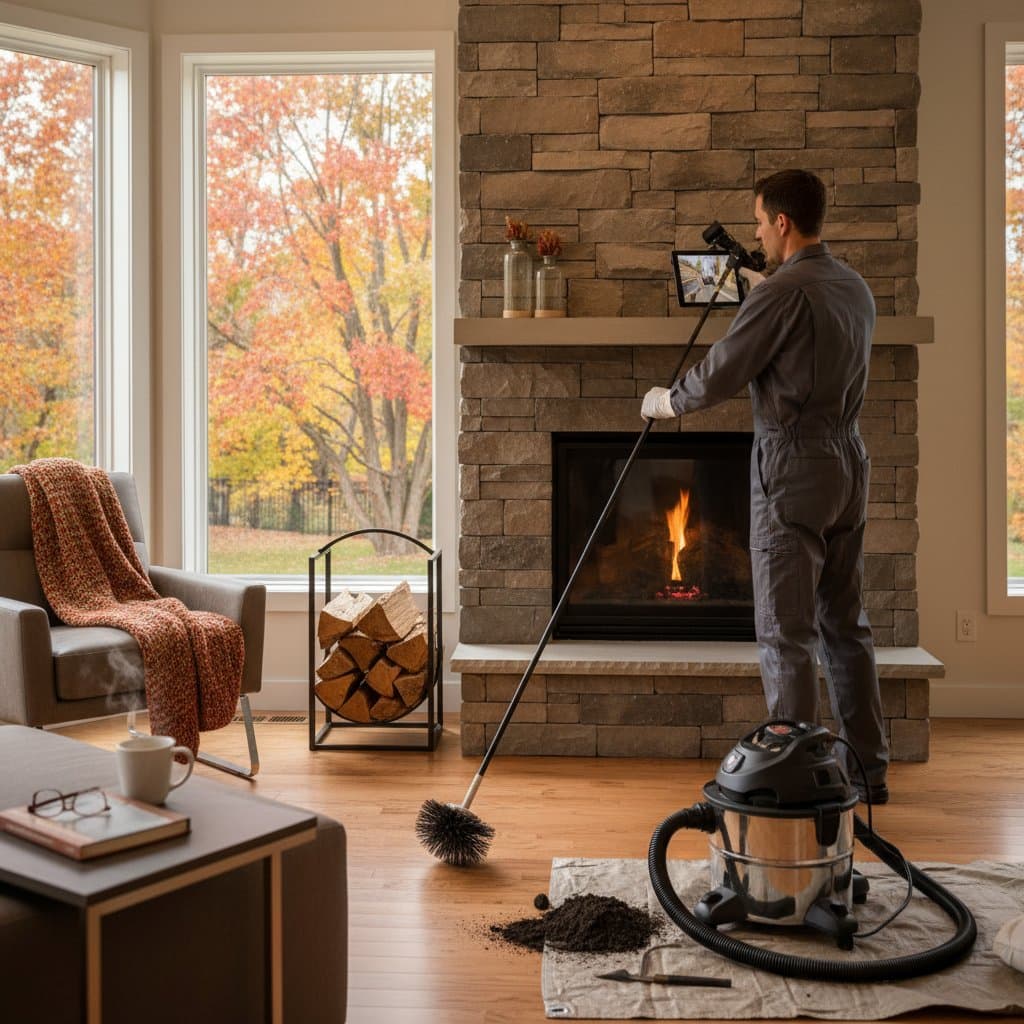
Certified professionals deploy rotary brushes and vacuum systems for secure removal of deposits. Schedule at least one thorough cleaning prior to commencing the heating season.
3. Test the Damper
The damper controls airflow between the fireplace and chimney.
- Operate it to verify smooth motion.
- If it binds or seals inadequately, remove soot from the edges and apply a suitable lubricant.
- In the closed position, it must fully obstruct cold air infiltration.
A malfunctioning damper leads to energy loss by permitting heated air to exit the home even during non-use periods.
4. Clean the Firebox
Extract ashes and soot remnants from previous burns.
- Use a metal shovel to gather residue and deposit it into a lidded metal container.
- Clean the interior walls and floor using a moist sponge and gentle detergent.
- Inspect for fractures or dislodged firebricks that might transmit heat to adjacent wooden framing.
This process also involves vacuuming vents and grilles on gas fireplaces or inserts.
5. Inspect the Fireplace Accessories
Substitute damaged screens, fractured glass doors, or distorted grates.
- Glass doors must operate freely and seal tightly.
- Screens prevent embers from contacting carpets or furnishings.
- Grates require sufficient robustness to support logs without deformation.
Review implements such as pokers and tongs to ensure handle integrity.
6. Check Carbon Monoxide and Smoke Detectors
Install operational detectors in proximity to every fireplace installation. Test each device and substitute batteries as necessary. Carbon monoxide remains undetectable by sight or smell, rendering functional alarms essential for early detection.
Common Problems Found During Fall Checks
- Creosote buildup. Adhesive or shedding layers indicate inefficient burning. Excessive amounts necessitate immediate flue sweeping.
- Water stains. Discolorations or damp odors suggest breaches at flashing or mortar seams.
- Animal intrusions. Avian, mammalian, or rodent occupations in idle chimneys obstruct passages and introduce ignition risks.
- Draft problems. Reversal of smoke into living areas typically signals obstructions or suboptimal damper alignment.
Safety Warnings
- Refrain from igniting fires with accelerants or flammable fluids.
- Burn exclusively dry, seasoned hardwoods to minimize residue production.
- Maintain a three-foot clearance between the hearth and combustible decorations.
- Position a fire extinguisher adjacent to the fireplace and familiarize yourself with its operation.
Engage a professional inspector if irregular smoke behavior, persistent aromas, or soot marks appear on ceilings.
Cost and Value Breakdown
Standard chimney sweeping or evaluation expenses pale in comparison to extensive home repairs. Proactive measures avert escalations like liner substitution or foundational reconstruction.
Consider maintaining a personal record chart:
- Annual inspection: Minimal expense, substantial safety benefits.
- Deep cleaning: Moderate investment, enhanced operational efficiency.
- Cap or damper replacement: Fluctuating costs, enduring advantages in elemental shielding.
(Suggested visual: A bar chart titled “Chimney Maintenance versus Repair Expenses,” illustrating evident financial benefits of routine care.)
Expert and User Insights
Participants in homeowner discussion groups frequently recount how an initial inspection averted severe smoke impairment. One individual detailed uncovering a avian nest obstructing over fifty percent of the flue, revealed solely through seasonal cleaning. Licensed sweep technicians note that over two-thirds of chimney conflagrations originate from unattended creosote. These accounts underscore the efficacy of basic protocols in forestalling major incidents.
Suggested Visual Aids
- Image: A specialist performing flue cleaning, captioned “Professional Chimney Maintenance at Work.”
- Image: A fissured masonry chimney, annotated “Detect Impairments Promptly to Avoid Infiltration.”
- Diagram: Illustrated components of the fireplace and chimney assembly, aiding in component recognition.
Sustaining Chimney Performance Year-Round
Upon finishing the fall evaluation, program alerts for winter and spring reviews. Minimal usage still generates accumulations that compound gradually. Store cordwood on elevated, covered platforms to shield it from pests and humidity.