Expect This from Your Fall Chimney Inspection
A quiet fire on a chilly evening ranks among the finest comforts of home. Before lighting that first match, however, schedule a thorough chimney inspection. Soot, creosote, or concealed cracks can transform a cozy fireplace into a serious safety hazard. A fall chimney inspection maintains home safety, optimizes heating system efficiency, and preserves clean air throughout the season.
Why a Fall Chimney Inspection Matters
Chimneys accumulate residue with each use of wood, pellets, or gas. This residue eventually hardens into creosote, a sticky and highly flammable material. Even a buildup of 1/8 inch poses ignition risk under certain conditions. Annual inspections identify issues before they escalate into costly or hazardous problems.
Inspections extend beyond fire prevention to enhance heating efficiency. Blockages weaken draft, causing fires to smoke excessively and generate minimal heat. A certified chimney sweep detects these problems early and restores optimal airflow for better performance.
The Three Levels of Chimney Inspection
The National Fire Protection Association outlines three inspection levels. Understanding the appropriate level aids in planning and budgeting.
Level 1: Routine Maintenance
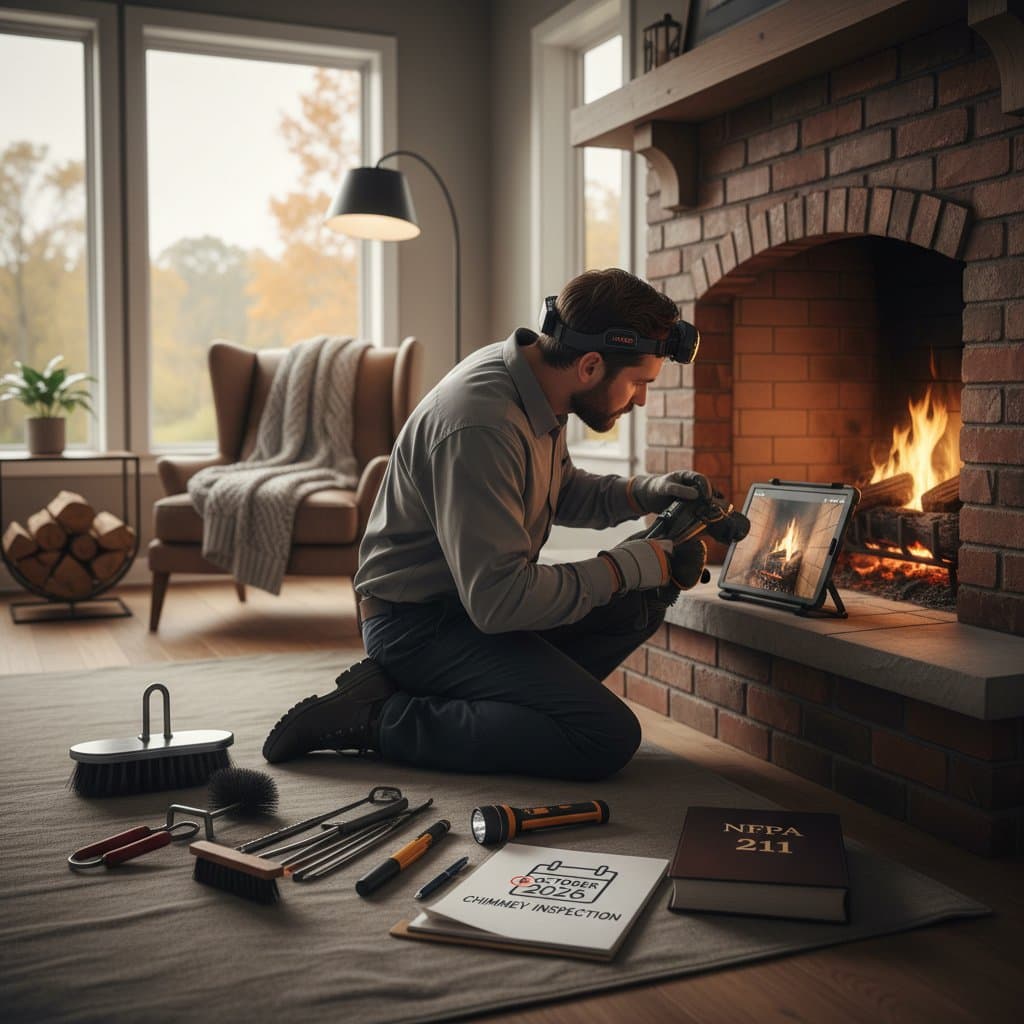
A Level 1 inspection consists of a visual examination of readily accessible chimney and fireplace components. The technician inspects the firebox, damper, and visible flue sections with a flashlight. For regular fireplace users without recent changes to the heating setup, this level suffices.
What to expect:
- Review of the chimney exterior and accessible interior areas
- Confirmation that the flue remains unobstructed and correctly connected
- Assessment for soot or creosote accumulation
- Evaluation of the chimney cap, crown, and flashing for deterioration
Typical cost: $100 to $250, varying by region and chimney height.
DIY feasibility: Limited. Homeowners may remove light soot, but professionals possess tools for identifying deeper concerns.
Level 2: After Changes or Damage
A Level 2 inspection encompasses all Level 1 elements plus a video scan of the flue interior. Professionals recommend this level following heating system modifications, chimney relining, or events such as chimney fires or extreme weather. Such scans often uncover liner cracks or masonry damage invisible externally.
What to expect:
- Video camera examination of the entire flue system
- Confirmation of adequate clearances from combustible materials
- Inspection of chimney structure in attics, crawl spaces, or basements
- Detection of moisture penetration or liner deterioration
Typical cost: $200 to $500.
DIY feasibility: None. Specialized cameras and safety equipment prove essential.
Level 3: When Serious Damage Is Suspected
A Level 3 inspection requires partial disassembly of building materials to evaluate hidden damage. This approach proves necessary after chimney fires or structural shifts. It frequently leads to recommendations for masonry repairs or liner replacements.
What to expect:
- Disassembly of chimney wall sections or adjacent framing
- Comprehensive structural assessment by a certified expert
- Detailed report with repair or reconstruction suggestions
Typical cost: $500 to $1,500, based on project extent.
DIY feasibility: None. Evaluations and repairs must comply with building codes.
What Inspectors Look For
Inspections address more than mere soot accumulation. Technicians systematically evaluate key components as follows:
| Component | What They Check | Acceptable Condition |
|---|---|---|
| Chimney cap | Secure attachment, absence of rust | Tight fit, no openings |
| Crown | Cracks or water pooling | Smooth surface, correct slope |
| Flue liner | Cracks or gaps | Continuous, unbroken surface |
| Damper | Smooth operation | Airtight seal when closed |
| Smoke shelf | Debris accumulation | Clear, level surface |
| Firebox | Loose mortar or bricks | Secure joints |
| Flashing | Gaps or corrosion | Watertight connection |
Repairs become advisable for any failing components prior to the heating season.
Common Mistakes Homeowners Make
The most prevalent error involves neglecting annual inspections. Creosote forms regardless of infrequent use. Homeowners often overlook the need for gas fireplace checks, assuming cleaner burns eliminate risks. In reality, gas systems generate condensation that erodes liners over time.
Additional pitfalls include:
- Selecting an improper brush size for cleaning
- Overlooking a missing or corroded chimney cap
- Burning unseasoned wood, which hastens residue buildup
- Permanently sealing the damper to minimize drafts, thereby trapping internal moisture
Steering clear of these issues sustains efficiency and prolongs system durability.
Accessibility and Safety Considerations
For households with mobility aid users, arrange the inspection to allow safe technician access without disturbing living areas. Clear pathways of furniture and rugs to eliminate tripping risks. In homes with children or pets, time the appointment for their absence to minimize dust and debris exposure.
Chimney tasks frequently require ladders and roof access. Certified professionals employ harnesses and secure footing gear aligned with Occupational Safety and Health Administration standards. Homeowners must avoid self-inspection at roof levels absent proper training and equipment.
Preparing for Your Fall Appointment
To facilitate the visit:
- Clear ash and debris from the firebox.
- Remove objects from the hearth within three feet of the fireplace.
- Ensure entry to attics or basements where the chimney extends.
- Request a written report with photographs of identified defects.
Schedule Your Inspection Today
Prompt action on a chimney inspection equips your home for safe, efficient winter heating. Certified professionals deliver peace of mind through expert evaluation and tailored recommendations. Contact a local sweep now to secure your appointment and enjoy worry-free fires this season.