Understanding Radon: The Invisible Risk to Your Home
Radon gas poses a significant health hazard as a naturally occurring radioactive element that seeps into homes through soil and building materials. Exposure over time increases the risk of lung cancer, making early detection essential for family safety. This article examines the costs associated with radon testing and removal in 2026, providing practical insights to help homeowners make informed decisions.
Why Test for Radon in Your Home
Testing reveals whether radon levels exceed safe thresholds set by health authorities, typically four picocuries per liter of air. Homes in high-radon zones, such as basements or ground floors, require regular checks, especially after renovations or seasonal changes. Short-term tests last two to seven days, while long-term tests span three months to a year for accurate averages.
Ignoring radon can lead to costly health issues down the line. Property buyers often include radon contingencies in offers, and disclosure laws in many states mandate reporting known levels. Proactive testing protects both current residents and future owners.
Radon Testing Options and Their 2026 Costs
Homeowners choose between DIY kits and professional services based on budget and accuracy needs. Costs vary by location, kit type, and lab analysis fees.
DIY Testing Kits
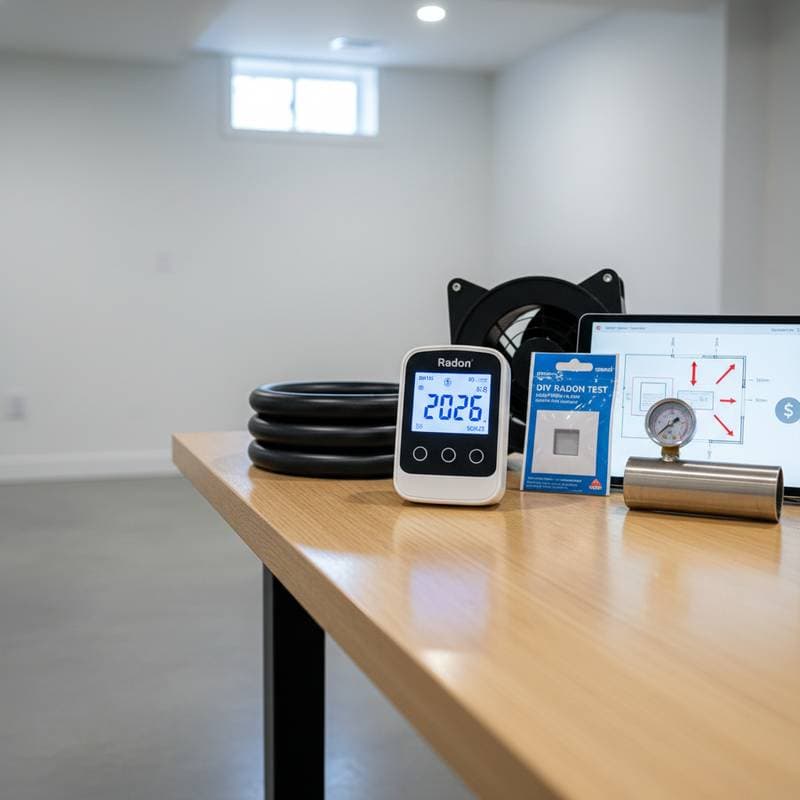
Affordable and user-friendly, these kits involve placing a charcoal canister or alpha track detector in the lowest livable area. Analysis occurs at certified labs, with results available in days to weeks.
- Basic short-term kit: $15 to $30, including lab fees.
- Long-term alpha track: $25 to $50.
- Digital continuous monitors for real-time readings: $100 to $200 for purchase or $50 monthly rental.
Purchase kits from hardware stores or online retailers. Follow placement instructions precisely to avoid false readings from drafts or humidity.
Professional Testing Services
Certified radon professionals use advanced equipment for precise measurements, ideal for real estate transactions or high-risk areas. They provide detailed reports and recommendations.
- Short-term professional test: $100 to $250.
- Long-term monitoring: $300 to $600.
- Follow-up testing post-mitigation: $80 to $150.
Hire firms accredited by the National Radon Proficiency Program. Professionals also inspect ventilation systems, adding value beyond basic detection.
Radon Mitigation Methods and 2026 Pricing Breakdown
If tests show elevated levels, mitigation systems reduce radon by 99 percent in most cases. Methods depend on home structure, soil type, and radon concentration.
Active Soil Depressurization (ASD)
The most common approach, ASD installs a vent pipe and fan to draw radon from beneath the foundation before it enters the home. Suitable for slab-on-grade, crawlspace, or basement foundations.
- Basic ASD system installation: $800 to $2,500.
- Complex setups with multiple suction points: $2,500 to $4,000.
- Annual maintenance, including fan replacement: $100 to $300.
Contractors seal cracks in floors and walls to enhance effectiveness. Systems run continuously, with electricity costs around $50 to $100 yearly.
Alternative Mitigation Techniques
For homes without basements, other options address specific conditions.
- Sub-slab depressurization for concrete slabs.
- Drain tile suction for homes with perimeter drains, costing $1,200 to $3,000.
- Block wall depressurization for hollow masonry walls, at $500 to $1,500.
- Ventilation improvements, such as heat recovery ventilators, adding $1,000 to $2,500.
Water radon treatment, rare but necessary for well water sources, involves aeration or filtration systems priced from $1,000 to $5,000.
Factors Influencing Radon Removal Costs in 2026
Pricing fluctuates due to regional differences, home size, and material needs. Urban areas with higher labor rates see 20 to 30 percent premiums over rural locations.
- Home size: Larger square footage requires more piping, increasing costs by $500 per 1,000 square feet.
- Soil permeability: Rocky or clay soils demand specialized equipment, adding $300 to $800.
- Building age: Older homes may need structural repairs, pushing totals above $3,000.
- Permits and inspections: $100 to $400 in regulated areas.
Inflation and supply chain factors project a 5 to 10 percent rise from 2025, but tax credits up to $1,200 for qualified installations offset expenses.
When to Hire a Professional for Radon Mitigation
DIY sealing of cracks offers temporary relief but rarely suffices for high levels. Professionals ensure compliance with building codes and provide warranties, typically one to five years.
Opt for experts if tests exceed 4 pCi/L or if selling a home. They assess site-specific challenges, like radon entry from sumps or joints. Post-installation testing verifies success, with retesting recommended every two years.
Budgeting Tips for Radon Testing and Removal
Plan finances by starting with a low-cost DIY test to gauge needs. Allocate $200 to $500 for initial testing and consultation.
- Seek multiple quotes from at least three certified contractors.
- Check for rebates or low-interest loans through state health departments.
- Bundle mitigation with other home upgrades, like energy-efficient windows, for savings.
- Track ongoing costs: Fans last 10 to 15 years, with alerts for malfunctions.
Insurance rarely covers radon work, so build it into home maintenance budgets. Long-term, reduced health risks justify the investment.
Securing Your Home's Air Quality for the Future
Addressing radon enhances indoor environments and property value. Families benefit from cleaner air, while mitigated homes appeal to health-conscious buyers. Schedule testing today to identify risks and implement solutions tailored to your situation. With informed budgeting, radon control becomes a straightforward step toward safer living.