2026 Greywater Installation: Costs and Return on Investment
Greywater systems have evolved from specialized environmental features into essential home upgrades that deliver financial savings and resource conservation. With escalating water prices and heightened focus on sustainability, homeowners increasingly consider greywater recycling as a viable option. This article examines installation expenses, available system types, and potential returns to assist in determining suitability for specific properties and routines.
Functions of a Greywater System
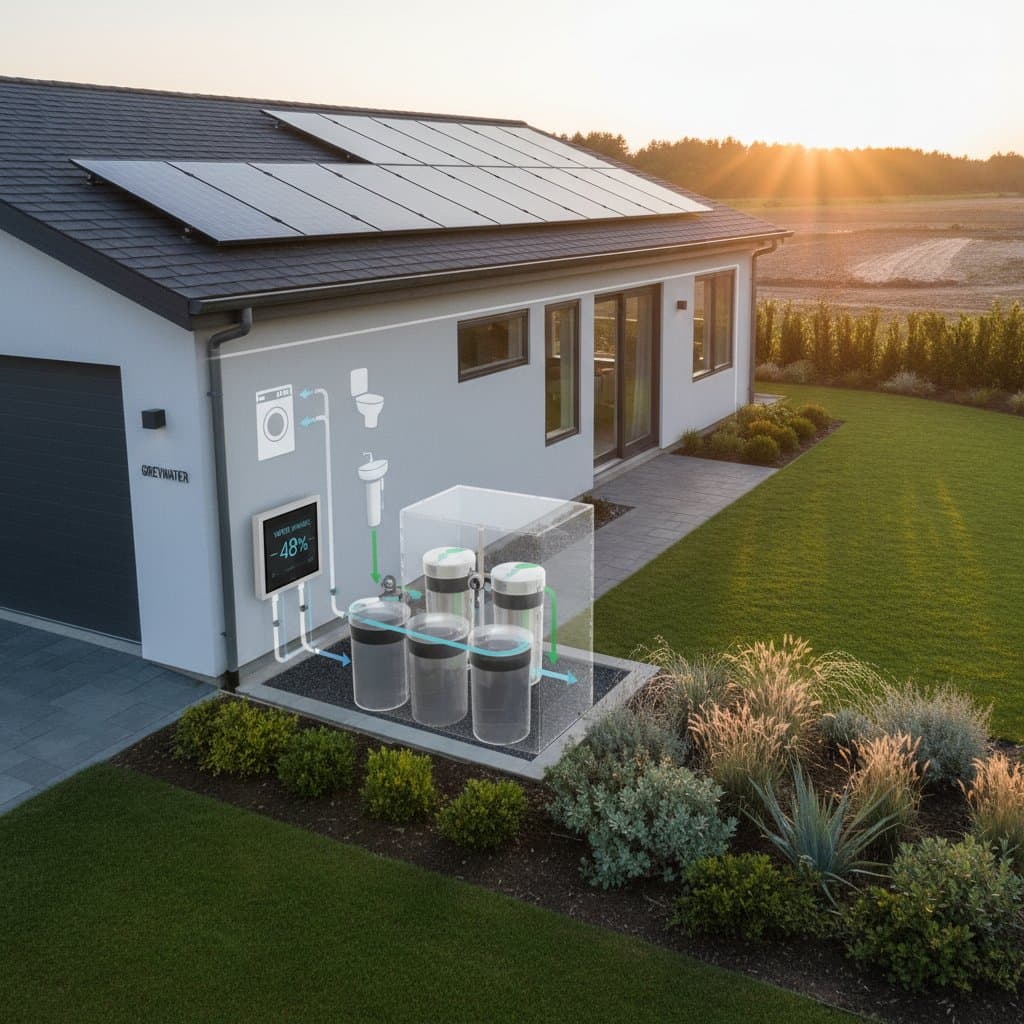
Greywater refers to mildly used water sourced from sinks, showers, bathtubs, and laundry appliances. This category excludes wastewater from toilets and kitchen sinks due to potential contaminants like grease and food particles. Greywater systems collect this water, apply filtration, and redirect it for applications such as outdoor irrigation, toilet flushing, or additional laundry cycles. Such recycling reduces reliance on fresh water sources by as much as 50 percent, based on system configuration and daily household patterns.
Essential Components in Greywater Systems
Effective greywater setups incorporate several critical elements:
- Collection pipes: Dedicated plumbing lines that gather water from showers, bathtubs, and washing machines.
- Filtration mechanisms: Devices that eliminate debris like lint, hair, and soap buildup.
- Storage reservoirs: Containers that retain processed greywater prior to distribution, ranging from 50 to 300 gallons in capacity.
- Pumping and delivery networks: Equipment that transports water to irrigation zones or indoor outlets.
- Regulatory controls and monitoring devices: Components that oversee water flow and uphold sanitation requirements.
Options range from manual designs to fully automated models. System intricacy influences initial expenses and ongoing upkeep demands.
Breakdown of Installation Expenses
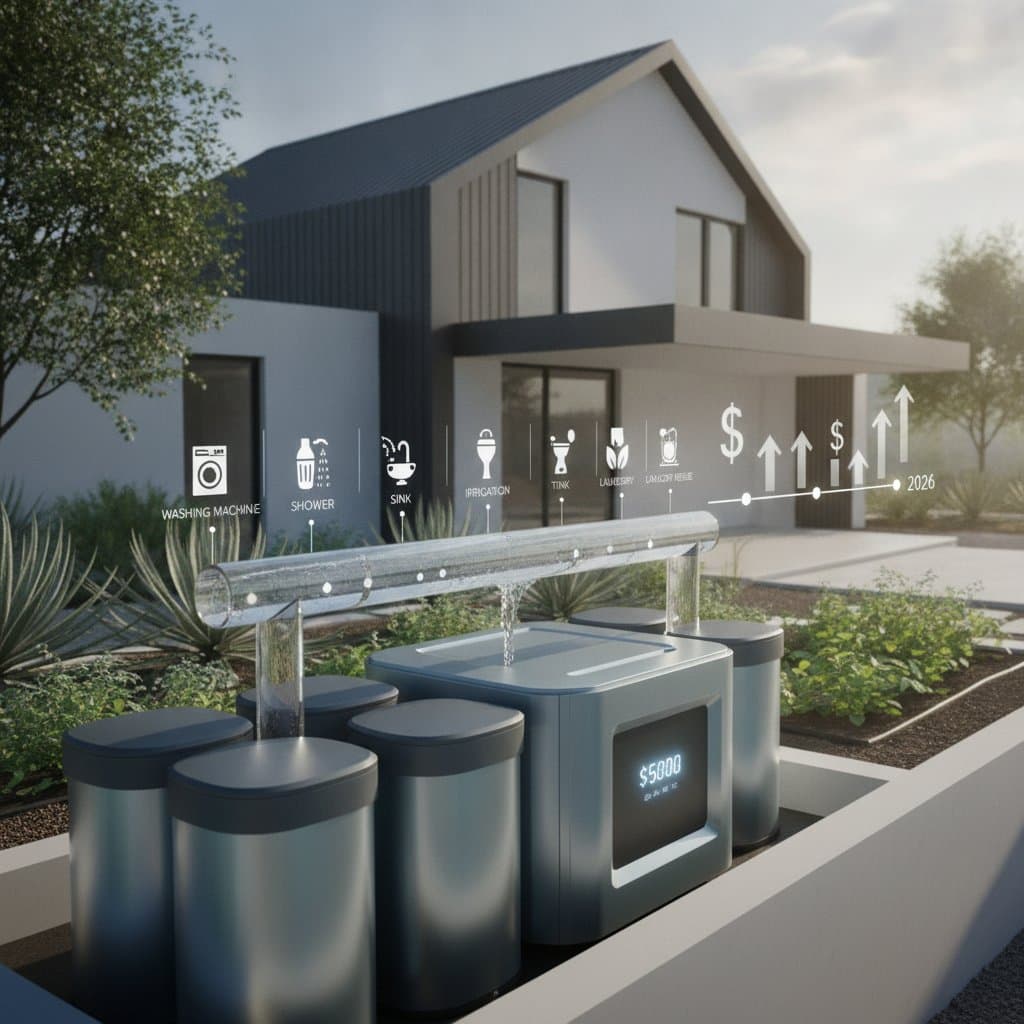
Expenses for greywater installations fluctuate according to property configuration, regional building regulations, and overall scale. For a compact single-bathroom residence employing a laundry-to-landscape configuration, budgets typically fall between $800 and $2,500. This approach links the washing machine directly to exterior watering systems via simple filtering.
More comprehensive setups that process water from all bathroom sources, incorporate storage, and feature pumps generally range from $4,000 to $9,000. Advanced automated variants managing multiple areas or integrating with indoor plumbing for toilet use may exceed $15,000.
Professional labor constitutes a substantial share of the total. Qualified plumbers often bill $85 to $150 hourly, with projects spanning one to four days based on scope. During new builds or renovations, embedding greywater infrastructure can lower costs by up to 30 percent relative to after-the-fact modifications.
Annual Operating and Upkeep Expenses
Recurring costs remain reasonable yet require attention. Filters demand cleaning or substitution every few months, while pumps necessitate yearly evaluations. Average yearly maintenance totals $100 to $300, scaled to system sophistication.
Electricity consumption stays low, comparable to that of a modest aquarium circulator. Many owners manage routine filter tasks independently, though professional services ensure adherence to local standards and simplify compliance.
Determining Return on Investment
Investment recovery hinges on regional water tariffs, landscape dimensions, and consumption behaviors. A typical family expending 150 gallons daily on irrigation and flushing reclaims 20,000 to 25,000 gallons annually. In high-cost water districts, this translates to yearly savings of $200 to $500.
Over a decade, accumulated reductions often recoup a large segment of upfront outlays. Properties in arid zones or under frequent watering limits experience accelerated returns. Moreover, these installations enhance market appeal; industry experts note that eco-friendly water features can elevate home values by 2 to 5 percent.
Broader Environmental and Functional Advantages
Conservation of water stands as the primary gain, yet additional perks emerge. Diminishing wastewater volume eases burdens on public treatment facilities. Directing reused water to gardens sustains vegetation amid dry spells without inflating utility charges.
Greywater enriches soil through residual nutrients in detergents and soaps, functioning as gentle fertilizers. In groundwater-scarce locales, these systems foster household independence. Owners secure greater autonomy in water management and lessen vulnerability to supply disruptions or restrictions.
Selecting an Appropriate System
Evaluate personal water consumption and existing plumbing arrangements first. Laundry-to-landscape models provide economical entry points with straightforward care, suiting novices. Households with several bathrooms or expansive yards benefit from branched drain or pumped reservoir designs for enhanced versatility.
Verify municipal guidelines promptly, as certain areas mandate approvals, backflow safeguards, or prescribed filtration protocols. Engage a licensed plumber or greywater expert during initial planning to avoid expensive alterations. Specialists assess factors like pipe routing, terrain gradients, and ground composition to maximize efficacy.
Consider integrating with rainwater collection for optimal results in water management.
Addressing Typical Challenges
Filters may clog, pumps can malfunction, or odors might develop as frequent hurdles. Proactive upkeep mitigates nearly all such issues. Should drainage slow or output diminish, inspect and clear the filter, then scan distribution pipes for obstructions.
Lingering smells usually signal water stagnation in reservoirs; remedies include increasing circulation rates or installing minor aeration units.
Maximizing Long-Term Value
A thoughtfully engineered greywater system generates enduring rewards via reduced expenses, nourished grounds, and elevated asset worth. Integration of intelligent controls allows monitoring of conservation metrics via applications or linked gauges.
For upcoming renovations or constructions, early incorporation secures superior returns. Even retrofits prove beneficial when combined with measures like efficient fixtures or precise irrigation networks.
Sustaining System Performance
Commitment to a greywater installation extends to fiscal and ecological realms. Routine inspections, eco-compatible cleaning agents, and adaptive usage strategies preserve efficiency across seasons. This diligence guarantees consistent advantages in cost control and environmental stewardship.