Greywater Costs in 2026: Permits and Savings Breakdown
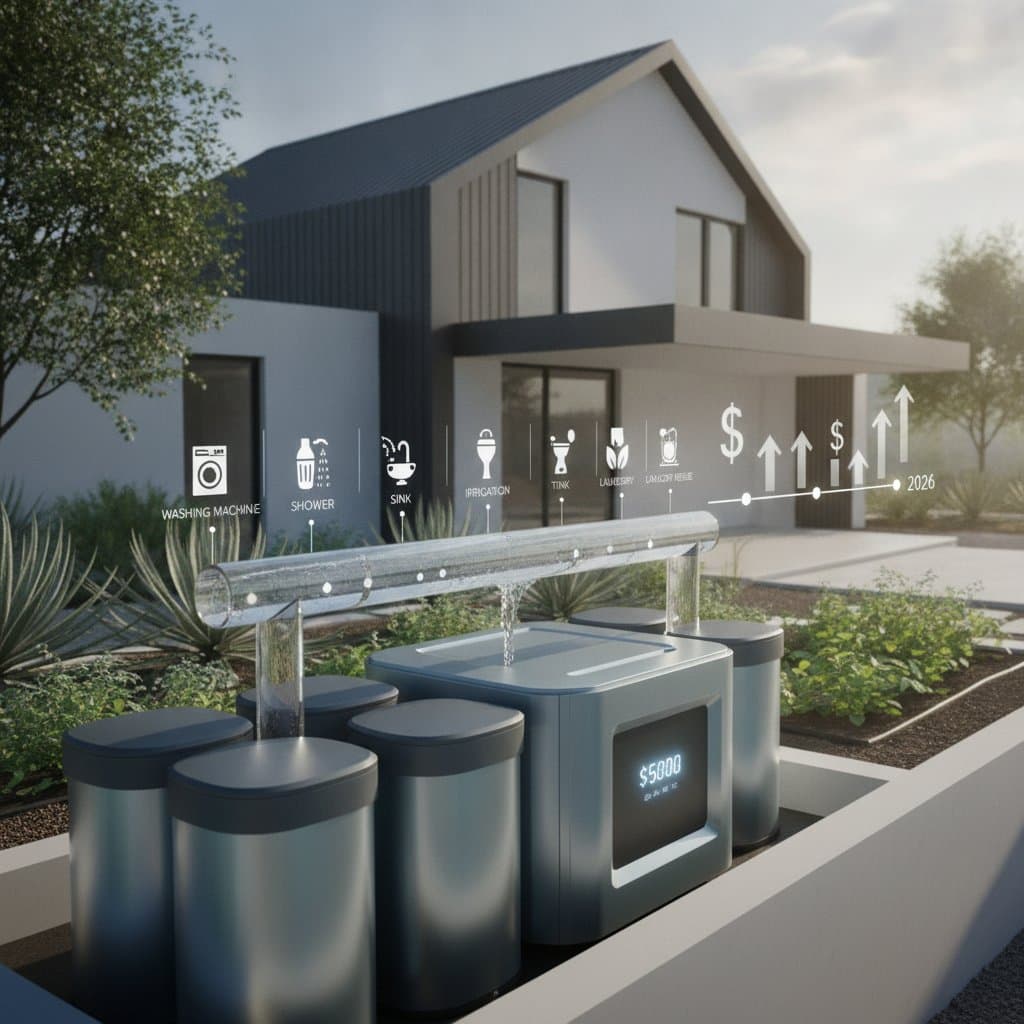
Recycling household water has evolved from a niche concept into a reliable method for conserving resources and reducing utility expenses. Greywater systems capture and repurpose water from sinks, showers, and laundry for tasks like outdoor irrigation. These setups decrease reliance on freshwater supplies, promote sustainable landscaping, and deliver ongoing financial benefits to homeowners. However, the full expense of installation and upkeep hinges on elements such as system design, material choices, permit requirements, and local plumbing codes.
This overview details budgeting essentials for a greywater system, examines how permits affect total outlays, and projects the monthly savings potential. Homeowners gain insights to make informed decisions that align with both financial goals and environmental priorities.
Typical Greywater System Costs
Costs for a greywater installation fluctuate based on home size, plumbing complexity, and whether the system integrates into new construction or a retrofit. Expect these average ranges for 2026 projects:
- Laundry-to-landscape systems: Basic setups that divert washing machine output directly to garden beds, priced from $500 to $2,500. These require minimal plumbing changes and suit smaller households.
- Gravity-fed systems: Rely on natural slope for water flow, costing $1,500 to $4,000. They demand site grading if terrain lacks sufficient incline but avoid energy-intensive pumps.
- Pump-based or pressurized systems: Ideal for expansive yards or multi-level homes, ranging from $3,000 to $10,000. Additional features like advanced filtration and automation drive up the price.
Professional labor often comprises 40 to 60 percent of the budget, escalating if existing structures need alteration to route pipes. In new builds, embedding lines during framing cuts labor by up to 30 percent compared to retrofits, where accessing hidden plumbing adds time and expense.
Permit Requirements and Associated Fees
Local regulations govern greywater installations to safeguard public health and prevent groundwater contamination. Most municipalities classify these systems as plumbing alterations, requiring permits that verify compliance with codes like the Uniform Plumbing Code.
Permit fees typically range from $100 to $500, depending on system scale and jurisdiction. Urban areas with strict water management policies may impose higher charges or mandate engineer-stamped plans. The application process involves submitting site diagrams, material specifications, and proof of backflow prevention. Approval timelines vary from two weeks to several months, so factor in delays when scheduling.
Non-compliance risks fines up to $1,000 or system removal orders. To streamline, consult your local building department early and consider hiring a licensed plumber familiar with regional rules. Some areas offer expedited reviews for eco-friendly projects, reducing both time and cost.
Material and Equipment Costs
Core components form the backbone of any greywater system, with prices reflecting durability and functionality:
- Diverter valves: Basic models start at $50, while automated versions with sensors reach $300. They enable seamless switching between sewer and reuse modes.
- Filters or screens: Coarse mesh screens cost $20 to $100; advanced multimedia filters, $200 to $600. Select based on water source—laundry greywater needs lint traps, while shower water benefits from hair strainers.
- Storage tanks or surge barrels: 50-gallon plastic barrels run $100 to $300; larger 200-gallon units with UV treatment hit $800. Opt for food-grade materials to avoid chemical leaching.
- Distribution piping: PVC pipes average $1 to $2 per foot; install 100 to 300 feet for typical yards, totaling $100 to $600. Use schedule 40 thickness for underground durability.
- Pumps: Submersible models for uphill flow cost $200 to $800, including installation. Energy-efficient options with timers minimize electricity use.
- Control systems: Simple timers are $50; smart controllers with app integration, $300 to $1,000. These optimize distribution based on soil moisture or rainfall data.
Premium materials like corrosion-resistant polyethylene extend system life to 20 years, offsetting higher upfront costs. For budget setups, prioritize filters and valves, as they prevent clogs that could lead to expensive repairs.
Ongoing Maintenance and Operating Costs
Greywater systems demand routine care to sustain efficiency, though efforts remain modest compared to traditional irrigation. Clean filters monthly during peak use by rinsing under pressure or replacing cartridges at $20 to $50 each. Inspect pumps quarterly for wear, lubricating moving parts to avoid $200 replacement fees.
Annual upkeep totals $100 to $300, covering minor parts and occasional professional tune-ups at $150 per visit. Flush distribution lines biannually with a vinegar solution to dissolve soap scum, preventing blockages. Track usage with a simple log: note flow rates and any odor changes, which signal bacterial buildup treatable with enzyme cleaners.
Electricity for pumps adds $5 to $20 monthly in pressurized systems, offset by water savings. Homeowners in arid climates may see lower costs by integrating mulch basins around irrigation points, reducing evaporation and pipe stress.
Projected Monthly Savings and Return on Investment
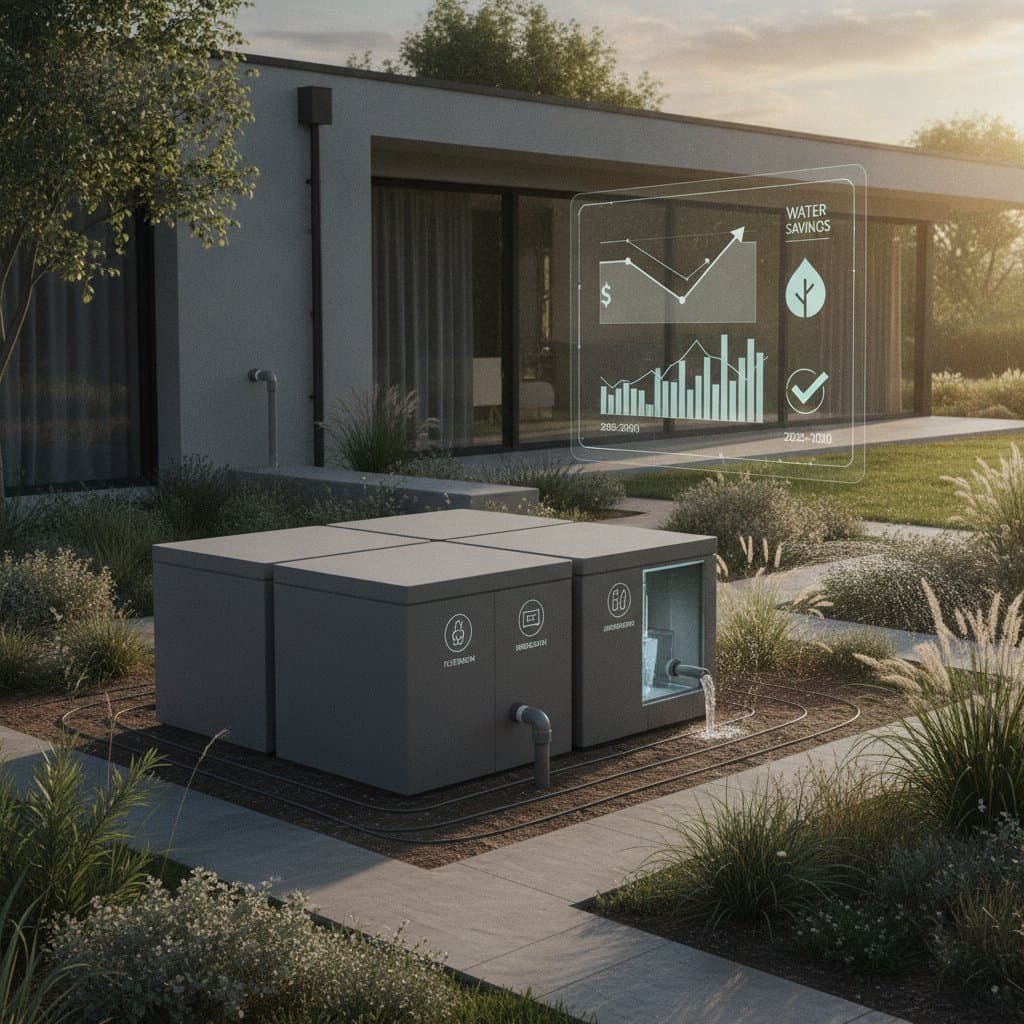
A well-designed greywater system recycles 20 to 50 percent of household wastewater, translating to $10 to $50 monthly bill reductions for average families using 100 to 200 gallons daily. In high-water-cost areas like California, where rates exceed $0.10 per gallon, savings climb to $75 or more per month during summer irrigation seasons.
Break-even occurs in 3 to 7 years, factoring permits and installation. Rebates from utilities—up to $1,000 in some programs—accelerate ROI. Calculate your potential: multiply daily greywater volume by local rates, then subtract maintenance. Tools like online calculators from water districts provide personalized estimates.
Environmental and Community Benefits
Greywater reuse eases pressure on municipal treatment plants by diverting 10,000 to 30,000 gallons annually per household from sewers. This lowers energy demands for processing and curtails pollutant discharge into waterways. In drought-prone regions, such systems preserve aquifer levels, supporting biodiversity and agricultural stability.
Communities benefit from collective adoption: reduced infrastructure strain cuts public water project costs. Homeowners report enhanced landscapes with healthier plants, as untreated greywater delivers nutrients like nitrogen from soaps. Pairing with drought-resistant natives maximizes ecological gains without chemical fertilizers.
Cost-Effective Strategies for Homeowners
Minimize expenses while ensuring reliability through targeted approaches:
- Scale appropriately. Launch with a laundry-only system at under $1,000, then scale to showers once savings prove viable.
- Leverage site features. Assess your yard's topography early; a 2 percent slope enables gravity flow, saving $500 on pumps.
- Time installations wisely. Align with kitchen or bathroom remodels to share labor costs, potentially halving plumbing fees.
- Source affordably. Buy bulk from irrigation suppliers or recycled material outlets; compare online for deals on tanks.
- Pursue incentives. Research state programs like California's SGIP for grants covering 20 to 50 percent of costs.
Consult certified installers for quotes, emphasizing modular designs that allow future expansions without full overhauls.
Ensuring Long-Term System Performance
Post-installation, establish a quarterly checklist: test diverters for leaks, verify pump pressure, and sample irrigation output for clarity. Address odors promptly by adding baking soda to laundry loads or installing bio-filters. Document all maintenance with photos and dates to support warranty claims or resale appraisals.
Professional audits every two years, costing $200, catch inefficiencies like valve wear before they impact savings. As regulations evolve, stay informed through local extension services to adapt your setup compliantly.
Achieving Sustainable Water Independence
Implementing a greywater system empowers homeowners to control water use amid rising costs and scarcity. By navigating permits thoughtfully and selecting durable components, you secure reliable monthly savings alongside ecological contributions. Start with a site evaluation today to unlock these benefits for your home.