Fall Chimney Preparation: Essential Steps to Prevent Fire Risks
As cooler weather arrives, the appeal of a crackling fire increases, yet so do the dangers of an unprepared chimney. Homeowners face risks like chimney fires and carbon monoxide leaks if maintenance is neglected. Fall preparation enhances heating efficiency and shields the home from avoidable threats. This guide provides a detailed checklist, cost breakdowns, and professional advice to maintain your fireplace system optimally.
Fall Chimney Preparation Checklist
Follow these steps annually before the heating season to minimize fire hazards and ensure smooth operation. Professional involvement proves essential for thorough assessments.
1. Inspect the Exterior Structure
Examine the chimney from ground level for cracks, leaning portions, or deteriorated mortar. Verify the integrity of roof flashing, which seals the chimney-roof junction. Compromised flashing invites leaks that harm interior walls adjacent to the fireplace.
2. Check the Chimney Cap and Crown
Confirm the cap remains secure without rust or perforations. Inspect the crown for fissures that permit water entry. Water infiltration leads to freezing and expansion, resulting in costly structural damage over time.
3. Arrange a Professional Sweep and Inspection
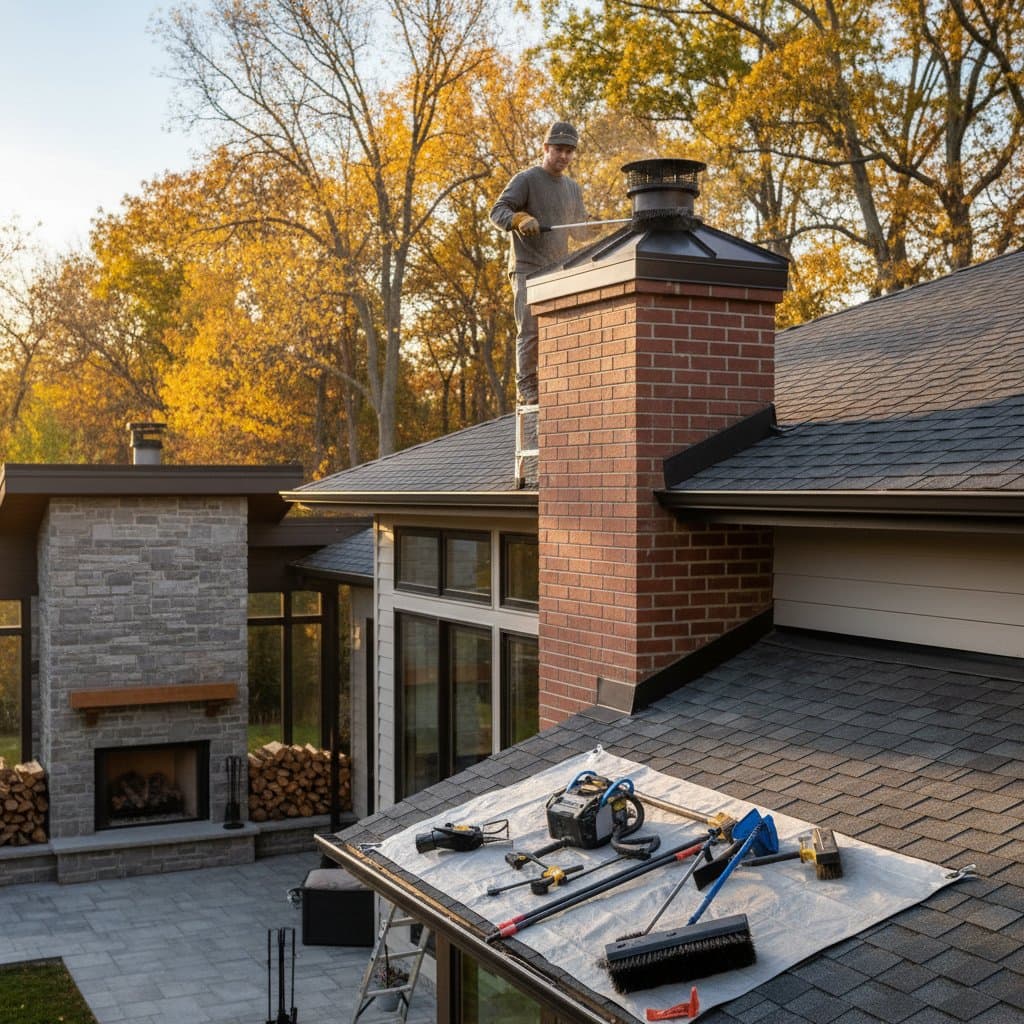
Engage a certified chimney sweep prior to the initial fire. The process covers flue lining, smoke chamber, and damper evaluation. Technicians identify bird nests, creosote deposits, and blockages that impede airflow.
4. Test the Damper and Draft
Operate the damper to ensure unobstructed movement. A jammed damper confines smoke indoors. Ignite a small paper scrap in the firebox and observe smoke ascent; it must rise steadily through the flue. Lingering or backdrafting smoke signals ventilation problems requiring adjustment.
5. Clean the Firebox
Clear ashes and sweep the hearth area. Scrutinize firebox bricks for fractures or absent mortar. Such damage permits heat escape to nearby wooden framing, heightening fire potential.
6. Verify Smoke and Carbon Monoxide Detectors
Install fresh batteries and test alarm functionality. Position units near bedrooms and the fireplace vicinity. Neglected detectors delay detection in chimney incidents.
7. Assess Wood Storage and Fuel Quality
Select seasoned hardwood dried for at least six months. Unseasoned wood generates excess creosote and smoke. Elevate logs off the ground under a tarp to maintain dryness.
8. Review Chimney Liner Condition
For clay tile liners, detect cracks or spalling. Stainless steel variants demand corrosion checks. Impaired liners diminish efficiency and permit heat conduction to combustible surroundings.
9. Evaluate the Hearth Extension and Adjacent Space
Maintain a three-foot clearance from the fireplace for rugs, furnishings, and decor. Initial fires produce unpredictable sparks that ignite proximate flammables.
10. Confirm Airflow and Ventilation
Ensure no obstructions block vents or intakes. Proper circulation fosters complete combustion and curbs indoor smoke. For gas units, validate pilot light stability and thermocouple performance.
Chimney Maintenance Costs: What to Expect
Budgeting for chimney services varies by scope and location. Understanding pricing helps homeowners plan effectively and avoid surprises.
National Averages and Regional Differences
Standard cleaning and inspection range from 150 to 500 dollars, with a national average of 300 dollars. This covers visual checks and basic sweeping. Urban centers push costs toward 400 dollars due to elevated demand, while rural areas hold at 200 dollars. Coastal and northern regions benefit from provider competition, stabilizing rates.
Pricing Models and Packages
Flat fees dominate routine cleanings at 150 to 300 dollars; hourly rates of 75 to 125 dollars apply to intricate tasks like creosote removal. Multi-flue systems add 100 to 200 dollars per unit. Bundles combining inspection, cleaning, and smoke tests yield 10 to 20 percent savings. Annual subscriptions, at 250 to 600 dollars, offer priority access and reminders for frequent users.
Service Tiers
Basic sweeps, removing soot and debris with a visual check, cost 150 to 250 dollars for light-use homes. Standard services add camera scans and creosote clearance for 250 to 400 dollars, suiting primary heating sources. Comprehensive options, including waterproofing and video reports, reach 400 to 700 dollars. Specialized repairs like relining exceed 1,000 dollars.
Factors Affecting Costs
Project scale influences pricing; multi-flue setups demand more time and tools. Complex designs or inserts require skilled labor, extending durations to two or three hours. Materials such as solvents for creosote or sealants for repairs add to bills. Early fall scheduling sidesteps 25 to 50 percent premiums during peak demand.
Add-On Services for Enhanced Protection
Supplement core maintenance with targeted upgrades to extend chimney longevity.
Chimney Cap Installation
Caps block rain, debris, and wildlife entry, costing 100 to 350 dollars based on size and material. Durable stainless steel options include warranties for lasting performance.
Waterproofing and Parging
Apply waterproofing to masonry exteriors for 150 to 300 dollars, preventing freeze damage in older structures. Parging smoke chambers, at 200 to 500 dollars, smooths surfaces to boost airflow and limit soot.
Expert Advice for Optimal Safety
Certified technician Jason Miller, with 20 years in the field, notes that proactive fall checks prevent nearly half of seasonal emergencies. He warns that creosote ignites at unexpectedly low temperatures once it accumulates to one-eighth inch, per Chimney Safety Institute of America guidelines. Video scans uncover concealed issues like cracks or nests in aging chimneys, a now-standard residential tool.
Gas fireplace owners must inspect for residue and vent blockages to avert carbon monoxide risks and meet codes. Regular upkeep ensures compliance and safety across fuel types.
Eco-Friendly Maintenance Choices
Opt for electric brushes and biodegradable creosote removers to minimize chemical use. These sustainable methods, though 10 to 20 percent pricier, safeguard health and the environment without compromising effectiveness.
Secure Your Heating Season
Implementing this checklist and budgeting wisely transforms chimney care from a chore into a safeguard. Professional services deliver peace of mind, efficient warmth, and reduced risks. Schedule early to enjoy a cozy, hazard-free fall and winter.