Understanding Greywater Systems and Local Regulations
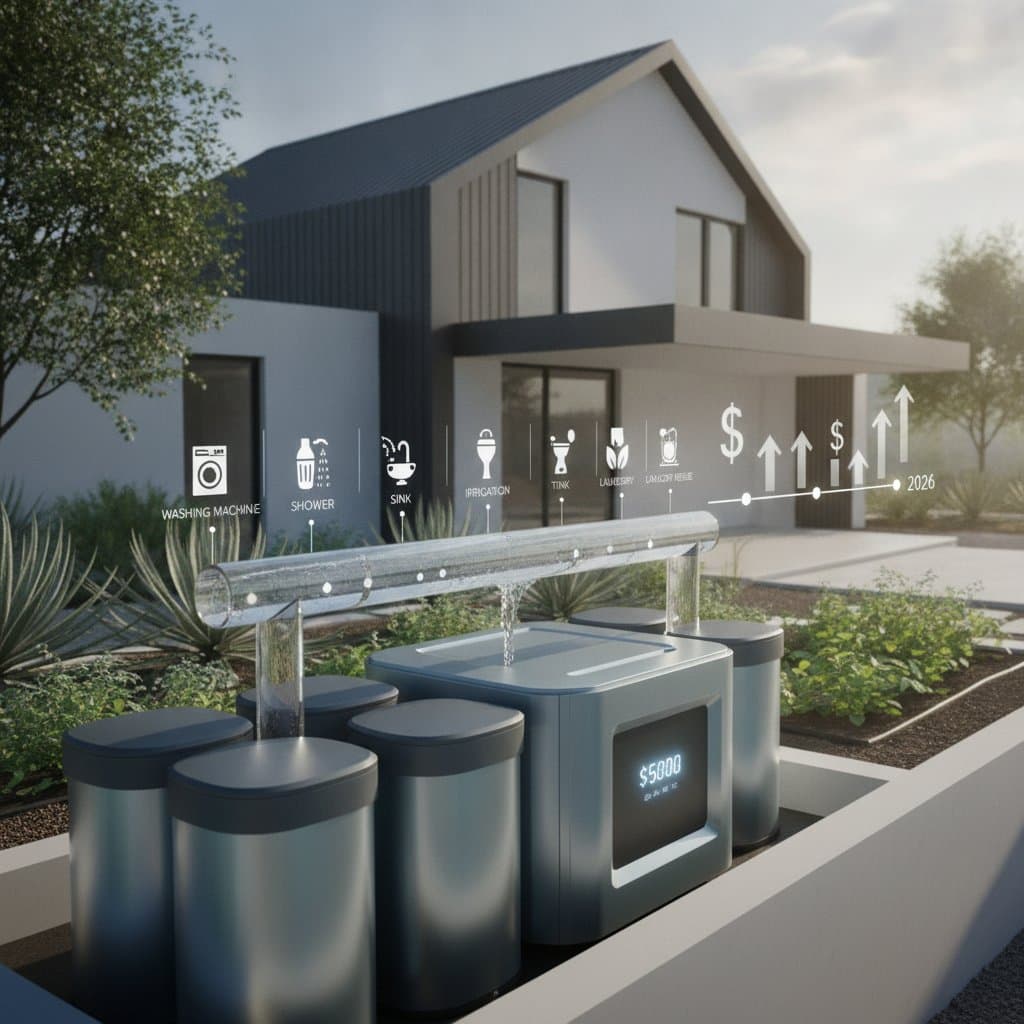
Greywater refers to wastewater from sinks, showers, bathtubs, and washing machines, excluding toilet or kitchen sink effluent. These systems collect and redirect greywater for non-potable uses like landscape irrigation or toilet flushing, conserving fresh water resources. Before installation, consult your local building department to identify applicable codes, often based on the International Plumbing Code or Uniform Plumbing Code.
Standard requirements typically encompass:
- Discharge lines with a minimum 2-inch diameter to prevent blockages.
- Subsurface irrigation exclusively, avoiding surface spraying to minimize health risks and odors.
- At least 18 inches of separation between greywater and potable water lines to avoid contamination.
- Prominent signage indicating non-potable water to alert users.
Permit fees for small residential setups range from $100 to $400. Whole-house configurations may necessitate engineered plans and on-site inspections, potentially increasing costs to $500 or higher. Secure approvals early to prevent delays or fines.
Installation Options: DIY or Professional Assistance
For a basic laundry-to-landscape system, a skilled homeowner can complete installation over a weekend using tools such as PVC cutters, slip fittings, and a drill. Maintain a gravity flow slope of 1 inch per 8 feet of pipe to ensure efficient drainage. Verify your washing machine's output, averaging 15 gallons per cycle, matches the system's capacity to avoid overflows.
Systems involving multiple sources, pumps, or indoor applications demand a licensed plumber with expertise in sustainable plumbing. Professionals guarantee adherence to codes and mitigate risks of future modifications. They also assist with paperwork for potential rebates, as some areas provide incentives for verified conservation efforts.
Installation Difficulty Levels:
- Laundry-to-landscape: Straightforward for those with basic skills.
- Gravity-fed from bath and laundry: Requires moderate plumbing knowledge.
- Pumped systems for indoor reuse: Reserve for certified experts.
Pitfalls to Sidestep in Greywater Design
Poor planning can lead to system failures, even in simple configurations. Key errors include:
- Combining blackwater (from toilets or kitchen sinks) with greywater, which introduces pathogens.
- Employing surface irrigation, leading to odors, mosquito breeding, or human contact hazards.
- Omitting a diverter valve, essential for routing water to the sewer during maintenance or heavy use.
- Applying untreated greywater to edible crops, risking contamination; opt for treated water or non-edible landscaping.
- Neglecting plant tolerances, as high-detergent greywater harms salt-sensitive species like ferns or azaleas.
- Overlooking routine upkeep, which causes filter clogs or emitter blockages.
Design for minimal intervention: systems should operate without odors if installed correctly. Monitor for unusual smells or surface pooling, then isolate the system and check for obstructions or breaches.
Adapting for Accessibility and Ensuring Safety
Greywater setups can accommodate diverse household needs by positioning controls accessibly. Install diverter valves and filters at 30 to 36 inches from the floor, with tactile labels and high-contrast markings for users with mobility or visual impairments.
Safety protocols prioritize separation from potable supplies. Codes mandate backflow preventers to block reverse flow. For indoor storage, integrate automatic flushing and UV treatment to maintain hygiene standards.
Calculating Returns and Broader Advantages
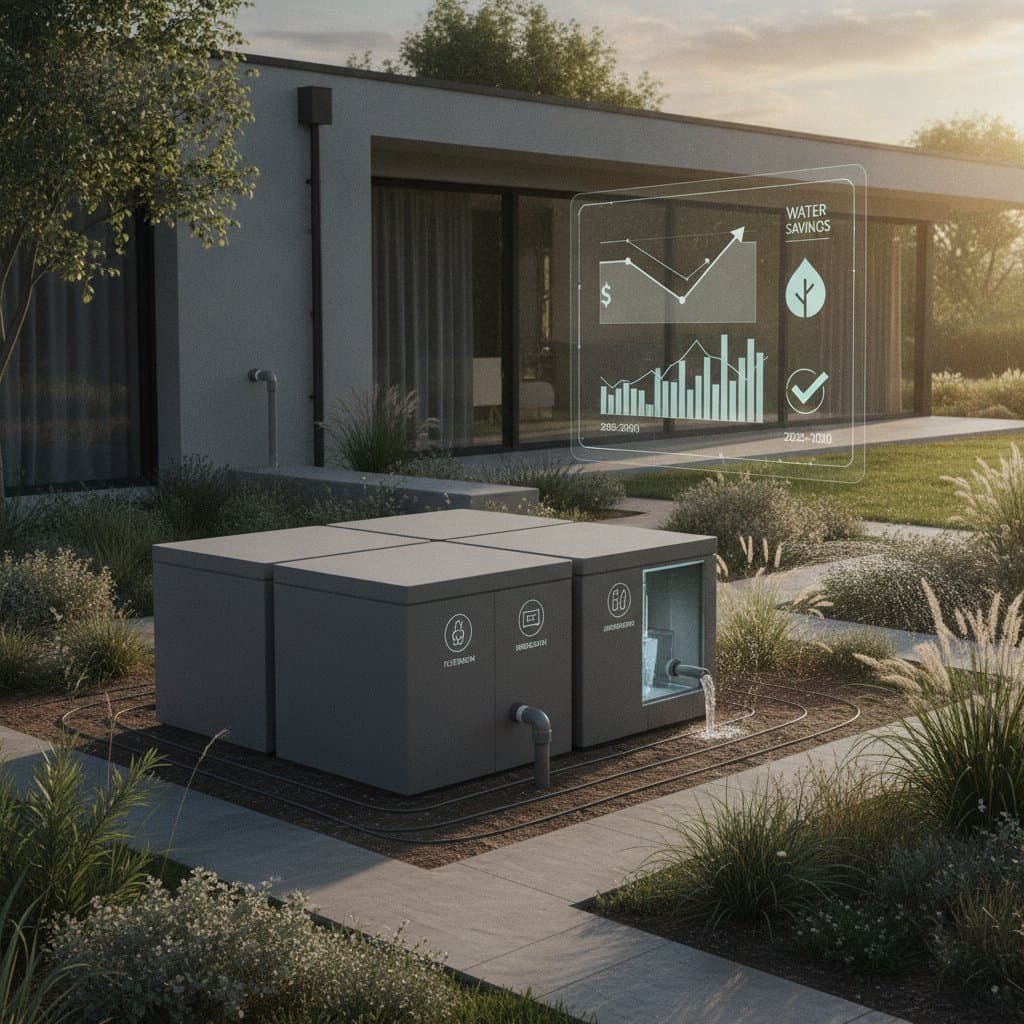
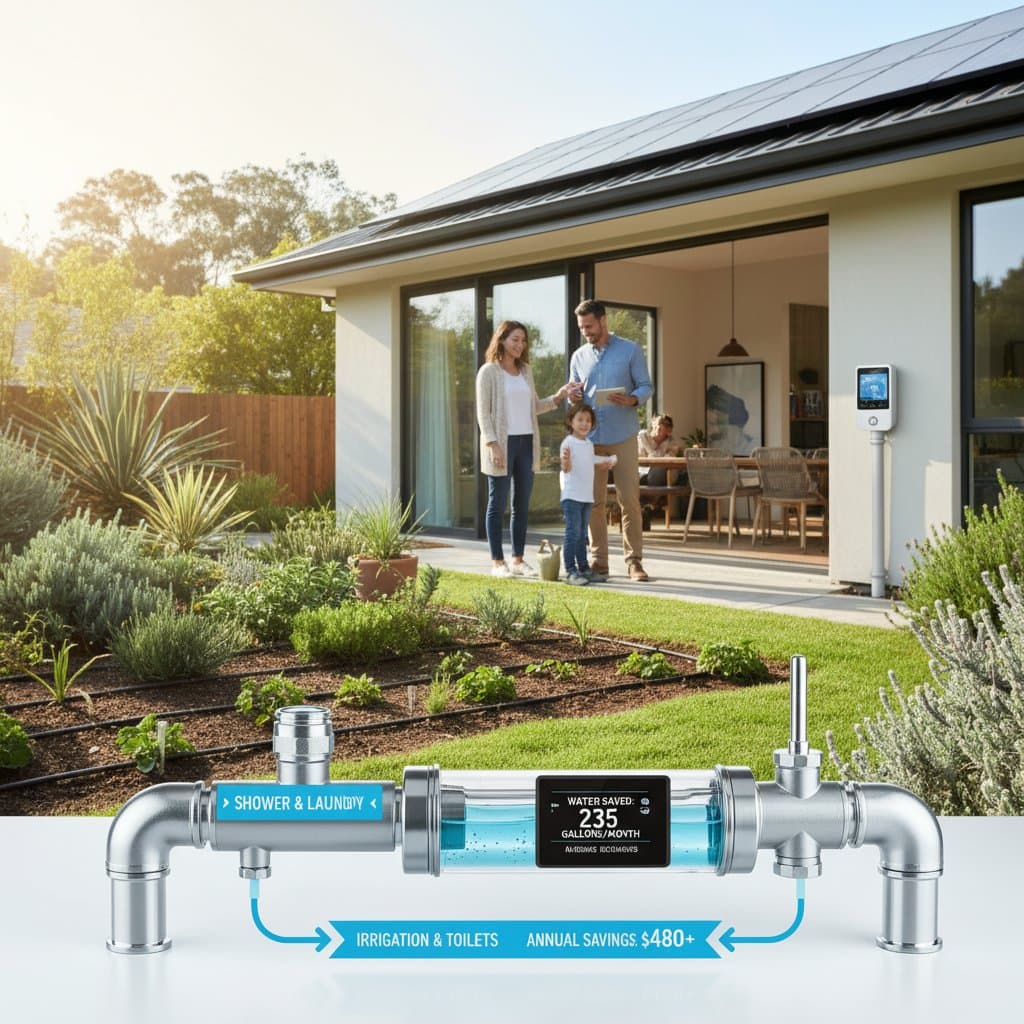
Primary motivation for adoption lies in bill reduction. A standard system reuses 10,000 to 25,000 gallons annually, yielding $100 to $400 in savings based on regional rates.
Basic laundry-to-landscape units recoup costs in 2 to 4 years. Advanced treated systems extend payback periods but elevate property value and underscore eco-friendly practices. In water-scarce regions, they sustain gardens amid usage limits.
Additional gains include reduced municipal water demand and lower environmental impact from wastewater treatment.
Steps to Implement Your Greywater Solution
Initiate with a modest laundry-to-landscape project to assess soil absorption and plant response. Observe for robust growth and unobstructed drainage over several months.
If performance proves reliable, scale to comprehensive reuse incorporating showers or toilets. Greywater diversion offers a tangible path to lower costs while preserving household functionality. Through diligent preparation and regulatory compliance, transform everyday wastewater into a valuable asset.