Maximize Savings on Greywater Systems Through Rebates
Water scarcity compels homeowners to adopt innovative water reuse practices. Greywater systems capture water from sources such as baths, showers, and laundry for applications like irrigation or toilet flushing. These systems provide both financial and environmental advantages, and rebate programs can significantly reduce initial expenses. A strategic approach to rebates enables a greywater installation to recoup costs quickly while delivering ongoing reductions in water usage.
This guide details the mechanics of rebate programs, the expenses they offset, and methods to optimize installation for maximum financial benefit. It also covers essential technical and practical considerations to ensure system compliance and performance.
The Value of Rebate Incentives
Water agencies and local governments provide rebates to promote greywater adoption, thereby easing pressure on freshwater resources. These incentives typically reimburse a percentage of costs for equipment, labor, design, and inspections. Rebate amounts vary by region, often ranging from five hundred to three thousand dollars.
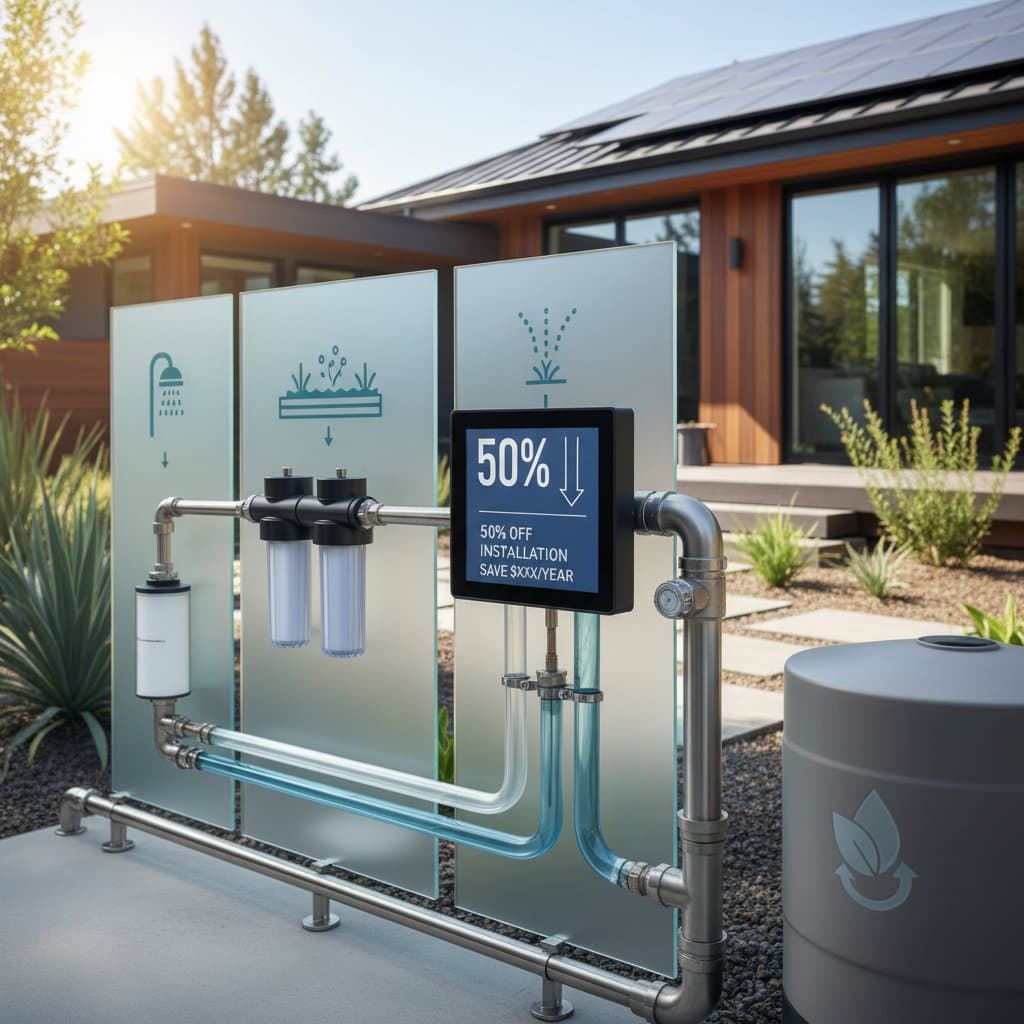
Consider a typical dual-source greywater setup: the full cost might approach six thousand dollars, but rebates can lower the net expense to under three thousand dollars. Such reductions demonstrate the potential to offset half or more of upfront investments. Moreover, rebate eligibility confirms adherence to health and environmental regulations, including proper filtration to prevent contamination or inefficient watering.
Strategies for Securing Optimal Rebates
Effective planning and timing enhance rebate outcomes. Adhere to the following steps prior to initiating a greywater project:
-
Verify Eligibility Requirements
Programs impose specific conditions, such as restrictions on irrigation coverage, lists of approved components, or mandatory inspections. -
File Pre-Approval Applications
Submit documentation before commencing work to avoid forfeiture of rebate funds. -
Select Qualified Professionals
Engage licensed plumbers or certified greywater specialists, as required by certain programs, to safeguard system integrity and rebate qualification. -
Maintain Comprehensive Records
Collect receipts, installation photographs, and inspection documentation; organized files expedite rebate processing. -
Arrange Post-Installation Inspection
A representative from the water district or agency verifies compliance before disbursing funds.
These procedures facilitate a seamless progression from planning to reimbursement.
Essential Installation and Maintenance Practices
Greywater installation extends beyond basic plumbing; it demands consideration of water volume, soil characteristics, and vegetation requirements for optimal function.
Installation Recommendations:
- Opt for gravity-fed configurations to minimize pump reliance and energy consumption.
- Limit untreated greywater storage to twenty-four hours to avert bacterial proliferation or unpleasant odors.
- Route water to mulch basins or infiltration trenches rather than directly onto foliage.
- Employ biodegradable, salt- and boron-free soaps and detergents.
Ongoing Maintenance Procedures:
- Examine and clean filters on a monthly basis to avoid obstructions.
- Inspect distribution lines for clogs or imbalanced flow.
- Evaluate system efficacy during arid conditions to confirm reliable operation.
Community-shared techniques, such as employing transparent tubing for flow assessment or fine-tuning slope gradients for even dispersal, prove valuable for troubleshooting and upkeep.
Addressing Frequent System Hurdles
1. Insufficient Water Pressure
Examine for air pockets or filter blockages if flow falters in irrigation lines. Substituting narrower hoses with broader alternatives often restores adequate circulation.
2. Unwanted Odors
Prompt usage prevents smells in greywater. Stagnation signals the need to modify outlets or incorporate minor aeration elements.
3. Excessive Watering or Accumulation
Imbalanced delivery may overwhelm specific plants. Calibrate valves or reconfigure outlets to achieve uniform landscape coverage.
4. Detergent Buildup in Soil
Transition to detergents formulated for plant safety; compatible options clearly indicate greywater suitability on labels.
These targeted modifications mitigate common issues and sustain rebate-supported system reliability.
Broader Impacts on Environment and Daily Life
Greywater recycling yields monetary savings alongside contributions to sustainable practices. It diminishes wastewater volume directed to treatment facilities, thereby reducing energy demands in processing. Homeowners sustain landscapes amid water restrictions without drawing from public supplies.
Research indicates that greywater-equipped residences achieve approximately forty percent lower outdoor water use compared to non-equipped counterparts. This efficiency fosters greater awareness of consumption patterns, encouraging conservation throughout the household. Visually, gardens and lawns retain vibrancy during dry spells, supporting robust outdoor spaces at minimal additional expense.
Steps to Implement Your Greywater Project
Pursuing a rebate-eligible greywater system requires deliberate preparation yet delivers enduring returns. Initiate contact with your local water authority or access their rebate resources to review available incentives. Obtain estimates from accredited installers; for basic laundry-to-landscape designs, consult detailed guides to assess DIY feasibility.
Upon approval, meticulously record each phase: capture pre- and post-installation images, retain invoices, and log interactions with professionals and officials. These documents secure rebates and demonstrate compliance for property evaluations or sales. As water rates escalate and conservation programs gain prominence, early action positions homeowners to capitalize on funding before limits are reached, yielding prompt bill reductions.
Greywater initiatives repurpose routine wastewater into an asset. Through precise engineering, diligent care, and strategic rebate utilization, establish a residence that conserves water effectively and generates sustained financial advantages. Proceed with thorough preparation, rigorous guideline adherence, and consistent system oversight.