Solar Shingles: Costs and ROI Essentials for Homeowners
Solar shingles represent a seamless fusion of roofing and renewable energy generation. These innovative tiles mimic traditional shingles in appearance while embedding photovoltaic cells to produce electricity. For those seeking an unobtrusive solar solution that avoids the visual clutter of mounted panels, solar shingles provide an elegant and efficient choice. Understanding their costs and long-term returns helps determine if they align with your home improvement goals.
Understanding Solar Shingles
Solar shingles function as photovoltaic roof tiles that supplant conventional roofing materials. Integrated solar cells within each shingle connect to create a unified power system. This design ensures they lie flush with the roof surface, preserving architectural integrity and enhancing curb appeal.
Typical dimensions include a width of 12 inches and a length of 86 inches, with a profile under one inch thick for minimal impact on roof pitch. Power output per shingle varies from 13 to 63 watts, influenced by manufacturer specifications and cell efficiency. For residential applications, systems often span 300 to 400 square feet on smaller homes, scaling to 1,000 square feet or more for expansive roofs, ensuring adequate coverage for diverse energy needs.
Breaking Down Solar Shingles Costs
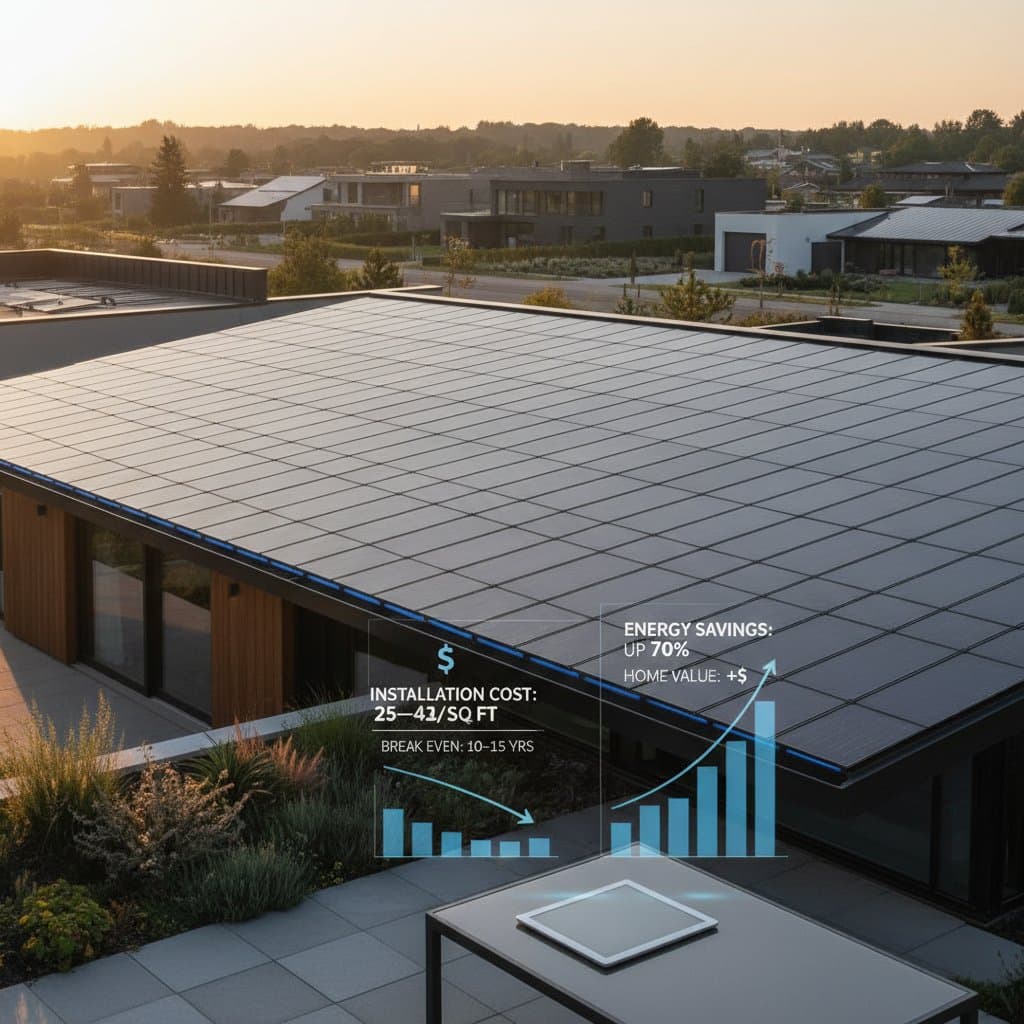
The initial expense for solar shingles exceeds that of standard asphalt roofs or conventional solar panels due to their dual-purpose engineering. Installation prices generally fall between $25 and $45 per square foot, encompassing materials, labor, and system integration. On a standard 2,000-square-foot roof, this translates to a total investment of $50,000 to $90,000.
In contrast, traditional solar panels cost $15 to $25 per square foot, but they require separate roofing considerations. Factors influencing the price include the roof's dimensions and incline, desired electricity generation capacity, selected brand and efficiency levels, regional labor expenses, and whether the project involves full roof replacement.
Opting for solar shingles during a scheduled roof overhaul can streamline expenses by combining structural updates with energy upgrades in a single project phase.
Calculating Return on Investment and Savings
ROI for solar shingles hinges on household energy consumption patterns, prevailing electricity rates in your area, and applicable federal or state incentives such as tax credits. Once operational, these systems typically slash monthly electric bills by 40 to 70 percent, depending on sunlight exposure and system scale.
Payback periods average 10 to 15 years, after which electricity production incurs no ongoing costs beyond minimal maintenance. A properly dimensioned installation over 25 years might generate 60,000 to 80,000 kilowatt-hours, yielding substantial cumulative savings often exceeding $30,000 in high-utility-cost regions.
Beyond direct financial gains, solar-equipped homes command 4 to 6 percent premiums in the real estate market, appealing to eco-conscious buyers and bolstering overall property equity.
Pitfalls to Sidestep in Solar Shingle Projects
One frequent oversight involves assessing roof integrity prior to installation. Proceed only after inspecting for damage, rot, or irregularities in the underlying decking, as these issues can compromise waterproofing and solar performance.
Another common error occurs when sizing the system inadequately, resulting in shortfall of projected energy yields. To prevent this, insist on comprehensive site assessments that model annual production based on your location's solar irradiance and usage profile.
Neglecting regulatory adherence poses risks as well. Adhere to the National Electrical Code for secure grounding, conduit routing, and interconnection protocols. Engage installers versed in both roofing and electrical standards to navigate permits and inspections smoothly.
Engaging Qualified Professionals
Attempting self-installation of solar shingles proves impractical and hazardous without specialized expertise. The process demands collaboration among certified roofers experienced in photovoltaic integrations, licensed electricians for grid-tie configurations, and permitting specialists familiar with local ordinances.
Professional involvement safeguards manufacturer warranties, which often span 25 years for power output and 10 to 20 years for product durability. They also optimize system layout to maximize efficiency, such as angling for optimal sun capture and minimizing shading from nearby structures.
Steps to Implement Solar Shingles Effectively
Begin your journey by evaluating your current roof's condition and energy audit to establish baseline needs. Solicit detailed proposals from at least three NABCEP-certified installers, focusing on itemized breakdowns of costs, projected outputs, and incentive eligibility.
Compare options by reviewing efficiency ratings, such as those exceeding 20 percent conversion rates from leading brands, and warranty terms that cover both energy production and weather resistance. Factor in financing avenues like solar loans or leases to manage upfront capital.
Ultimately, solar shingles deliver enduring value through reduced utility dependence, enhanced home resilience, and alignment with sustainable living principles. By methodically planning and executing the installation, you position your property for decades of reliable, green energy benefits.