2026 Microplastic Filter Costs: What Homeowners Pay
Microplastics pose a significant threat to household water quality. These minuscule particles evade conventional filters and contaminate sources used for drinking, cooking, and bathing. Homeowners increasingly seek microplastic filters to safeguard their water supply. The primary challenge lies in determining the investment required. This guide examines cost variations, compares installation approaches, and provides strategies for selecting an effective system within budget constraints.
Understanding Microplastic Filter Costs
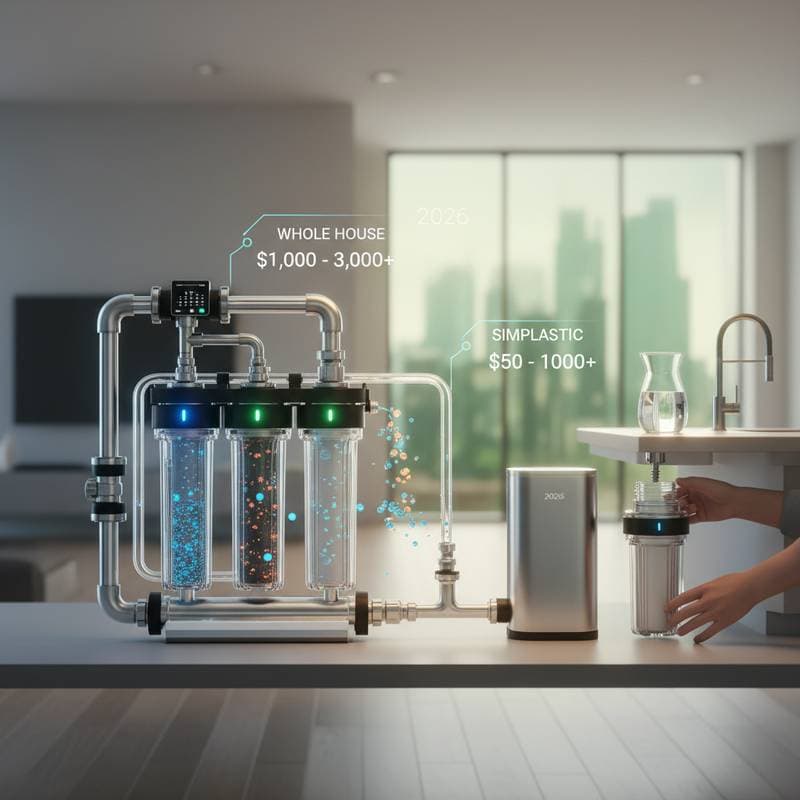
The expense of a microplastic filtration system hinges on filter type, installation approach, and plumbing scale. Options span from compact under-sink models to comprehensive whole-house units. Homeowners typically encounter costs between $50 and $3,000, influenced by immediate purchases and ongoing upkeep.
DIY Microplastic Filtration Costs
Individuals with basic plumbing skills often opt for self-installation to minimize expenses. Consider these typical breakdowns:
- Under-sink filters: $100 to $300 for the unit, targeting a single faucet like the kitchen sink.
- Countertop filters: $50 to $150, requiring no plumbing alterations but suitable only for drinking water.
- Whole-house filters: $400 to $1,000, accommodating broader water flow demands.
Supplementary items, including fittings, tubing, and brackets, contribute $30 to $80. Installation demands several hours, and errors such as inadequate sealing may cause leaks or inefficiencies.
Professional Microplastic Filter Installation Costs
Professionals guarantee precise setup and sustained functionality. Fees encompass labor and equipment:
- Labor charges: $200 to $500, varying with task intricacy and site access.
- System pricing: $800 to $2,500 for whole-house configurations, scaled by manufacturer and throughput.
- Enhancements: Additions like pressure regulators or sediment pre-filters increase costs by $100 to $400.
Such setups frequently include warranties and service agreements, enhancing long-term value.
Factors Affecting Pricing
Multiple elements shape overall expenditure:
- System scope: Whole-house models demand higher investment yet purify all incoming water.
- Source water characteristics: Elevated sediment or minerals necessitate preliminary treatments, elevating expenses.
- Plumbing configuration: Vintage infrastructures might require adaptations or pipe replacements.
- Flow capacity: Units engineered for greater volumes command premium prices.
- Upkeep demands: Cartridge replacements cost $50 to $200 apiece, contingent on durability and supplier.
Although self-installation appears economical, expert involvement promotes durability and reduces future complications.
DIY Versus Professional Installation: Key Considerations
The decision between self-guided and expert-led installation rests on personal expertise, available resources, and system demands.
Advantages of DIY Installation
- Expense reduction: Elimination of labor fees lowers the overall outlay.
- Schedule control: Proceed at a convenient pace without coordinating external services.
- Skill development: Offers practical experience in residential enhancements.
Limitations of DIY Installation
- Potential for malfunctions: Improper joints risk water damage or system failure.
- Warranty exclusions: Producers may void coverage absent certified setup.
- Performance gaps: Insufficient technical insight could compromise filtration efficacy.
Advantages of Professional Installation
- Precision assurance: Experts achieve optimal integration and operation.
- Tailored assessments: On-site evaluations pinpoint ideal filter specifications.
- Ongoing support: Warranties and service options secure enduring reliability.
- Efficiency gains: Completion occurs swiftly, often in mere hours.
Essential Skills and Tools for DIY
Successful DIY efforts require wrenches, pipe cutters, sealing tape, and occasionally a drill. Connections to primary lines involve halting water flow and relieving pressure prior to modifications. Novices benefit from professional assistance to avert hazards.
Safety and Duration Factors
Prioritize safety by verifying shut-off valve functionality and preparing for water interruptions. DIY projects span four to eight hours, depending on complexity. Professionals streamline the process, mitigating risks associated with high-pressure lines.
Common Questions on Microplastic Filtration
What is the cost of a whole-house microplastic filter?
Systems generally fall between $800 and $2,500, excluding setup fees. Premium multi-stage variants may exceed $3,000.
Do these filters address additional pollutants?
Many designs simultaneously diminish chlorine, particulates, metals, and organics, enhancing flavor and aroma.
What replacement interval applies to filters?
Cartridges endure six months to one year, based on consumption and impurity concentrations.
Are microplastic filters suitable for potable water?
Certified units comply with rigorous safety and performance benchmarks for consumption.
Is a pre-filter necessary?
High particulate or hardness levels warrant one to shield the primary filter and prolong service life.
Can installation occur outside?
Select units rated for exterior conditions; indoor placement averts freeze or UV degradation.
What upkeep does the system require?
Replace elements periodically and flush per guidelines to sustain performance.
When should professionals intervene?
Complex mains or limited experience signal the need for expert handling.
Justify the investment in microplastic filters?
Affirmative, particularly in contaminated regions or with private wells, yielding purer, healthier water.
Essential inquiries for installers?
Probe warranty terms, service routines, part pricing, and modification surcharges.
Step-by-Step Selection Process
Step 1: Analyze Water Composition
Employ test kits or expert labs to detect microplastics and impurities.
Step 2: Review Financial Parameters
Weigh unit costs against setup and recurring filter expenses.
Step 3: Gauge Plumbing Proficiency
Assess pipe-handling capabilities; defer to experts for intricate arrays.
Step 4: Anticipate Upkeep Needs
Evaluate replacement ease and frequency alignment with routines.
Step 5: Finalize Choice
Align selection with expertise, finances, and sustainability objectives.
Project Preparation Essentials
Thorough Investigation
Examine certifications and microplastic-specific features in product details.
Venue Readiness
Evacuate the site, isolate water, and facilitate connection access.
Financial Planning Advice
Incorporate future filters and fittings into projections to avoid overruns.
Timeline Arrangement
Book experts during low-impact periods; reserve ample time for personal efforts.
Sustaining Filtration Effectiveness
Regular cartridge swaps prevent clogging and maintain purity. Monitor flow rates for early issue detection. Annual professional inspections ensure alignment with evolving water standards. These practices maximize health benefits and extend system longevity, delivering sustained value from the initial outlay.