Greywater System Costs: Permits, Installation, and Savings Guide
Homeowners increasingly seek methods to enhance water efficiency, and greywater systems provide a reliable approach. Greywater consists of wastewater from sinks, showers, and laundry, excluding toilets and kitchen sinks. This water can support landscape irrigation or toilet flushing, promoting conservation without complicating daily routines.
Initial concerns often involve expenses, regulatory hurdles, and return on investment. A clear grasp of these elements enables informed choices, minimizing disruptions during setup.
Benefits of Greywater for Residential Use
Observe water from a shower drain away unused, and recognize an opportunity for conservation. Greywater systems redirect this flow for productive purposes, lowering utility expenses especially where irrigation dominates consumption. Such practices foster environmental responsibility and ease pressure on public infrastructure.
Organizations like the National Kitchen & Bath Association endorse safe water reuse under established plumbing standards. Select a system suited to your site, secure necessary approvals, and budget accordingly to proceed confidently.
Cost Overview for Greywater Installations
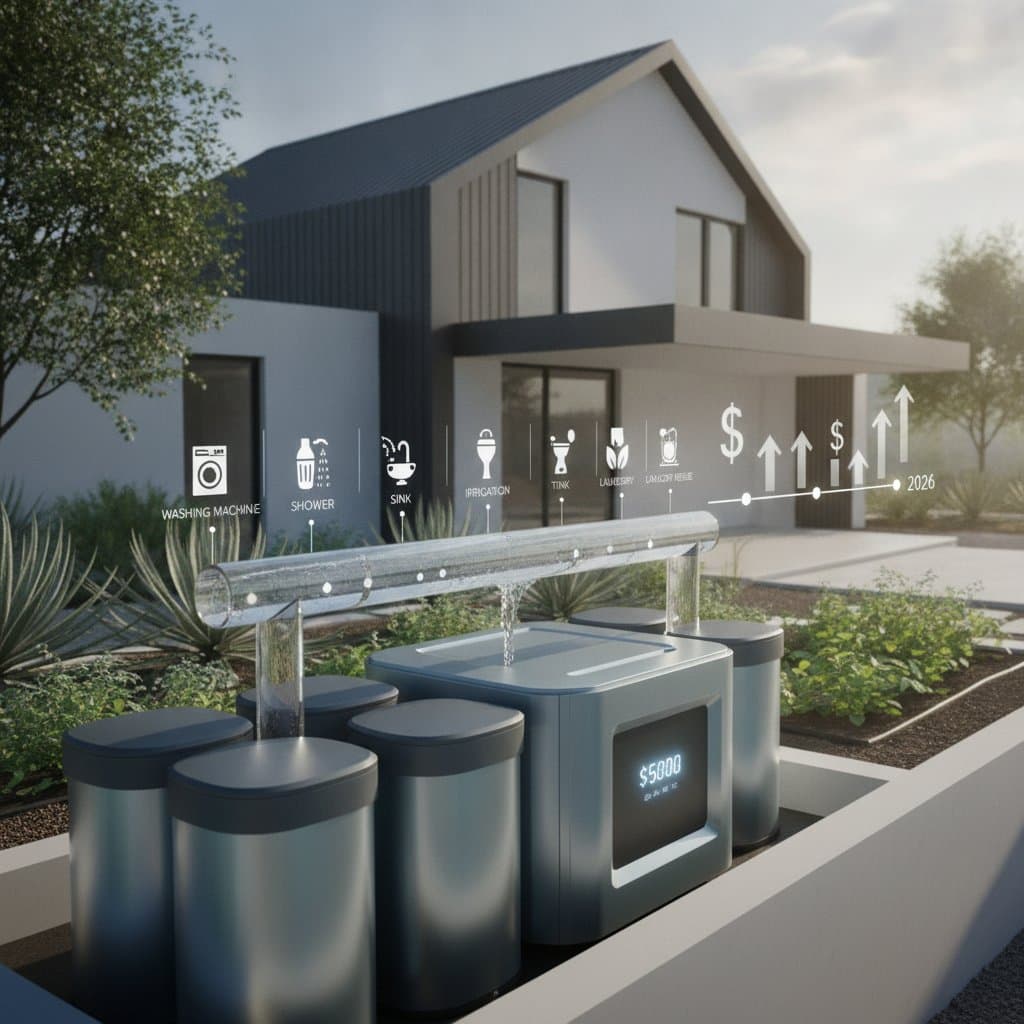
Expect to invest between $1,200 and $8,000 for a greywater system, influenced by design intricacy and professional involvement. Basic laundry diversions align with the lower spectrum, whereas integrated home-wide units with advanced features approach the upper limit.
The following table outlines key options:
| System Type | Cost Range | Key Features | DIY Potential |
|---|---|---|---|
| Laundry-to-landscape | $1,200-$2,500 | Washing machine diversion to irrigation | High |
| Single-fixture capture | $2,500-$4,000 | Shower or sink water redirection | Moderate |
| Whole-home integration | $5,000-$8,000 | Multi-source collection with filtration | Low |
| Filtration and storage unit | $7,000-$10,000 | Disinfection for broader reuse | Professional |
These estimates cover materials, approvals, and labor. Upfront costs recoup through sustained reductions in water usage.
Exploring Greywater System Configurations
Laundry-to-Landscape Setup
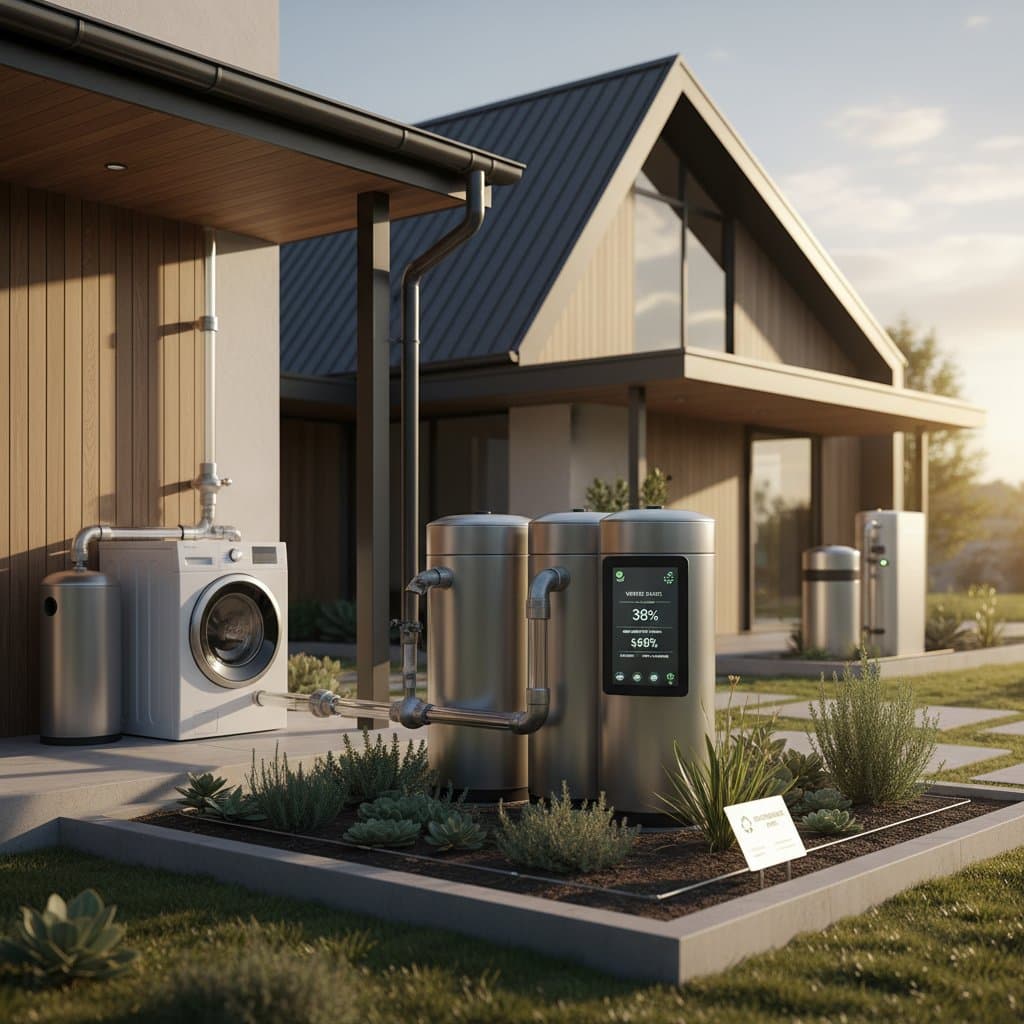
This entry-level design routes washing machine output via a three-way valve to an external irrigation network. Install a 2-inch drain line paired with 1-inch polyethylene tubing for uniform distribution. Opt for eco-friendly, low-phosphate detergents to maintain water quality without added filtration.
Suitable for those pursuing rapid efficiency gains with minimal alterations. A family of four may conserve 15,000 gallons annually through this method.
Single-Fixture Diversion Systems
Intercept drain lines from a shower or sink prior to sewer connection, directing flow through a coarse filter to subsurface irrigation. Access 1.5-inch lines and ensure adequate gradient for gravity operation; slab homes may require a compact pump for elevation challenges.
Ideal for properties with reachable underfloor spaces. Achieve 20 to 25 percent savings on exterior watering demands.
Comprehensive Whole-Home Systems
Aggregate greywater from various fixtures, apply multi-stage filtration, and incorporate storage for versatile applications like irrigation or toilet supply. Provision 100 to 300 gallons of capacity using PVC or HDPE pipes, supported by a 0.5 to 1 horsepower pump.
Recommended for dedicated sustainability efforts yielding substantial returns. Realize up to 40 percent overall household water reduction.
Navigating Permit Requirements
Local regulations govern greywater projects, varying by jurisdiction yet adhering to common principles. Basic diversions like laundry-to-landscape often qualify for exemption or streamlined review if safety protocols are met.
More elaborate setups demand plumbing permits, potentially with health department oversight for storage or reuse beyond irrigation. Inspections verify separation of greywater from blackwater, mandating backflow preventers and labeled non-potable lines.
Submit designs illustrating flow paths and treatment for larger installations. Fees range from $100 to $500; consult your building authority online and engage a greywater-savvy plumber for documentation.
Calculating Financial Returns
Redirecting greywater to irrigation typically trims annual bills by $150 to $400 for average households. In high-cost areas, gains surpass $600 yearly. Over a decade, these accumulate to surpass most setup expenses.
Additional value emerges from preserved landscaping during shortages and lessened regional water demand. Track your usage patterns to project personalized benefits.
Avoiding Installation Pitfalls
Conceptual simplicity belies potential errors in execution. Select biodegradable detergents to prevent residue issues. Incorporate surge filters to safeguard distribution lines from debris.
Maintain proper downhill gradients or integrate pumps as needed. Exclude kitchen or toilet inputs to uphold system integrity. Balance application rates to nourish rather than overwhelm vegetation.
Thorough site mapping precedes any modifications, averting costly corrections.
Deciding Between DIY and Professional Installation
Handy individuals adept in basic plumbing and irrigation can manage laundry diversions independently. Gather tools including a hole saw, PVC cutter, diverter valve, tubing, clamps, and a shovel for 4-to-6-inch trenches. Allocate a weekend for assembly and testing.
Delegate filtration, pumping, or interior rerouting to certified professionals for code adherence and contamination safeguards.
Ensuring Accessibility and Compliance
Adapt systems for limited mobility by favoring automated valves and above-ground emitters over deep burials. Position filters at convenient heights and apply clear labeling. For toilet applications, treat water thoroughly and enforce air gaps between supplies.
These measures uphold safety standards while broadening usability.
Sustaining System Performance
Regular upkeep preserves longevity. Clean laundry lint filters promptly. Alternate watering zones to avoid soil overload. Monitor for odors signaling clogs or stagnation, addressing promptly.
Annual reviews confirm operational efficiency.
Steps to Implement Your Greywater Project
Align the system with your property's configuration, adhere to regulations, and anticipate ongoing care. Review local guidelines, diagram plumbing routes, and estimate savings from bill reviews. This preparation clarifies self-installation viability or the need for expert assistance, paving the way for effective water management.