
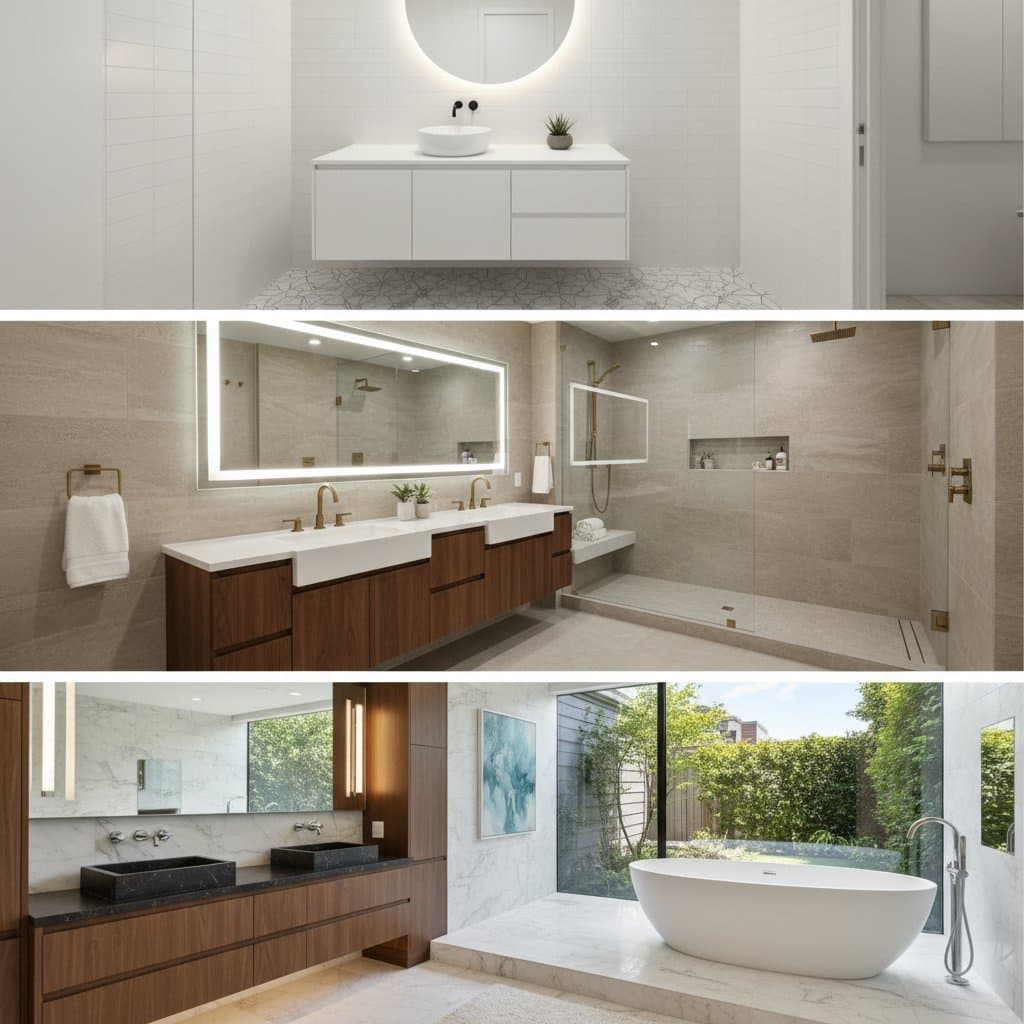
Budget Your Bathroom Remodel: Costs by Size
A bathroom remodel demands more than selecting tiles and fixtures. The essential task lies in aligning your design aspirations with financial constraints. Whether refreshing a compact powder room or overhauling a primary suite, grasping how expenses vary by square footage forms the basis of an effective project. This guide details pricing structures according to size, examines primary cost influencers, and guides decisions on conservation versus enhancement.
Small Bathroom Remodel Costs
Small bathrooms, typically measuring 20 to 40 square feet, appear frequently in guest areas, condominiums, or vintage residences. Despite their limited dimensions, these areas necessitate precise organization to ensure usability and visual appeal.
Typical Cost Range
An unpretentious overhaul of a small bathroom generally ranges from several thousand dollars to tens of thousands, contingent upon the extent of work. A surface-level update involving fresh paint, updated hardware, and a ready-made vanity proves the most economical option. In contrast, a comprehensive gut job featuring bespoke tiling and enhanced plumbing reaches the upper limit.
Cost Breakdown
- Demolition and disposal: Extracting outdated fixtures and tiles usually incurs charges from a few hundred dollars to more than one thousand.
- Plumbing and electrical: Shifting fixture positions may contribute several thousand dollars, whereas basic replacements such as a faucet or lighting element cost considerably less.
- Flooring: Ceramic or porcelain tiles offer resilience against water and wear, with material expenses averaging two to five dollars per square foot.
- Fixtures: A narrow vanity, conventional toilet, and straightforward shower configuration maintain economical outlays.
- Labor: Confined quarters in small bathrooms reduce work efficiency, leading to elevated rates per square foot relative to expansive areas.
Cost-Saving Tips
- Retain current plumbing configurations to minimize alterations.
- Select tiles in smaller dimensions to reduce material surplus.
- Install a preformed shower base rather than a tailored tile surround.
- Opt for mid-tier fixtures from established manufacturers such as Delta or Moen to secure durability over time.
One homeowner in Reddit’s r/HomeImprovement forum reported that preserving the original layout reduced expenses by nearly thirty percent from initial estimates. Such pragmatic choices enable premium outcomes within restrained funds.
Large Bathroom Remodel Costs
Large bathrooms, exceeding 75 square feet, commonly incorporate dual vanities, distinct bathing and showering sections, and superior surfacing. These environments function more as private retreats than basic utilities.
Typical Cost Range
A luxurious renovation of a large bathroom frequently surpasses six figures, especially with structural modifications or opulent materials. A moderate-scale project for such a space still demands substantially higher investment than for smaller counterparts, as all components expand proportionally.
Cost Breakdown
- Plumbing: Accommodating paired sinks, various shower outlets, or a standalone tub involves extra piping and controls.
- Tile and surfaces: Expansive tiles, genuine stone, or intricate mosaics elevate both supply and installation fees.
- Cabinetry: Bespoke woodworking with embedded illumination or recessed storage improves utility at increased cost.
- Technology: Features like intelligent mirrors, underfloor warming, and electronic shower controls represent favored additions that accumulate several thousand dollars.
- Permitting and inspections: Extensive projects provoke thorough regulatory evaluations and extended durations.
Design and Cost Balance
Property owners frequently allocate excess funds to aesthetics that yield limited returns. Professionals featured on Houzz recommend emphasizing perennial materials ahead of fleeting trends. Subdued palettes, robust stone counters, and enduring fixtures preserve market value and defer subsequent overhauls.
Budget Planning and Cost Control
Effective budgeting maintains oversight during the endeavor. Divide allocations into defined segments and reserve a buffer for unforeseen issues.
Sample Budget Allocation
- Labor: 35 to 50 percent
- Fixtures and finishes: 25 to 35 percent
- Cabinetry and countertops: 10 to 15 percent
- Plumbing and electrical: 10 to 15 percent
- Permits and unexpected repairs: 5 to 10 percent
These proportions adjust based on project magnitude and local rates. Obtain detailed estimates from contractors to facilitate precise comparisons.
Cost Control Tips
-
Establish a strict upper limit prior to commencement. Convey your total expenditure to the contractor and document it formally.
-
Procure materials beforehand. Supply disruptions can halt advancement and inflate labor charges.
-
Resist alterations during execution. Modifying selections post-installation initiates supplemental orders and surcharges.
-
Consider future sales. Steer clear of overly customized elements if resale looms soon; impartial aesthetics attract broader audiences.
A Quora participant with two decades in home renovations observed that clients who confirm all selections before initial teardown consistently finish promptly and adhere to finances.
Timeline and Project Preparation
Project durations hinge on complexity, supplies, and specialist schedules. Surface refreshes conclude in weeks, whereas full overhauls with utility relocations extend further.
Steps to Prepare
-
Outline layout and aesthetics. Develop a proportional diagram and settle fixture arrangements promptly.
-
Choose materials. Secure tiles, fixtures, and storage units ahead of teardown to circumvent interruptions.
-
Engage qualified experts. Examine feedback, confirm credentials, and solicit endorsements.
-
Arrange provisional facilities. For single-bathroom dwellings, arrange substitute provisions.
-
Safeguard neighboring spaces. Employ protective coverings and barriers to confine debris.
Thorough readiness averts expensive delays and streamlines collaboration among specialists.
Sustaining Your Renovation
After completion, uphold your bathroom through consistent upkeep to maximize longevity.
- Apply sealant to grout lines yearly to block water intrusion.
- Service exhaust fans regularly to mitigate moisture accumulation.
- Examine sealant around bathing areas bimonthly for integrity.
- Employ mild cleaning agents to safeguard surfaces from fading.
Routine attention prolongs the remodel’s vitality and preserves its pristine condition, ensuring ongoing enjoyment and value.




