Understanding 2026 Greywater System Costs and Rebates
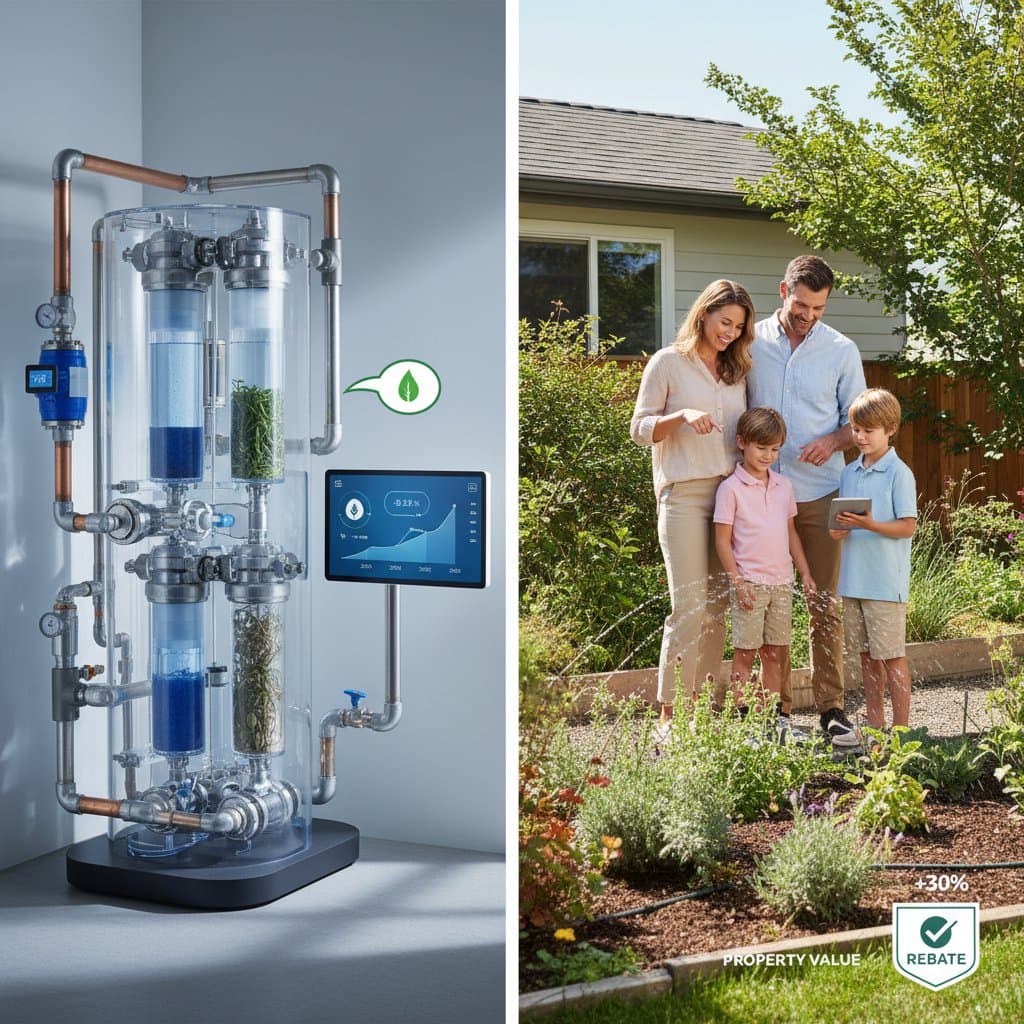
Greywater systems capture water from household sources like sinks, showers, and washing machines for reuse in irrigation or flushing toilets. These setups reduce freshwater demand, decrease utility bills, and align with broader sustainability goals. As rebates expand in 2026, installation becomes more affordable, enabling more homeowners to adopt this technology without straining budgets.
Core Components of Greywater System Pricing
Residential greywater installations typically cost between $2,500 and $12,000, based on national data from recent projects. Basic systems that divert laundry water to garden beds start at the lower end, around $2,500 to $4,000, due to simple plumbing rerouting and gravity-based flow. Advanced whole-house models, which process water from multiple fixtures, reach $8,000 to $12,000 or higher, incorporating pumps, filters, and storage.
Location plays a significant role in these figures. In water-stressed regions like California or Arizona, expect 20 to 30 percent higher costs from elevated labor rates and strict permitting requirements. Conversely, Midwest states may see prices 10 to 15 percent below average, thanks to abundant contractor availability and milder regulations. Seasonal fluctuations add another layer; summer installations in arid areas can increase by 15 percent due to heightened demand.
Material choices and local codes further shape expenses. Systems using durable PVC piping and basic sediment filters keep costs down, while those with UV disinfection or advanced bio-filters add $1,000 to $3,000. Always verify compliance with municipal guidelines to avoid fines or rework.
Common Pricing Approaches in the Industry
Contractors employ varied billing strategies to suit different project scales. Hourly labor rates generally span $75 to $150, reflecting technician expertise and regional norms. For straightforward jobs, flat-rate quotes provide transparency, often totaling $3,000 for a basic setup.
Larger endeavors benefit from per-unit pricing, such as $500 per additional fixture connection, or scope-based estimates that outline phases like design and testing. Bundled services, combining installation with initial calibration, save 10 to 20 percent compared to piecemeal hiring.
Maintenance options increasingly follow subscription models. Annual plans, priced at $200 to $500, cover filter replacements and inspections, preventing clogs and ensuring efficiency. These arrangements prove valuable for systems handling high volumes of water.
Overview of Service Tiers and Associated Costs
-
Entry-Level Systems: Laundry-to-landscape designs cost $2,500 to $4,000. They involve minimal alterations, relying on natural drainage to irrigate non-edible plants.
-
Mid-Range Systems: Multi-fixture units, processing sink and shower water, range from $5,000 to $8,000. These provide broader reuse, potentially recycling 30 to 50 percent of household greywater.
-
High-End Systems: Automated versions with sensors and app controls fall between $9,000 and $15,000. Ideal for expansive homes, they optimize water distribution and track usage in real time.
-
Custom Integrations: Tailored setups merging greywater with solar pumps or rainwater harvesting exceed $15,000. Engineering consultations add $500 to $1,500 upfront.
Each tier balances upfront investment with reuse capacity, so assess your daily water output—typically 40 to 60 gallons per person—to select appropriately.
Factors That Drive Cost Variations
Property specifics heavily impact totals. Larger lots demand extended piping, adding $500 to $2,000 in materials. Homes with intricate plumbing or steep terrain require extra engineering, potentially increasing labor by 25 percent.
Pump-dependent systems for uphill irrigation tack on $800 to $1,500, while underground installations to preserve aesthetics double excavation fees. Urban settings command higher rates—up to $120 per hour—due to licensing demands, whereas rural areas offer savings through lower overhead.
Soil permeability and climate also matter. Sandy soils simplify drainage setups, cutting costs, but clay-heavy ground necessitates costly amendments like French drains.
Additional Services and Potential Fees
Beyond core installation, expect charges for essentials like annual filter swaps at $100 to $300 or tank sanitization at $200 to $400. Diagnostic visits, using tools to check flow rates and pH levels, run $150 to $250.
Site evaluations, conducted by certified plumbers, cost $200 to $500 but identify issues early, such as incompatible soaps that could clog filters. Rush services during peak seasons may add 20 to 50 percent premiums.
Some firms include warranties covering parts for five years, offsetting minor repairs without extra billing.
Navigating Rebates and Financial Incentives in 2026
Rebate programs proliferate in 2026, driven by federal and state water conservation initiatives. Many districts reimburse 20 to 50 percent of costs, up to $3,000 for qualified systems. For instance, programs in the Southwest target drought mitigation, offering $1,000 fixed rebates for basic installs.
Layer incentives by pairing greywater with low-flow fixtures; combined setups can yield additional $500 credits. Check eligibility through local utility websites or environmental agencies, as applications often require pre-approval and post-installation verification.
Utility companies frequently provide low-interest loans or grants, reducing effective costs to under $2,000 for entry-level systems. These supports not only lower barriers but also accelerate payback periods to three to five years via bill reductions of 20 to 40 percent.
Steps to Install and Maximize Value
Start by gathering three to five quotes from licensed professionals, emphasizing those with greywater certifications. Discuss your water usage patterns and site constraints to tailor recommendations.
Prioritize systems matching your needs, such as pump-free options for flat yards. Leverage rebates early in planning to refine budgets.
Regular upkeep, like quarterly filter rinses, sustains performance and qualifies for extended incentives. Ultimately, these investments yield annual savings of $200 to $600, elevate home resale appeal, and foster water-wise living for the long term.