Greywater in 2026: Costs, Permits, and Home Savings
Reusing household water has emerged as a viable strategy for homeowners seeking to reduce expenses and minimize waste. Greywater consists of lightly contaminated water from sources such as showers, sinks, and washing machines. This type of water differs from blackwater, which originates from toilets and requires more intensive treatment. Equipped with an appropriate system, greywater undergoes filtration and redirection for applications like irrigation or toilet flushing. Homeowners increasingly adopt these systems to achieve financial savings, alleviate pressure on municipal water supplies, and promote environmentally responsible practices.
What Greywater Systems Do
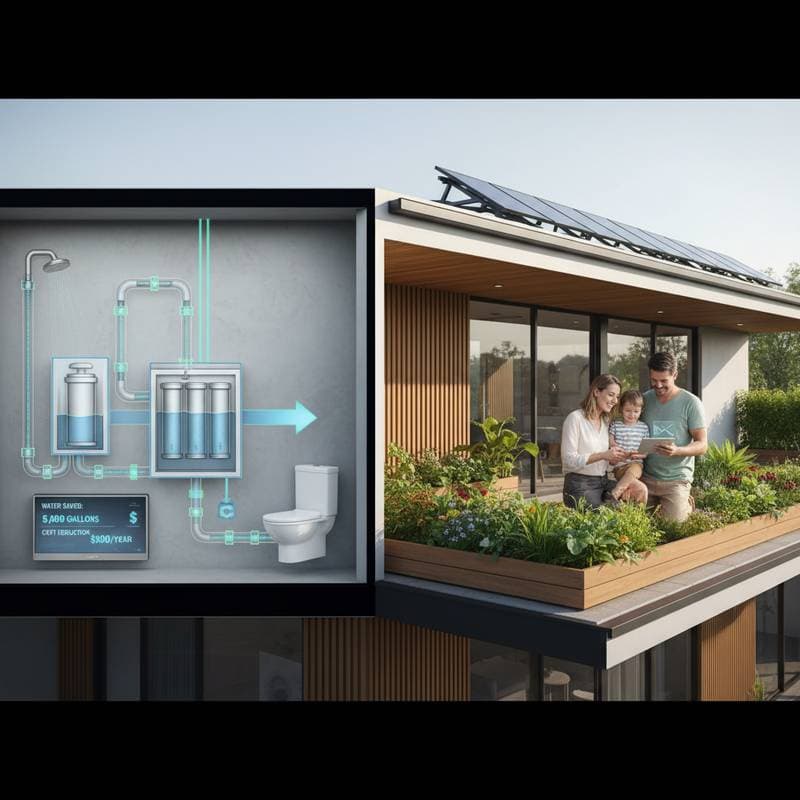
A greywater system collects wastewater from designated drains, applies filtration, and redirects it for secondary use. The setup typically includes a storage tank, a pump, and components for basic treatment. Basic models employ straightforward filters, whereas advanced versions incorporate biological processes or mechanical purification methods. The primary objective remains ensuring the water suits non-potable purposes without posing health risks.
Suggested image: A labeled diagram of a home plumbing layout showing greywater collection points and reuse areas, with alt text “Illustration showing greywater collection from shower and laundry feeding a garden irrigation setup.”
Why Homeowners Choose Greywater Recycling
Multiple advantages render greywater systems attractive to property owners. Primary among them are decreased water bills and lessened environmental impact. In regions facing water scarcity, these systems deliver a reliable supply for landscaping and exterior maintenance. Numerous homeowners express satisfaction in contributing to reduced household waste through this method.
Key benefits include:
- Lower utility costs. Reusing greywater can reduce overall consumption by as much as 50 percent in certain households.
- Reduced demand on local systems. By retaining water on-site, the burden on public treatment facilities diminishes.
- Healthier landscapes. The water often carries trace nutrients that enhance plant vitality and growth.
- Sustainable property value. Prospective buyers view these installations as valuable enhancements, particularly in markets prioritizing ecological features.
Cost Breakdown for Greywater Systems
The expense of a greywater system varies based on its scale, sophistication, and regional material prices. A fundamental manual configuration with essential filters may cost less than one thousand dollars. Mid-level options, featuring pumps, storage tanks, and automated diverters, generally range from one thousand to three thousand dollars. Sophisticated setups with intelligent sensors and seamless irrigation integration can exceed five thousand dollars.
Suggested chart: A bar chart comparing average costs by system type, labeled “Manual,” “Mid-range,” and “Advanced,” with alt text “Chart showing greywater system cost comparison by type.”
Cost factors to consider:
- System type. Gravity-based designs prove more economical than those requiring pumps or advanced filtration.
- Installation labor. Engaging a professional plumber or certified specialist contributes significantly to the overall price.
- Maintenance needs. Components like filters, tanks, and pumps necessitate periodic cleaning or replacement, typically every few months.
- Permitting fees. Local regulations may impose charges for inspections or plan approvals.
Although initial investments differ, many owners recoup expenses through savings within three to five years. Certain jurisdictions offer rebates or tax incentives that accelerate payback periods. For instance, evaluate system efficiency by calculating annual water usage reductions against setup costs to project return on investment accurately.
Permits and Local Rules
Most installations require approval from municipal authorities to confirm compliance with safety standards. Officials seek assurance that the system avoids contaminating potable water sources. Permit processes range from basic filings to comprehensive plumbing evaluations. Contact the local building department early to understand specific requirements.
Suggested image: A photo of a plumber connecting greywater pipes under a sink, with alt text “Professional plumber installing greywater diverter valve under sink.”
Preparation proves essential: compile detailed schematics illustrating drain integrations, treatment protocols, and output locations. Regulations vary; some locales restrict applications to subsurface irrigation, while others permit indoor uses like toilet replenishment. Adhering to these guidelines safeguards public health and ensures operational legitimacy. Consult certified professionals to navigate variations, such as soil percolation tests for outdoor discharge systems.
Maintenance and Operation
Routine upkeep maintains the reliability of a greywater system. Clean filters biweekly to remove debris accumulation. Rinse storage tanks quarterly to avert sediment buildup. Test pumps monthly for consistent performance and address any irregularities promptly.
Maintenance checklist:
- Rinse filters and screens thoroughly.
- Inspect hoses and connections for potential leaks.
- Flush tanks using fresh water.
- Replace worn seals or gaskets as needed.
- Maintain a log of all maintenance activities.
Select biodegradable, low-sodium detergents to preserve system integrity and support plant health. This practice minimizes chemical residues that could impair filtration or harm vegetation. Owners often find that establishing a calendar-based schedule simplifies adherence, transforming maintenance into a straightforward habit.
Comparing Greywater to Other Water-Saving Methods
Greywater recycling represents one effective approach among various conservation techniques. Alternatives include rainwater collection, installation of low-flow appliances, and automated irrigation controllers. Greywater uniquely repurposes water already present within the home's infrastructure, converting potential waste into a valuable asset.
Suggested chart: A comparison table showing “Greywater,” “Rainwater Harvesting,” and “Low-Flow Fixtures” with pros and cost ranges, alt text “Comparison of water-saving methods by cost and efficiency.”
Integrating greywater with complementary methods yields optimal results. For example, pair it with rainwater barrels for comprehensive coverage of both interior and exterior demands. Assess site-specific factors, such as rainfall patterns or household water profiles, to determine the most synergistic combination.
Addressing Common Concerns and Misunderstandings
Potential users frequently express apprehension regarding odors or pathogen risks associated with greywater. Contemporary designs incorporate features like continuous circulation and robust filtration to mitigate these issues effectively. Stagnation becomes unlikely, and proper sealing prevents microbial proliferation.
Installation complexity deters some, but modular kits simplify the process for DIY enthusiasts. Follow manufacturer guidelines, including pressure testing connections, to achieve secure setups. Engage online communities or sustainability organizations for practical insights from experienced users.
Reports from adopters highlight tangible outcomes: measurable bill reductions, vibrant gardens, and enhanced flexibility during droughts. These accounts demystify the technology and encourage broader adoption. Consider starting with a pilot diversion from the laundry to gauge performance before full-scale implementation.
Steps to Implement Greywater Recycling
Begin by researching local ordinances and consulting a qualified plumber for site assessment. Identify viable connection points, such as the washing machine outlet, and select filters compatible with your water quality. Proceed with a modest setup, like manual diversion to garden beds, to build familiarity.
Document usage metrics, including pre- and post-installation bills, to quantify benefits. Scale up gradually, incorporating automation for efficiency. This methodical approach ensures seamless integration and maximizes long-term advantages.
Greywater systems empower homeowners with direct influence over resource management. They deliver cost reductions, foster ecological balance, and bolster home resilience. Through diligent planning and upkeep, these installations evolve into enduring assets that elevate daily living standards.