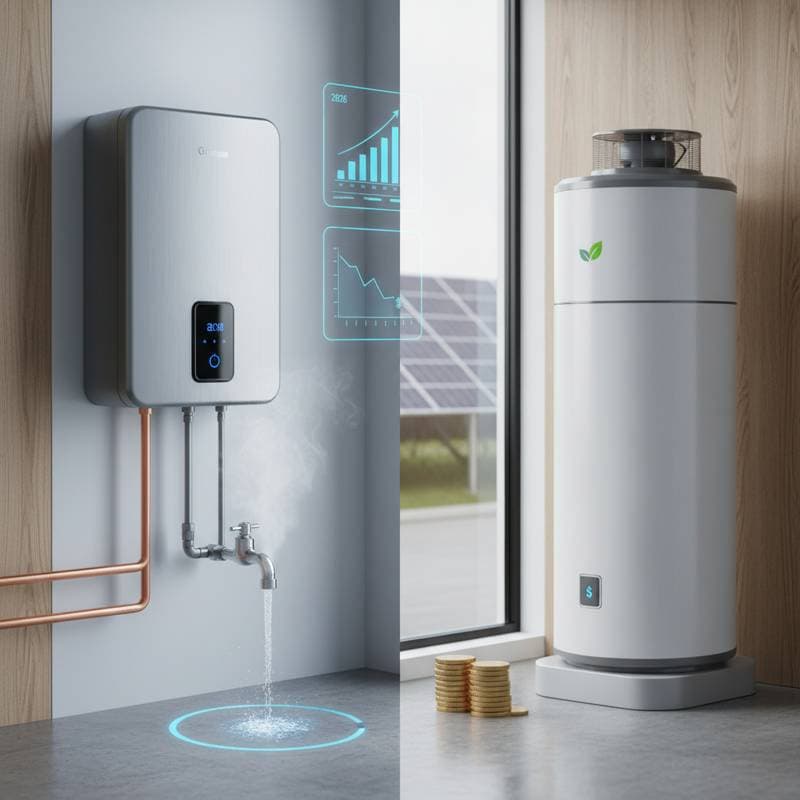
Understanding 2026 Costs: Tankless versus Heat Pump Water Heaters
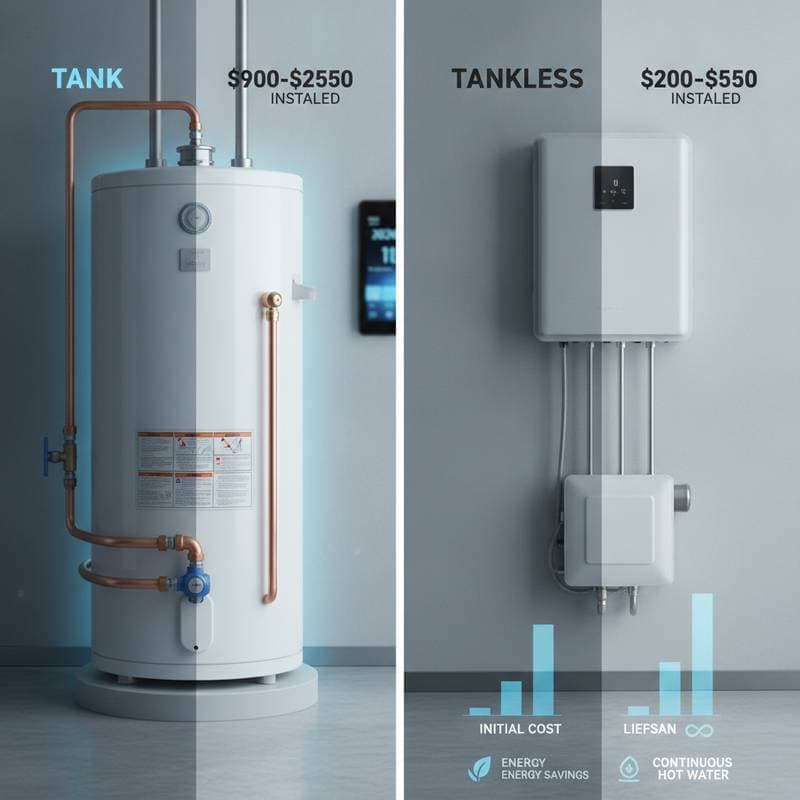
Selecting a water heater represents a significant investment that influences household comfort and energy expenses for an extended period. Tankless water heaters and heat pump water heaters stand out as leading efficient choices. These systems employ distinct technologies, each suited to specific residential setups. A clear comparison of their costs, efficiency, and upkeep enables informed decision-making for long-term benefits.
This analysis details installation expenses, operational costs, durability, performance metrics, and maintenance requirements. It also addresses indirect factors such as energy rebates and environmental impacts that shape overall value.
The Mechanics of Heat Pump Water Heaters
Heat pump water heaters, sometimes referred to as hybrid units, utilize electricity to transfer heat from ambient air to stored water. Rather than producing heat through direct combustion or resistance, they function similarly to a reversed air conditioning system. A compressor and refrigerant loop capture thermal energy from the surrounding environment and deliver it to the water reservoir.
Primary Benefits
- Superior efficiency levels. These units achieve two to three times the efficiency of conventional electric heaters by leveraging existing heat sources.
- Reduced utility expenses. Homeowners frequently experience savings of 50 to 70 percent on water heating bills following installation.
- Integrated storage capacity. The built-in tank ensures a consistent supply of hot water, accommodating peak usage without interruption.
- Incentive opportunities. Numerous utility providers and federal initiatives provide financial rebates for adopting high-efficiency appliances.
Notable Limitations
- Elevated initial investment. Purchase prices exceed those of traditional electric alternatives.
- Specific spatial demands. Optimal operation requires approximately 750 cubic feet of surrounding air volume.
- Ambient temperature effects. The process expels cooler air into the space, potentially lowering room temperatures in confined areas.
- Extended recovery times. Reheating from a cold state occurs more slowly compared to gas-based alternatives.
Performance Efficiency and Annual Expenses
Both technologies demonstrate strong energy performance, though through different mechanisms. A standard tankless gas water heater attains 90 to 98 percent thermal efficiency, varying by condensing or non-condensing design. Electric tankless variants match these rates but consume substantial power during simultaneous high-demand scenarios.
Heat pump water heaters reach efficiency ratings of 200 to 300 percent, effectively multiplying input electricity into greater heat output via ambient energy capture. This advantage proves most pronounced in temperate climates, yielding substantial bill reductions.
For a household of four individuals:
- Gas tankless model: Yearly energy expenditure ranges from $200 to $350.
- Electric tankless model: Yearly costs fall between $250 and $400.
- Heat pump model: Annual expenses typically span $100 to $200.
These estimates vary based on regional electricity or gas rates, daily hot water consumption, and seasonal temperatures. In colder locales, heat pump systems may incur higher costs due to increased reliance on supplementary electric heating elements.
Installation Space and Setup Demands
Tankless water heaters feature compact footprints, allowing wall mounting indoors or outdoors. They suit apartments, compact residences, or limited utility spaces effectively. Gas versions necessitate exterior venting and fresh air intake, whereas electric models require only adequate electrical circuit capacity.
Heat pump water heaters demand greater volume, ideally 7 by 10 feet of unobstructed airspace for air circulation. They perform optimally in basements, garages, or dedicated utility areas with temperatures between 40 and 90 degrees Fahrenheit. Placement in enclosed closets diminishes efficiency; many installations incorporate ducting to redirect airflow from adjacent rooms.
Comprehensive Ownership Cost Analysis
Evaluating total ownership involves summing initial outlays, ongoing operations, and upkeep over a decade.
Sample Tankless Water Heater Breakdown:
- Initial installation: $3,500
- Yearly operational cost: $300
- Annual maintenance: $100
- Decade total: Approximately $7,500
Sample Heat Pump Water Heater Breakdown:
- Initial installation: $2,500
- Yearly operational cost: $150
- Annual maintenance: $80
- Decade total: Approximately $4,300
Although tankless units often endure longer, heat pump options frequently demonstrate lower cumulative costs within the initial ten years. Factors like fluctuating energy tariffs, family composition, and rebate availability can alter these projections.
Essential Factors for Purchase Decisions
Assess the following elements prior to selection:
- Regional climate conditions. Heat pump systems thrive in mild or warmer environments; tankless models remain unaffected by weather but depend on reliable fuel sources.
- Family demographics. Larger households gain from tankless on-demand supply, while smaller groups benefit from heat pump conservation.
- Available infrastructure. Limited space favors wall-mounted tankless designs over bulkier heat pump tanks.
- Existing utilities. Natural gas-equipped homes may optimize tankless efficiency; fully electric setups align seamlessly with heat pumps.
- Operational noise. Heat pumps generate mild compressor and fan sounds; tankless units operate quietly.
- Projected energy trends. Stable electricity pricing in certain areas positions heat pumps as a prudent future-proof choice.
Steps to Select and Install Your Ideal System
Begin by auditing your home's hot water usage patterns and energy sources. Consult local contractors for site-specific assessments, including rebate eligibility. Prioritize certified models from reputable manufacturers to ensure reliability and warranty coverage. With these insights, you position your household for sustained savings and enhanced efficiency through 2026 and beyond.