2026 Mini-Split AC Costs: Installation Breakdown
Mini-split air conditioners rank among the leading options for homeowners seeking enhanced comfort and energy efficiency without the need for extensive ductwork. Individuals upgrading outdated systems or adding cooling to new spaces benefit from a clear grasp of installation expenses to facilitate informed planning and prevent unexpected charges. This guide examines primary cost elements, including equipment selection, labor requirements, and ongoing operational considerations.
Understanding Mini-Split Systems
A mini-split system comprises an indoor air-handling unit and an outdoor condenser, linked by refrigerant lines and electrical wiring. This configuration bypasses the requirement for conventional ductwork, rendering mini-splits suitable for residences without central ducts, historic structures, or areas demanding precise zoning.
Each indoor unit manages a designated zone, enabling independent temperature regulation across rooms. The adaptability of multi-zone configurations represents a primary benefit, though it directly affects installation expenses.
Average Cost Range
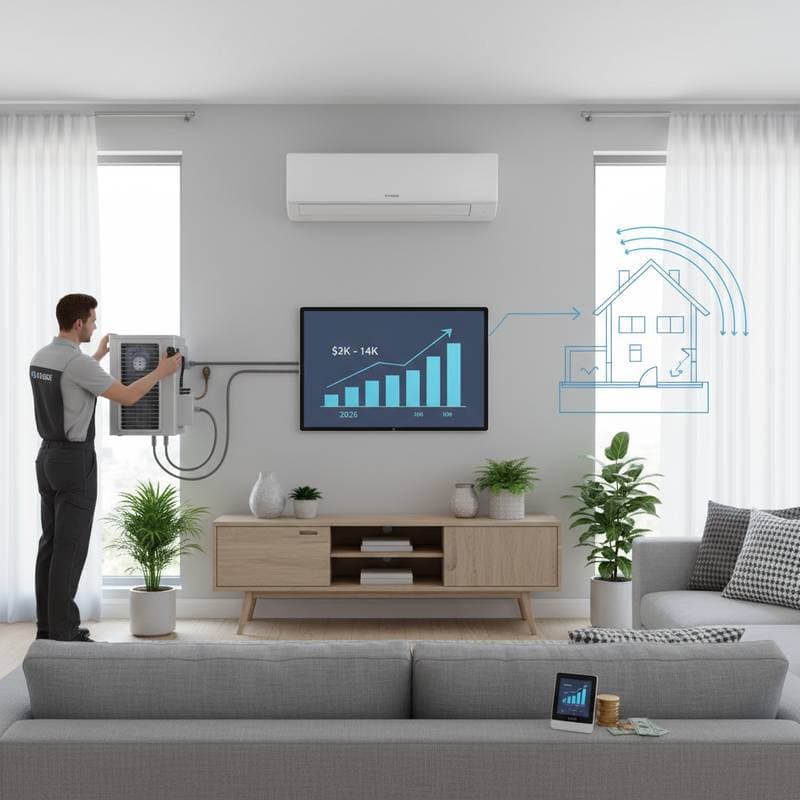
Installed mini-split systems typically range from $3,000 to $14,000, influenced by zone quantity, unit capacity, and manufacturer. Single-zone setups for compact areas align with the lower spectrum, whereas multi-zone arrangements for multiple rooms approach the upper limit.
Labor constitutes 30 to 40 percent of the overall expense. Certified professionals handle refrigerant management and electrical integrations, making expert installation indispensable.
Equipment Costs by Type and Capacity
Mini-split units receive ratings based on cooling capacity in BTUs. A 12,000 BTU model suits spaces of 400 to 500 square feet, whereas 24,000 to 36,000 BTU variants accommodate expansive or multi-room layouts.
Equipment pricing generally follows this structure:
- Single-zone systems: $1,000 to $4,000
- Multi-zone systems: $2,500 to $8,000
- High-efficiency or premium models: $4,000 to $9,000
Manufacturers like Mitsubishi, Daikin, and Fujitsu command premium prices for their durability and innovative features. Alternatives such as Pioneer or Senville provide reliable operation at lower costs, albeit with potentially reduced warranty periods or limited smart functionalities.
Labor and Installation Costs
Labor expenses vary with system intricacy, zone count, and site challenges. Standard single-zone projects incur $1,000 to $2,500 in labor fees. Multi-zone efforts escalate to $5,000 or higher, particularly when involving numerous indoor units, wall penetrations, or specialized mounting.
Essential labor tasks encompass:
- Mounting indoor units: Secure and level each unit on interior walls or ceilings.
- Running refrigerant lines: Route insulated copper tubing and drainage from indoor to outdoor components.
- Electrical wiring: Install dedicated 240-volt circuits with accurate load assessments and grounding.
- Vacuum testing and refrigerant charging: Verify leak-free operation and optimal efficiency.
Qualified HVAC specialists manage permits, adhere to local codes, and conduct thorough system tests prior to commissioning.
Additional Materials and Accessories
Supplementary items beyond core components elevate the total outlay:
- Line sets: $100 to $400, based on length and insulation specifications
- Mounting brackets or pads: $50 to $200
- Electrical components: $150 to $500 for breakers, disconnects, and conduit
- Condensate pumps or drain kits: $75 to $300
- Smart thermostats or remote controllers: $100 to $400
Though modest in isolation, these elements collectively increase project costs by several hundred dollars.
Multi-Zone vs. Single-Zone Installations
Zone quantity significantly impacts expenses. Single-zone systems excel in targeted applications like garages, sunrooms, or offices. Multi-zone systems, supporting two to five rooms, promote energy conservation via individualized controls yet demand additional hardware and intricate setup.
A two-zone configuration with paired 9,000 BTU units installs for $5,000 to $8,000. Five-zone systems surpass $12,000, offering superior comfort customization and minimized waste in unoccupied spaces.
Energy Efficiency and Long-Term Savings
Mini-splits demonstrate superior efficiency, frequently exceeding 20 SEER ratings. Such performance reduces utility expenses by 30 percent or greater relative to conventional central systems. Inverter compressors modulate output to match real-time needs, avoiding the inefficiencies of fixed-speed units.
Initial investments recoup through diminished bills and reduced upkeep. Eligible models attract rebates that offset upfront costs by hundreds of dollars.
Cost Factors Homeowners Often Overlook
Certain elements frequently escape notice and alter budgets:
- Electrical upgrades: Aging homes might necessitate panel enhancements or rewiring, ranging from $500 to $2,000.
- Wall or ceiling repairs: Finishing penetrations post-installation incurs minor additional fees.
- Permit and inspection fees: Compliance with regulations adds $100 to $300.
- System placement: Extended line distances or access obstacles prolong labor and inflate charges.
Anticipating these aspects prior to commencement mitigates unforeseen expenditures.
DIY vs. Professional Installation
Although DIY kits appear online, uncertified attempts risk warranty invalidation and operational failures. Refrigerant protocols and electrical standards demand specialized credentials. One Reddit contributor recounted a self-installation resulting in leaks and repair bills surpassing professional fees.
Engaging licensed experts guarantees appropriate sizing, safety, and coverage preservation. This approach yields dependable performance and reassurance.
Maintaining Your Investment
Regular upkeep sustains mini-split efficiency. Replace or clean filters monthly during peak seasons. Clear debris from outdoor coils to preserve ventilation. Schedule professional inspections annually or biennially for refrigerant levels and electrical integrity.
Diligent care prolongs unit lifespan to 15 years or beyond, safeguarding value and reliability.
Steps to Secure Your Mini-Split Setup
Evaluate your residence's configuration and thermal requirements to initiate planning. Obtain estimates from three or more certified HVAC contractors, scrutinizing equipment options, warranty terms, and expertise alongside pricing. Demand detailed breakdowns to track allocations.
Strategic mini-split deployment enhances home climate management affordably. Partnering with skilled providers and comprehending costs ensures sustained, serene operation across seasons.