Permeable Driveway Costs: Navigating Eco Regulations
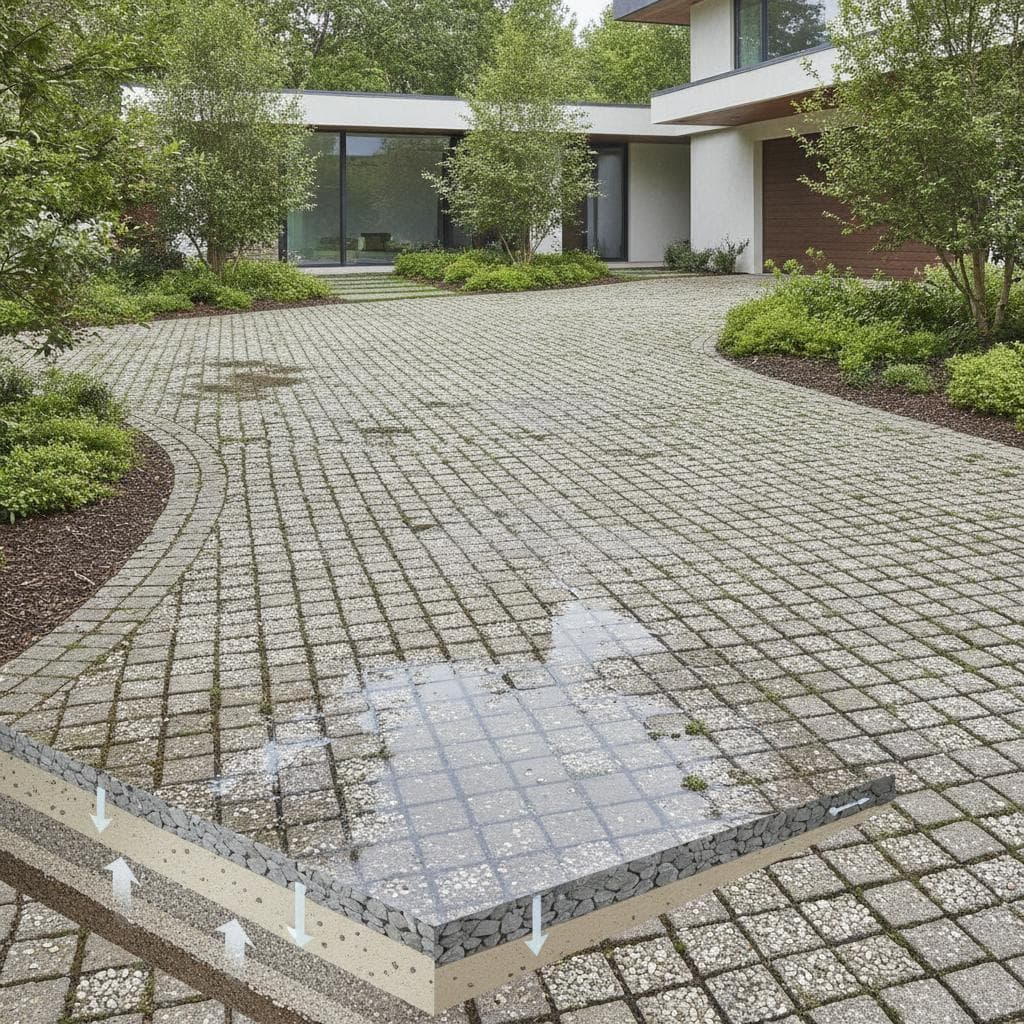
A driveway appears straightforward, yet it significantly influences rainwater management on your property. Conventional concrete or asphalt surfaces direct stormwater directly to streets, transporting pollutants into drainage systems and waterways. Permeable driveways allow water to percolate through the surface and infiltrate the soil, promoting environmental health. Homeowners frequently inquire about the expenses involved and the environmental regulations that influence them.
This guide provides precise figures, material options, and installation insights to support informed planning. Readers will gain clarity on pricing factors, applicable rules, and strategies to align investments with both financial limits and sustainability objectives.
Cost Overview
The typical cost for installing a permeable driveway ranges from 12 to 30 dollars per square foot, varying by material selection and site preparation requirements.
| Driveway Type | Material Example | Typical Cost (per sq. ft.) | Ideal Applications |
|---|---|---|---|
| Permeable Pavers | Concrete or clay blocks with open joints | 18 to 30 | Aesthetic appeal and high durability |
| Porous Asphalt | Asphalt incorporating coarse aggregates | 12 to 20 | Expansive areas with substantial vehicle loads |
| Pervious Concrete | Concrete formulated with minimal fines | 15 to 25 | Regions experiencing moderate traffic |
| Gravel Grid Systems | Polymer grids packed with aggregate | 10 to 18 | Cost-effective installations suitable for self-builders |
These estimates encompass excavation, foundational layers, and labor. Additional expenses for waste removal and permits may increase costs by 1 to 3 dollars per square foot.
For a standard driveway spanning 20 feet in width and 40 feet in length, expect a total investment between 9,600 and 24,000 dollars.
Key Environmental Regulations
Permeable driveways extend beyond aesthetic or functional choices; they integrate into comprehensive stormwater management frameworks. Familiarize yourself with these primary regulations prior to engaging contractors.
Limits on Impervious Surfaces
Numerous local governments impose caps on impervious coverage across properties. Standard concrete driveways contribute to these limits, whereas verified permeable alternatives typically receive exemptions. Such provisions can streamline project approvals.
Standards for Runoff Infiltration
Regulations in many areas mandate specific absorption capacities, such as handling 1 inch of rainfall within 24 hours. Engineers select sub-base thickness and aggregate sizes accordingly to satisfy these criteria.
Requirements for Maintenance Documentation
Certain jurisdictions demand a formal maintenance protocol submitted alongside permit applications. This document outlines procedures to preserve functionality, including annual sediment removal via vacuuming or pressure washing.
Available Incentives and Credits
Various municipalities provide rebates on stormwater fees or property tax reductions for permeable installations. These benefits can recover 5 to 15 percent of upfront expenses.
Pitfalls to Sidestep
Despite good intentions, permeable driveways may underperform without proper construction and upkeep. Address these frequent issues to ensure reliability.
- Overlooking Soil Analysis: Proceed without assessing soil permeability, and the system may flood or obstruct. Conduct tests early in the planning phase.
- Selecting Inappropriate Base Aggregates: Standard sand or rounded gravel retains particles; opt for washed, angular stones like 3/4-inch crushed rock to maintain open voids.
- Neglecting Gradients: Install without a 1 to 2 percent slope, and excess water may pool; direct overflow toward designated drainage paths.
- Permitting Debris Buildup: Accumulated sediments reduce infiltration rates; schedule yearly cleanings to sustain performance.
- Omitting Perimeter Supports: Lack of edging allows pavers to displace, leading to irregularities; secure borders firmly during installation.
Steering clear of these errors preserves appearance and guarantees adherence to environmental standards.
Upkeep and Durability
Permeable driveways demand minimal repairs compared to impervious options, though consistent attention sustains their efficacy.
Routine Annual Procedures
- Employ vacuum sweeping or leaf blowers to eliminate surface debris.
- Examine joints and voids for blockages.
- Replenish sand or aggregate in settling paver gaps.
Periodic Interventions
- Apply pressure washing every few years to rejuvenate flow.
- Restore gravel levels in grid systems as erosion occurs.
- Evaluate gradients and outlets following intense rainfall events.
Quality construction and diligent care yield lifespans of 25 to 40 years, influenced by material resilience and local weather patterns.
Strategies for Expense Reduction
Achieve savings while upholding quality through targeted approaches.
- Repurpose Suitable Existing Substrates: If current bases align with drainage needs, integrate them to cut excavation costs.
- Restrict Ornamental Features: Apply decorative elements solely to prominent zones.
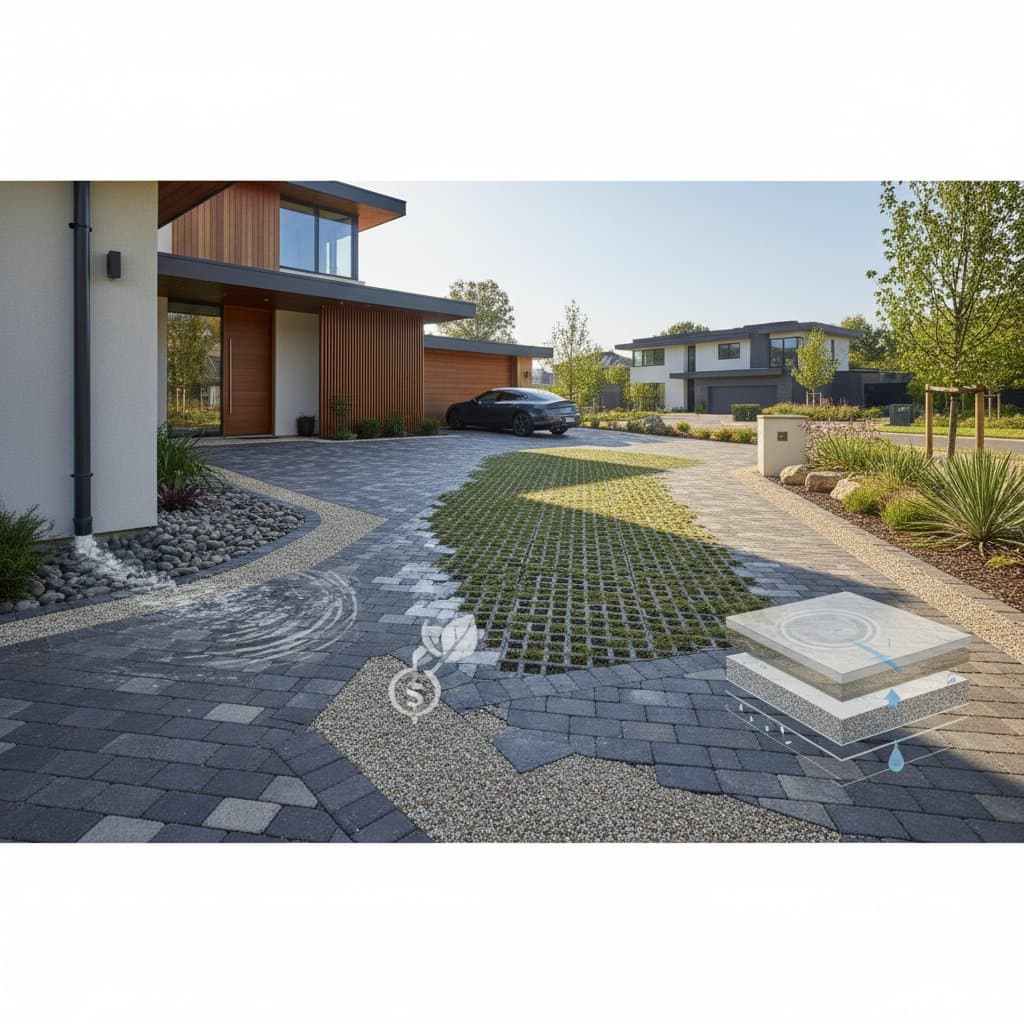
- Hybrid Designs: Incorporate permeable pavers in high-use zones and gravel systems in less trafficked areas.
- Pursue Rebates: Submit applications for environmental incentives promptly.
- Time Projects Optimally: Schedule during favorable weather to ease digging and secure competitive contractor rates.
These measures frequently lower total expenditures by 10 to 20 percent.
Steps to Launch Your Project
Begin by consulting local building authorities to confirm regulation details and permit processes. Engage a certified installer experienced in permeable systems, and request references from similar undertakings. Budget for a professional soil percolation test, which costs around 500 to 1,000 dollars but prevents costly redesigns. Finally, document your maintenance routine from day one to maximize longevity and qualify for incentives. With these preparations, your permeable driveway will effectively manage stormwater, enhance property value, and contribute to cleaner local waterways.