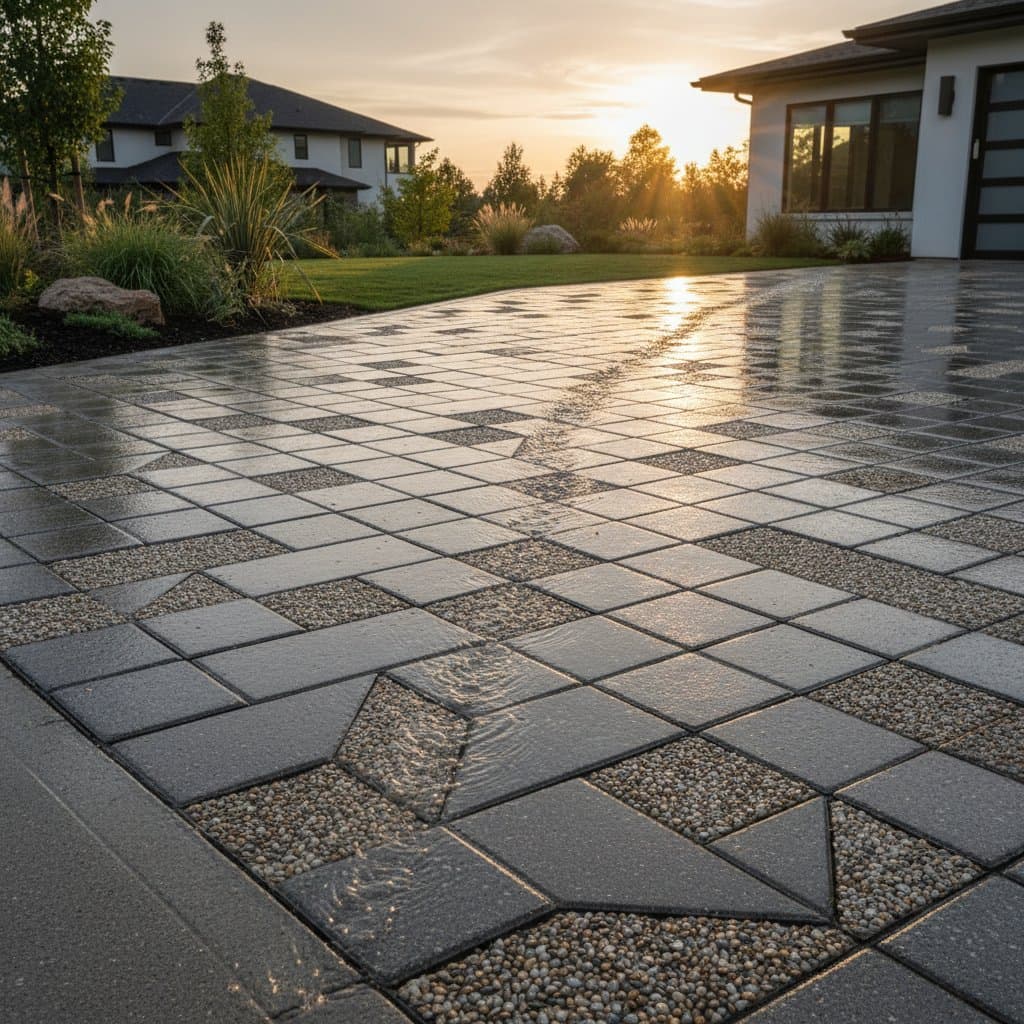
Permeable Driveway Costs: A Comprehensive Guide to Eco-Friendly Paving
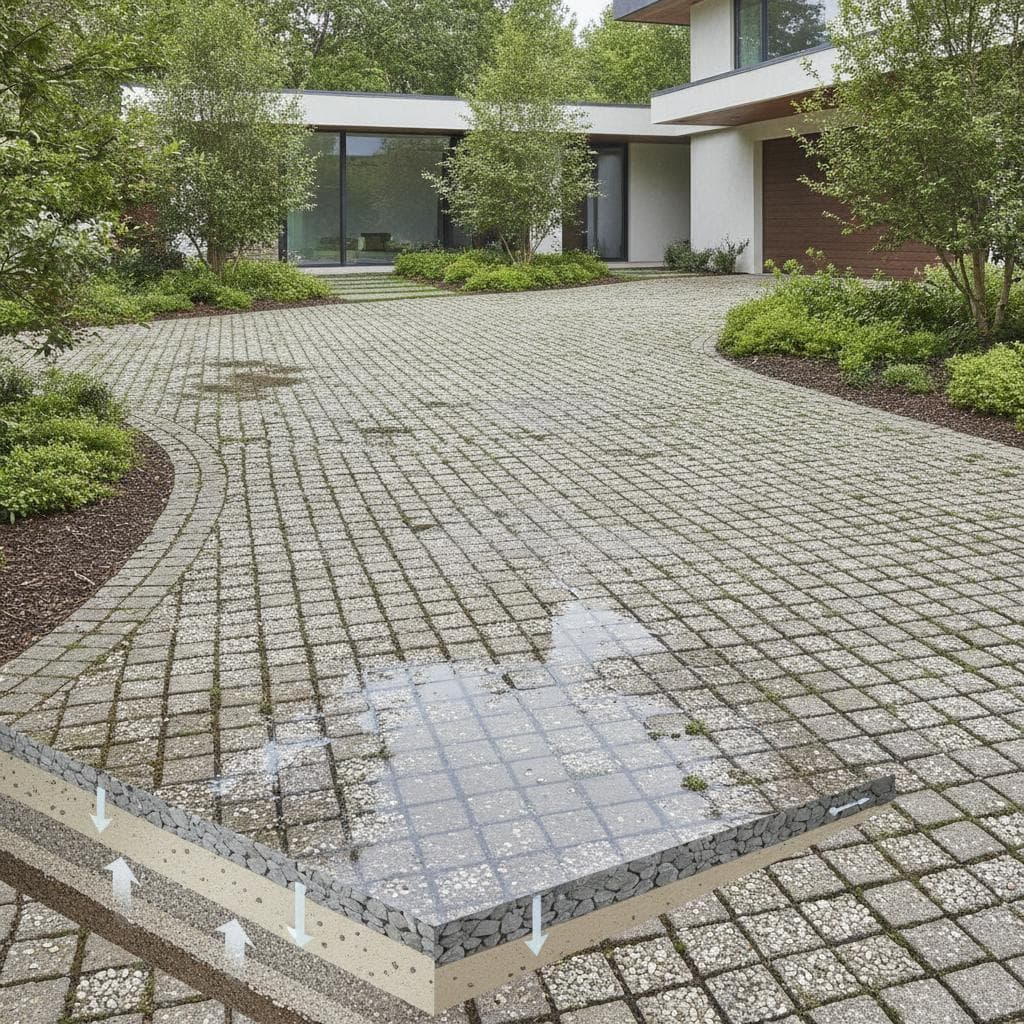
Homeowners increasingly seek solutions that balance environmental responsibility with practical needs. Permeable driveways offer an effective approach by permitting rainwater to infiltrate the ground rather than pooling on the surface. This design minimizes runoff, enhances local drainage, and contributes to flood prevention. Although initial expenses exceed those of standard pavements, the enduring advantages in sustainability and upkeep justify the investment.
Types of Permeable Driveway Materials
Various materials suit permeable driveways, each presenting distinct cost profiles and functional attributes.
- Permeable pavers consist of interlocking units made from concrete or natural stone, featuring joints that facilitate water passage.
- Porous asphalt resembles conventional asphalt yet incorporates coarser aggregates to form voids that allow infiltration.
- Pervious concrete employs a no-fines aggregate mixture, resulting in an open structure that supports water flow.
- Gravel grids integrate stabilized grids with loose aggregates, providing erosion control and straightforward installation.
Installation costs for these systems generally range from 12 to 30 dollars per square foot. Factors such as material durability and site specifics influence this spectrum. Gravel grids often represent the lower end, whereas pavers and pervious concrete command premium pricing due to their longevity and aesthetic appeal.
Key Factors Affecting Permeable Driveway Expenses
Multiple elements determine the total cost of a permeable driveway installation. Understanding these helps homeowners budget accurately and select optimal options.
- Site preparation and base layer: Excavation to remove impermeable soils, followed by layering gravel or sand for drainage, forms the foundation. Challenging soil types or poor drainage may necessitate additional amendments, elevating material and labor demands.
- Chosen materials: High-end options like natural stone pavers increase costs through their resilience and visual elegance. More economical choices, such as porous asphalt, provide comparable performance at reduced upfront prices, though they might incur higher maintenance over time.
- Professional labor: Contractors experienced in permeable systems ensure precise installation, which commands higher rates. Their knowledge prevents common pitfalls, such as inadequate compaction, that could compromise performance.
- Site conditions: Sloped terrains require grading to direct water flow, while limited access might demand specialized equipment. Urban settings with regulatory requirements can further adjust pricing.
For a typical two-car driveway spanning 600 square feet, expect expenditures between 9,000 and 18,000 dollars. This figure surpasses traditional asphalt or concrete by 20 to 50 percent, yet the offset comes through reduced environmental impact and operational savings.
Environmental and Functional Advantages
Permeable driveways extend beyond water management to foster broader ecological health. As rainwater percolates through the surface, it undergoes natural filtration, trapping sediments and pollutants that would otherwise enter waterways. This process replenishes aquifers and alleviates pressure on public sewer systems during storms.
Additional benefits enhance daily living. These surfaces mitigate urban heat islands by absorbing less solar radiation, resulting in cooler ambient temperatures around the property. In colder climates, faster drainage reduces ice formation, decreasing the need for salts or chemicals by up to 75 percent. Overall, maintenance expenses can decline by 25 percent compared to impermeable alternatives, as issues like cracking from water expansion become less prevalent.
Installation: DIY Considerations Versus Professional Expertise
Certain gravel grid systems appeal to skilled homeowners for partial DIY efforts, particularly in flat, accessible areas. Begin by assessing soil permeability with simple percolation tests, then layer the base materials uniformly. However, achieving structural integrity demands precision to withstand vehicular loads without compromising infiltration.
Professional installation remains advisable for most projects. Experts evaluate subsurface conditions, incorporate geotextile fabrics to prevent clogging, and align with municipal codes on stormwater management. This approach guarantees a 20- to 30-year lifespan, far exceeding basic DIY outcomes.
Essential Maintenance Practices for Longevity
Preserving a permeable driveway involves routine actions to sustain its permeability and appearance. Schedule annual cleanings using a shop vacuum or low-pressure washer to clear surface debris from pores and joints. Avoid high-pressure methods that could erode the sub-base.
Monitor after significant rainfall for signs of sediment buildup or uneven settling. Replenish gravel or joint sand as erosion occurs, and reseal pavers if manufacturer guidelines recommend it. These steps ensure consistent performance, extending the driveway's service life to 20 years or beyond while upholding its environmental contributions.
Realizing Value Through Sustainable Choices
Permeable driveways integrate functionality with forward-thinking design, delivering resilience against weather extremes and alignment with green building trends. Homeowners gain not only a durable entryway but also a contribution to community water quality. By investing in this technology, properties achieve enhanced curb appeal alongside measurable reductions in long-term costs and ecological footprints.