Powerwall vs Rivals: Home Battery Backup Costs
Home battery prices depend on more than the battery itself. Installation, electrical upgrades, backup coverage, incentives, and local labor can shift the total substantially. Tesla Powerwall is a familiar option, but Enphase, FranklinWH, and other systems compete on capacity, equipment design, warranties, and how much of a home they can support.
For a typical installed home battery, a practical planning range is about $10,000 to $20,000 before incentives. Larger systems or complex installations can exceed that range. These are broad United States estimates, not guaranteed quotes. Ask local installers to itemize equipment, labor, electrical work, permits, and any solar components separately.
Home Battery Backup Cost Fundamentals
A battery stores electricity for use during an outage, during expensive utility hours, or when solar panels produce more power than the home needs. The inverter converts stored electricity into household current, while control equipment determines which circuits receive backup power. Some systems can support most of a home, while smaller setups prioritize essentials such as refrigeration, lighting, internet, and selected outlets.
Many residential batteries provide roughly 10 to 15 kilowatt-hours of usable capacity. Installed pricing often falls around $1,000 to $1,800 per usable kilowatt-hour, though the ratio is not a reliable substitute for an itemized quote. Smaller systems can have a higher cost per unit because installation and control equipment still carry fixed costs.
Regional pricing reflects labor, permitting, utility rules, and local demand. Urban areas with higher electrician rates often cost more than rural markets, while remote locations may add travel or equipment delivery fees. Incentives, electricity prices, and utility programs also differ by state and provider.
Battery installation does not have a predictable seasonal discount. Contractor availability, storm preparation, supply conditions, and local rebate deadlines can affect quote timing. Get estimates early if a project depends on a utility approval or a specific incentive.
Tesla Powerwall Price and Main Rivals
Tesla Powerwall pricing depends on the model, system size, installation needs, and whether the home already has compatible solar equipment. A single installed unit commonly lands in the $12,000 to $18,000 range before incentives. A second unit increases storage and may increase installation costs, though shared equipment and labor can make the total lower than two separate projects.
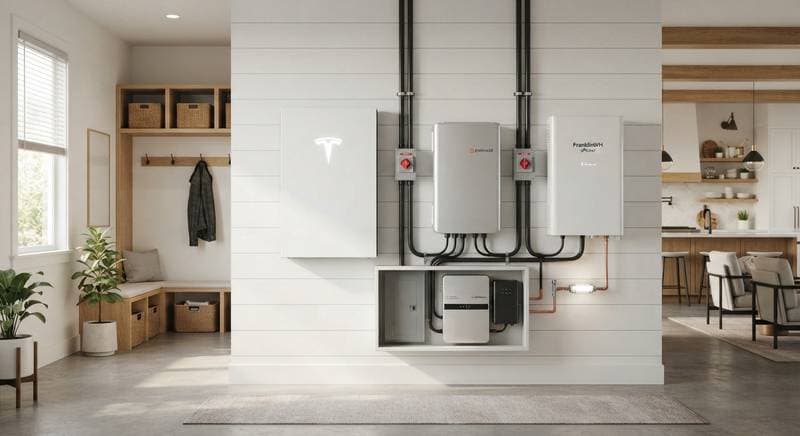
Enphase systems are often attractive to homeowners who already use Enphase microinverters. A single battery installation may land around $12,000 to $20,000, with the final amount shaped by capacity and electrical design. FranklinWH systems often fall in a similar or higher range, especially when a project includes a whole home backup configuration and additional control equipment.
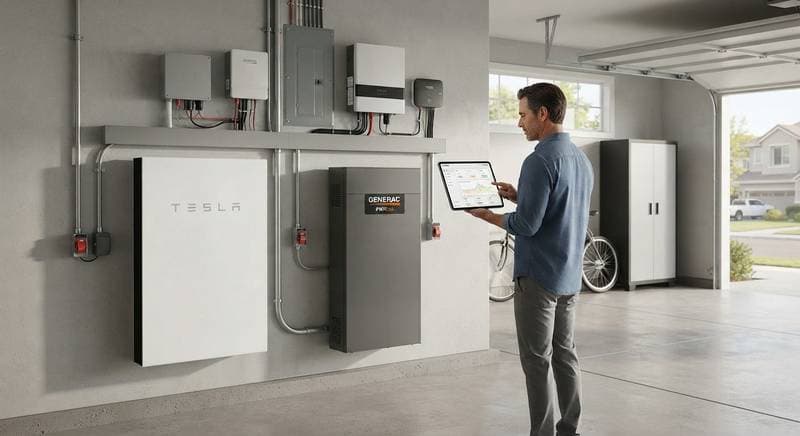
Other options include Generac PWRcell and battery products from solar and electrical companies. Their pricing depends on configuration, compatibility, and local installer support. Comparing brand names alone misses important differences. Check usable capacity, continuous power output, backup behavior, warranty coverage, and whether the system can recharge from solar during an outage.
A lower equipment price may not produce the lowest installed cost. One quote may include a gateway, backup panel, permits, and commissioning, while another may list those items separately. Compare the complete project total and the equipment specifications.
Common Pricing Models and Service Tiers
Most homeowners receive a project price rather than a simple hourly rate. The installer surveys the home, specifies equipment, and quotes a complete system. Ask whether the proposal is fixed price, and identify conditions that could trigger additional charges, such as concealed wiring problems or a panel replacement.
Typical service levels include:
- Essential backup: One battery and a small backup circuit group, often about $10,000 to $15,000 installed. This can cover priority loads, not every appliance.
- Standard backup: One battery with a larger set of circuits, commonly about $12,000 to $20,000. The design may include solar integration and more monitoring features.
- Expanded backup: Two or more batteries, or a system designed for broad household coverage, often $20,000 to $35,000 or more.
- Custom systems: Homes with unusual electrical layouts, high energy use, multiple buildings, or specialized equipment may require bespoke engineering and a higher budget.
Some providers offer financing, leases, or subscriptions that bundle equipment and service. Compare the total payments, ownership terms, maintenance obligations, and early termination rules with a cash purchase. A subscription can simplify service, but the homeowner may have less control over equipment and contract changes.
What Changes the Final Price
The home's energy needs are the first cost driver. A household that needs lights, a refrigerator, and internet during outages may need less capacity than one expecting to run air conditioning, an electric range, or a well pump. High starting loads can require attention to power output as well as storage capacity.
Other major variables include:
- Electrical condition: An outdated panel, limited space, or required service upgrade can add roughly $1,000 to $5,000 or more.
- Installation location: Long cable runs, difficult access, fire code requirements, and exterior mounting conditions can increase labor.
- System size: Additional batteries raise equipment costs and may require added control hardware.
- Solar compatibility: Existing inverters and wiring may work with one battery brand but need changes for another.
- Permits and utility approvals: Fees and review requirements differ by jurisdiction.
- Installer qualifications: A licensed electrician and experienced battery installer may charge more, while reducing design and safety risks.
Battery backup does not always mean the home can run normally during an outage. Ask the installer to list the supported circuits and estimate runtime under specific loads. A battery may last much longer with a refrigerator and lights than with central heating or cooling.
Add On Costs and Incentives
A backup panel or critical loads panel can cost about $1,000 to $3,000, depending on wiring and circuit count. A main electrical panel replacement can add several thousand dollars. Automatic transfer equipment, monitoring hardware, trenching, or a long cable route may also appear as separate line items.
Solar panels are a separate expense unless included in the proposal. If the home lacks solar, a battery can still charge from the grid in many configurations, but it may not provide the same outage resilience as a solar paired system. Ask whether the battery can recharge from solar while the grid is down. Not every system configuration supports the same operation.
Some installations include load management, which temporarily limits heavy appliances to protect backup capacity. This can cost extra, yet may help a smaller system support more household needs. Expedited installation fees may apply when a provider offers priority scheduling, but confirm that faster work does not bypass inspections or permit requirements.
Federal, state, utility, and local incentives can reduce net costs, but eligibility rules change. The federal residential clean energy credit has historically covered qualifying battery storage, subject to tax law and project requirements. Verify current guidance with the IRS, a tax professional, and your utility before including an incentive in your budget. Do not assume a rebate is guaranteed or available at the point of sale.
Compare Quotes and Choose a Provider
Request at least three written proposals from licensed, insured contractors. Ask each company to show the same information so the comparison is useful:
- Battery model, usable capacity, and continuous power output.
- Equipment, labor, permits, panel work, and commissioning as separate costs.
- Circuits backed up and expected runtime for realistic household loads.
- Warranty length, coverage terms, service process, and labor exclusions.
- Solar charging behavior during an outage, if applicable.
- Incentives shown separately from the contract price.
A warranty may cover equipment for a set period or energy throughput, and the exact terms differ by brand. Read the capacity retention language and ask who handles warranty service. A manufacturer warranty is less reassuring if local support is difficult to reach.
Check that the contractor holds the required electrical license and carries liability insurance. Ask for recent battery project references and confirm who performs the work. The Department of Energy and local utility resources can help explain storage and interconnection requirements, while consumer protection agencies can provide guidance on contracts and complaint history.
Watch for proposals that promise whole home backup without load calculations, omit panel work, or treat estimated incentives as guaranteed savings. Also clarify whether the battery price includes internet connectivity, monitoring, and future service visits.
Choose Capacity Around Your Household
Start with the appliances and circuits that matter most during an outage, then estimate their power draw and likely daily use. Ask installers to model both a short outage and an extended outage. That exercise helps determine whether one Powerwall, an Enphase or FranklinWH system, or a smaller essentials focused setup fits the home.
The best value is the system that meets a clearly defined backup plan at a transparent installed price. Compare the same loads, warranty terms, and equipment scope across bids. Before signing, get the final design, permit responsibilities, payment schedule, and change order rules in writing.