Battery Backup Costs: Powerwall vs Cheaper Options
A home battery can keep selected appliances running during an outage, store solar electricity for evening use, or help reduce reliance on the grid during peak rates. The right system depends on what you want it to do, how much backup power you need, and whether your home already has solar.
For homeowners comparing Tesla Powerwall prices with less expensive batteries, the purchase price is only part of the decision. Installation, electrical upgrades, usable capacity, warranty terms, and backup capability all affect the total cost. Ask for quotes that separate these items so you can compare systems on equal terms.
What a Home Battery Costs
A professionally installed home battery system can cost several thousand dollars, with larger or more complex setups reaching well into five figures. A single battery may be enough to support essential circuits, while whole-home backup often requires more storage, a compatible inverter, and electrical work.
Prices differ by location and project. Labor rates, permits, utility rules, equipment availability, and the condition of your electrical panel all affect the quote. A battery added to an existing solar system may also need compatibility upgrades.
A useful quote should list:
- Battery equipment and usable capacity
- Inverter or power conversion equipment
- Installation labor and electrical materials
- Backup gateway, transfer equipment, and panel work
- Permit fees and inspection costs
- Warranty coverage and any monitoring fees
Compare the complete installed price, not just the advertised battery price. A low equipment price can lose its advantage if it needs a costly inverter or substantial rewiring.
Tesla Powerwall Price and Features
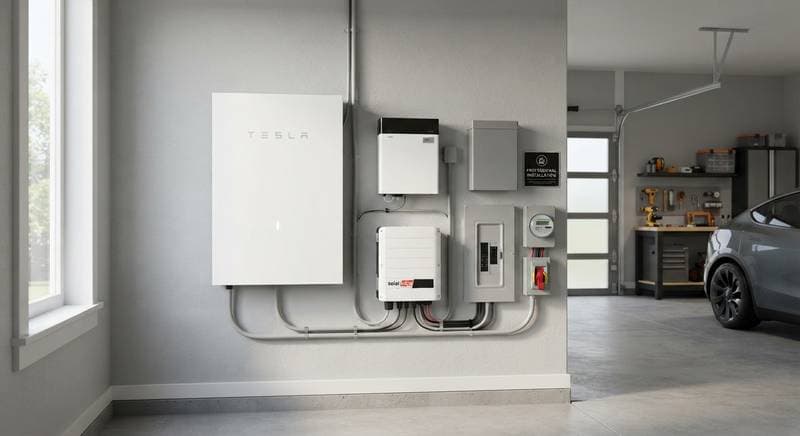
Tesla Powerwall systems are designed to store electricity for home use and provide backup during grid outages. They include a battery, monitoring features, and equipment that coordinates with the home's electrical system. The exact configuration and installed cost depend on the model, installer, and site conditions.
A Powerwall may suit homeowners who want a well integrated system, a familiar monitoring interface, and the option to add storage capacity. It can also be a practical choice when a local installer has experience with Tesla equipment and can provide clear service support.
The brand name alone does not determine value. Ask the installer to confirm:
- Usable energy capacity, not only the battery's advertised capacity
- Continuous and peak power output
- Which circuits remain available during an outage
- Whether the system can charge from the grid or solar panels
- Warranty length, coverage limits, and service process
- Any extra cost for backup controls or panel changes
A battery's energy capacity describes how much electricity it can store. Its power rating describes how quickly it can deliver electricity. A system may have enough stored energy for several hours but still be unable to start a large air conditioner or run several high demand appliances at once.
Cheaper Battery Options
Several manufacturers sell residential batteries that can cost less than a Tesla system, especially when the equipment fits an existing inverter or solar setup. Some brands offer modular units, giving homeowners the option to start with a smaller capacity and expand later. Availability and installer support vary by region.
A lower price does not automatically mean a poor system. It may reflect a simpler design, a smaller battery, a different warranty, or fewer integrated features. Check the complete specification sheet and make sure the equipment is approved for your utility and local building requirements.
Compare options by installed cost per usable kilowatt hour, but do not use that figure alone. Two batteries with similar capacity can differ in power output, backup controls, warranty terms, and ability to work with existing solar equipment. A less expensive battery can be the stronger choice when its features match your needs and the installer can service it locally.
Decide How Much Backup You Need
Start with the appliances and circuits that matter during an outage. Many households prioritize a refrigerator, lights, internet equipment, phone charging, and a few outlets. Homes with medical equipment, a well pump, or electric heating may need a larger system and a careful load calculation.
To estimate needs, list each essential device, its wattage, and how many hours you expect to run it. Starting loads matter too. Pumps and compressors can briefly draw more power when they switch on. Ask an electrician to check those loads before choosing a battery.
A targeted backup plan often costs less than trying to power every circuit. A critical loads panel can isolate selected circuits and reduce the battery capacity required. Whole-home backup provides broader coverage, but may require additional equipment and may not support every large appliance at the same time.
DIY or Professional Installation
Most grid connected home batteries need professional installation. The work can involve high voltage wiring, electrical permits, utility coordination, fire safety clearances, and programming. Incorrect installation can create shock or fire hazards and may affect warranty coverage or insurance.
DIY power stations are a separate, smaller category. They can power portable devices or selected appliances through approved connections, but they do not automatically provide safe whole-home backup. Never connect a portable generator or battery to a home circuit through a standard outlet. A transfer switch or other approved connection is needed to prevent dangerous backfeed.
Ways to Control the Total Price
- Size storage around essential loads instead of buying maximum capacity.
- Keep an existing solar inverter if the proposed battery is compatible.
- Ask whether a smaller system can be expanded later.
- Check whether panel upgrades are required before signing a contract.
- Review local utility programs, incentives, and financing terms.
- Confirm whether the price includes permits, inspection, and commissioning.
Choosing a System That Fits
Choose a Powerwall when its features, installer availability, and service options justify the quoted installed price. Consider a less expensive battery when it delivers the power and storage you need, works with your solar equipment, and comes with dependable local support.
Before signing, ask the installer to demonstrate how the system responds to an outage, identify which circuits receive backup, and explain what the warranty covers. A clear load plan and a complete quote make it easier to compare Tesla Powerwall prices with other home battery options and avoid paying for capacity your household will not use.