Roof Leaks: What Your Home Warranty May Not Cover
A roof leak can stain ceilings, damage insulation, and threaten electrical systems. When repairs are needed, homeowners often wonder whether a home warranty will pay. The answer depends on the contract, the cause of the leak, and whether roof coverage was included.
A home warranty is a service contract, not homeowners insurance. It may cover repairs to certain home systems and appliances when they fail from normal wear. Roof leak coverage is often limited to specific repairs, such as patching a covered leak. It usually does not pay for a full roof replacement or damage caused by neglect, storms, or installation problems.
Before you file a claim, find out what your plan covers, what it excludes, and what evidence the warranty company may request.
What Roof Leak Coverage Usually Includes
Some home warranty plans offer an optional roof leak add-on. Coverage often applies to small leaks in accessible areas of the roof. The contract may list covered materials or locations, such as shingles, flashing, or vents.
Coverage can be narrow. A plan might pay to seal a leak but exclude damaged drywall, furniture, flooring, or personal belongings. It may also exclude roof sections that are difficult to reach or parts of the roof above a porch or detached structure.
Check the contract for:
- The maximum amount the company will pay per claim or contract period
- Whether coverage applies to the roof itself, interior damage, or both
- Which roof materials and areas qualify
- Service fees, deductibles, and repair limits
- Rules for maintenance, inspections, and claim approval
The contract controls. A sales page may use broad language, while the service agreement defines the actual limits.
What a Home Warranty Usually Will Not Cover
Many roof warranty exclusions relate to the leak's cause. A home warranty generally does not replace homeowners insurance, and it may reject claims tied to sudden damage or poor upkeep.
Common exclusions include:
- Storm and weather damage: Wind, hail, fallen branches, and heavy snow are often insurance matters.
- Neglected maintenance: Missing shingles, clogged gutters, or unrepaired flashing can lead to denied claims.
- Preexisting leaks: Damage that began before coverage started may not qualify.
- Aging or end-of-life roofs: A warranty may cover a limited repair, but not replacement of worn roofing.
- Defective installation or materials: A contractor or manufacturer warranty may be the better path.
- Structural or interior repairs: Rot, mold, ceiling damage, insulation, and belongings may fall outside roof leak coverage.
- Commercial or detached structures: Garages, sheds, and other separate buildings are often excluded.
Read exclusions alongside the coverage section. If the contract does not clearly explain how it handles a specific roof type or leak source, ask the provider for a written answer before relying on coverage.
How to Check Whether Your Leak Qualifies
Use these steps to make a careful claim and limit further damage.
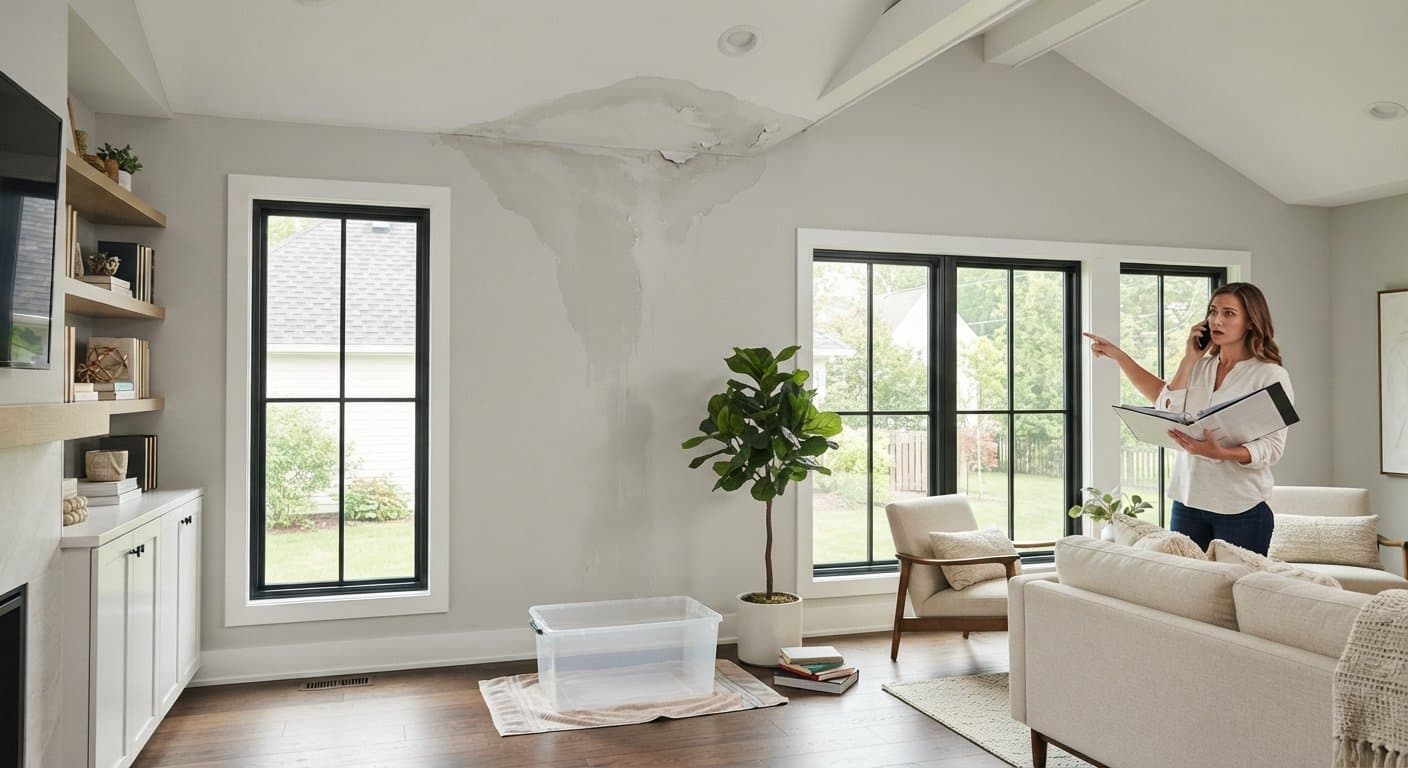
- Control immediate risks. Move belongings, place a container under drips, and avoid wet electrical fixtures. Do not climb onto a wet or damaged roof.
- Document the problem. Photograph the stain, active dripping, and visible roof damage from a safe location. Note when you first noticed the leak.
- Review your service contract. Search for "roof leak," "roof coverage," "maintenance," and "exclusions." Confirm whether you purchased the relevant add-on.
- Contact the warranty provider before hiring a repair person. Many plans require approval or use of an assigned contractor. Unapproved work may not be reimbursed.
- Ask what the inspection will cover. Find out whether the contractor will identify the leak source, assess roof condition, and report any maintenance concerns.
- Keep every record. Save claim numbers, inspection reports, receipts, and messages. If the claim is denied, ask for the exact contract clause behind the decision.
Do not delay necessary temporary protection while waiting for a claim decision. Tell the provider what steps you took to prevent additional damage, and keep receipts for reasonable emergency measures.
Home Warranty or Homeowners Insurance?
A useful rule is to match the claim to the cause. A small leak tied to a covered component may fit a roof leak add-on. Damage from a storm may belong with homeowners insurance. A workmanship issue may need attention from the roofer, while a defective shingle may be covered by its manufacturer.
| Situation | First place to check |
|---|---|
| A small leak from a covered roof area | Home warranty contract |
| Hail, wind, or a fallen tree | Homeowners insurance |
| A leak after recent roof work | Roofing contractor |
| A product defect | Roofing material manufacturer |
Policies differ, and a single event can involve more than one source of damage. Ask each provider what evidence it needs before authorizing permanent repairs.
Reduce the Risk of a Denied Claim
When comparing plans, treat roof leak coverage as a limited repair benefit, not a promise to replace the roof. Ask about caps, exclusions, contractor approval, and interior damage before enrolling.
Steps to Protect Your Investment
Review your contract annually to understand current coverage limits. Schedule regular roof inspections to catch small issues before they become major problems. Keep maintenance records organized and accessible for future claims.
Consider whether your current plan meets your needs or if additional coverage options would provide better protection. Contact your warranty provider directly with specific questions about your roof type and local weather conditions.