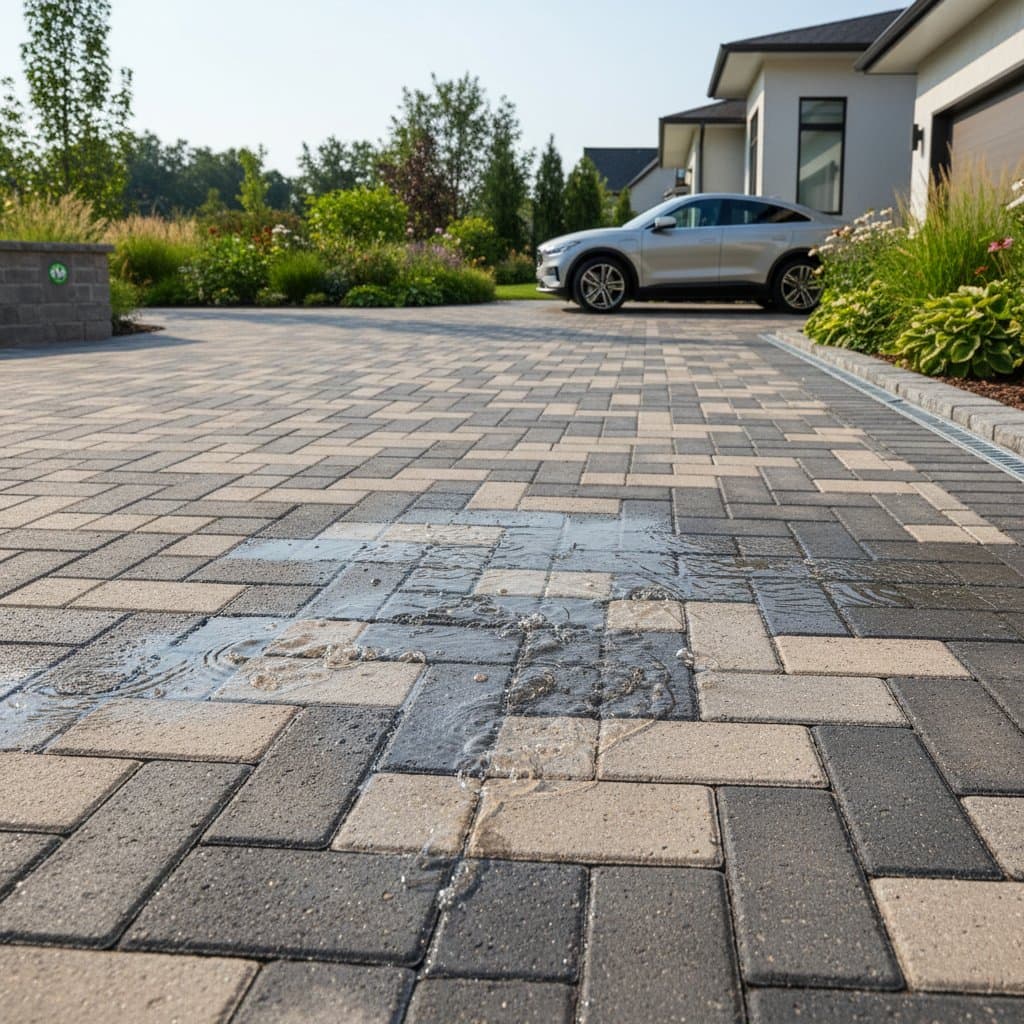
Permeable Pavers: Balancing 2026 Costs with Stormwater Advantages
Permeable pavers represent a shift from conventional surfacing options to innovative solutions that address urban flooding and environmental concerns. Homeowners increasingly select these materials to manage heavy rainfall, prevent driveway ponding, and meet local drainage mandates. The core appeal lies in their ability to integrate strength with sustainability, directing rainwater through the pavement to replenish soil moisture instead of overwhelming sewer systems. Property owners must evaluate whether the investment aligns with their needs for reduced erosion and enhanced landscape health.
Core Mechanics of Permeable Paver Systems
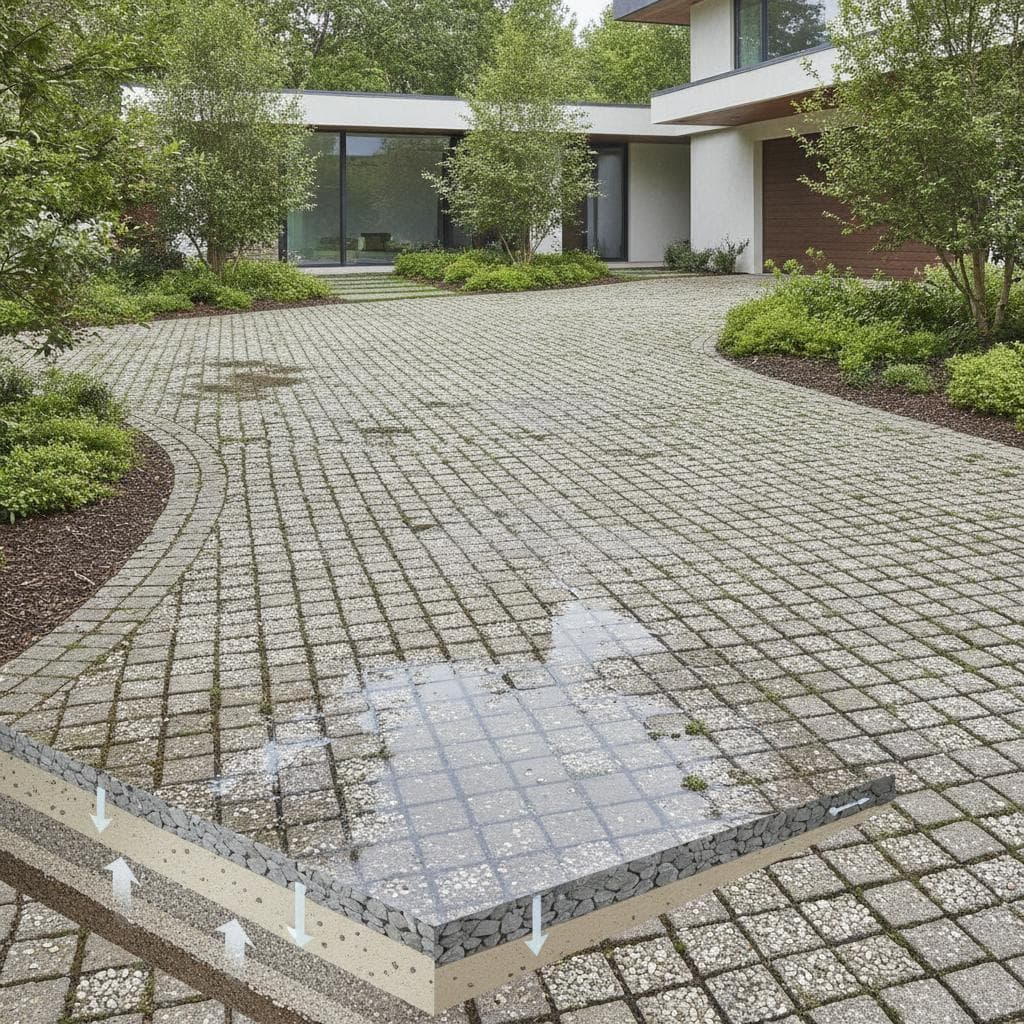
Permeable pavers differ fundamentally from impermeable surfaces like poured concrete or rolled asphalt. They consist of precast units with voids or porous compositions, paired with joints packed with fine gravel or sand. Rainwater penetrates these gaps and flows into a subsurface reservoir of open-graded aggregate, typically crushed rock sized from 0.75 to 1.5 inches.
Design specifications vary by site conditions, such as clay-heavy soils requiring deeper bases up to 18 inches or sandy areas needing only 6 inches. This layered approach filters out debris and sediments, releasing purified water gradually to minimize flash flooding. Engineers often incorporate geotextile fabrics between layers to prevent soil migration while preserving hydraulic conductivity.
Key Factors Influencing Installation Expenses
In 2026, expect permeable paver installations to range from $10 to $20 per square foot, encompassing materials, labor, and site preparation. Premium choices, such as natural stone or textured concrete pavers with reinforced edges, may elevate prices to $25 per square foot or more. Standard concrete slabs cost $6 to $12 per square foot, and asphalt surfaces fall between $4 and $8 per square foot, highlighting the premium for permeability.
Several elements drive these figures. Excavation removes 6 to 12 inches of existing material to accommodate the base. Contractors then install successive lifts of base material: a bottom layer of larger stone for storage, a middle course of medium gravel for filtration, and a top bedding layer of finer aggregate to support the pavers.
- Site assessment determines base depth based on traffic load and rainfall intensity.
- Material selection influences costs; recycled plastic grids or permeable concrete blocks offer budget options.
- Labor demands precision, with compacting equipment ensuring even voids for water flow.
Regional labor rates and material availability can add 20 to 40 percent to totals in urban settings. Homeowners benefit from consulting certified installers who verify soil permeability rates exceed 100 inches per hour to guarantee system efficacy.
Incentives and Enduring Value Propositions
Many local governments provide financial relief for permeable installations, including rebates up to $3 per square foot or tax credits covering 20 percent of expenses. In stormwater-regulated zones, such as coastal cities or expanding suburbs, these systems avoid compliance fees that can exceed $5,000 for non-permeable properties. Programs like those from the Environmental Protection Agency encourage adoption through low-interest loans for green infrastructure.
Environmentally, permeable pavers capture up to 90 percent of rainfall on site, fostering aquifer replenishment and diluting urban pollutants before they reach waterways. This filtration process removes oils, heavy metals, and nutrients, supporting healthier ecosystems. Reduced strain on municipal infrastructure translates to community-wide flood prevention, particularly in areas prone to intense storms.
Homeowners report practical gains, including diminished winter ice formation from quicker drainage and lower utility bills in regions with water conservation incentives. Over a 30-year lifespan, these surfaces outlast asphalt by 10 to 15 years, with repair costs limited to occasional joint replenishment rather than full resurfacing.
Strategies for Optimal Longevity and Performance
Regular upkeep ensures permeable pavers function at peak capacity. Schedule inspections following significant downpours to check for uneven infiltration or debris accumulation. Use a stiff-bristled broom or commercial vacuum to clear joints annually, preventing compaction that reduces flow rates.
Replenish aggregate in gaps with polymeric sand alternatives designed for permeability, applying it dry to allow binding without sealing pores. Professional power washing every two to three years removes embedded soils, restoring infiltration to original levels. Steer clear of salt-based deicers, which can clog voids; opt for sand or calcium magnesium acetate instead.
For driveways supporting vehicles, select pavers rated for 8,000 pounds per square foot compressive strength. Integrate edge restraints to counter shifting, and pair with rain gardens or bioswales for enhanced water quality. These measures extend durability while maximizing environmental contributions.
Realizing Returns Through Sustainable Choices
Homeowners in vulnerable areas gain substantial advantages from permeable pavers, including elevated property appeal and compliance with evolving building codes. The 2026 cost range of $10 to $20 per square foot reflects a commitment to resilience against climate variability. By prioritizing these systems, individuals secure lasting protection for their landscapes, lower ongoing expenses, and a positive impact on local hydrology.