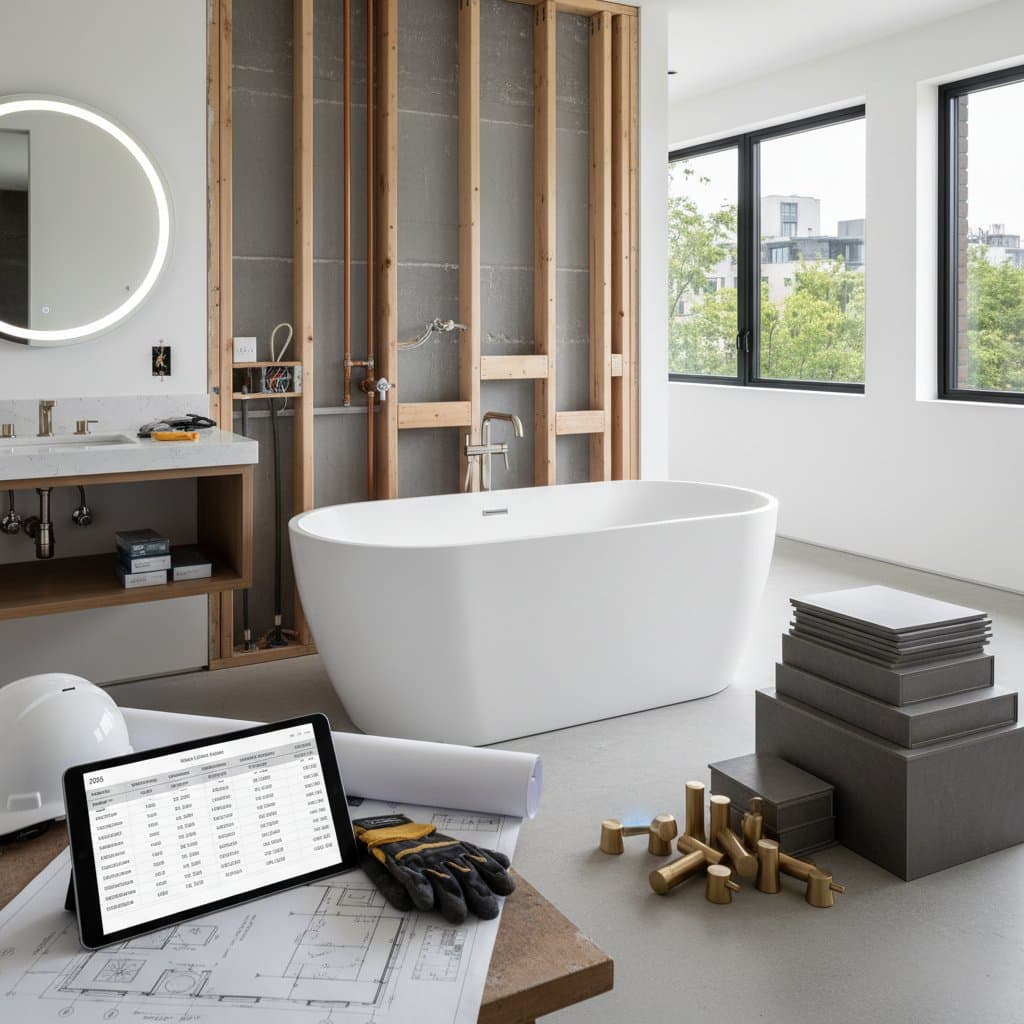
Understanding Costs for a 2026 Bathroom Renovation
Bathroom renovations rank high among home improvement priorities. These projects enhance comfort, increase property value, and lower future upkeep expenses. Homeowners planning for 2026 must account for fluctuating material prices, contractor fees, and design choices to establish a solid budget.
This article examines key cost elements, with special attention to labor, which often dominates expenses. Learn to allocate funds effectively and implement strategies that preserve quality.
Establishing a Practical Budget
Bathroom projects span simple updates to comprehensive redesigns. Expenditures typically range from $3,000 for basic refreshes to $25,000 or more for extensive overhauls. Variables include bathroom dimensions, selected materials, fixture selections, and any required plumbing or layout adjustments.
Categorize your renovation to refine estimates:
- Basic Refresh: Involves repainting, fixture swaps, and lighting upgrades, often under $5,000.
- Moderate Remodel: Encompasses tile replacement, vanity installation, and tub or shower updates within the existing footprint, averaging $10,000 to $15,000.
- Complete Overhaul: Features plumbing relocations, custom elements, and premium finishes, potentially exceeding $20,000.
Contractors frequently note that labor comprises 40 to 60 percent of total costs. Older homes may incur extra charges for addressing plumbing deterioration, moisture damage, or foundational concerns before primary work commences.
Material Expenses and Emerging Patterns
Selections in materials influence aesthetics and finances profoundly. Tile installation represents a major outlay, with porcelain and ceramic options providing affordability and resilience at $4 to $10 per square foot. Natural stone or intricate mosaics elevate costs to $15 to $30 per square foot.
Consider these typical ranges per square foot:
- Ceramic tile: $3 to $8, ideal for budget-conscious durability.
- Porcelain tile: $5 to $12, offering superior water resistance.
- Natural stone: $10 to $25, for a high-end, timeless look.
- Luxury vinyl plank: $2 to $7, a low-maintenance alternative mimicking wood or stone.
Vanities, surfaces, and fixtures present similar variability. Stock vanities paired with quartz countertops cost $500 to $1,500, whereas bespoke units with marble exceed $3,000. Faucets range from $50 for standard models to $500 for artisanal pieces.
Contemporary choices emphasize sustainability. Fixtures from brands such as Kohler and Moen, including dual-flush toilets and aerated showerheads, decrease water consumption by 20 to 30 percent. These selections lower utility expenses and align with evolving efficiency standards.
Labor Expenses and Essential Services
Although do-it-yourself efforts reduce outlays, specialized tasks demand professional expertise. Plumbing alterations, electrical modifications, and moisture barriers necessitate adherence to codes for safety and legality. Engaging certified professionals prevents errors that could inflate future repair bills.
Break down labor fees by specialist:
- General contractor: Oversees coordination, charging 10 to 20 percent of the project total, or $50 to $150 hourly.
- Plumber: Manages pipework and drainage, at $75 to $150 per hour.
- Electrician: Handles circuits and illumination, typically $60 to $120 per hour.
- Tiler: Executes flooring and wall applications, $40 to $80 per square foot installed.
- Painter: Applies finishes, $30 to $60 per hour.
Opting for a general contractor streamlines operations but increases fees by 15 to 25 percent compared to direct trade hiring. Professionals report that self-coordination often leads to scheduling gaps, idle materials, and corrective work, extending timelines by weeks and budgets by 10 to 20 percent.
Overlooked Expenses to Anticipate
Demolition frequently reveals unforeseen issues. Leaks, fungal growth, or obsolete wiring transform routine updates into substantial fixes. Allocate 10 to 20 percent of your budget as a reserve for such contingencies.
Frequent surprises encompass:
- Subfloor replacements due to moisture intrusion, adding $1,000 to $3,000.
- Pipe or venting shifts for redesigned configurations, $500 to $2,500.
- Permitting and evaluation charges, $200 to $1,000 depending on locality.
- Debris removal and disposal, $300 to $800.
- Ventilation or thermal barrier enhancements, $400 to $1,200.
Pre-project assessments by inspectors minimize disruptions. Transparent discussions with contractors clarify potential risks early.
Balancing DIY and Expert Involvement
Homeowners can tackle select elements to curb expenses. Tasks like painting, accessory mounting, or fixture exchanges suit skilled individuals. However, shower sealing, tile alignment, or wiring demand precision to avoid failures.
Data from industry surveys indicate that full DIY attempts result in correction costs surpassing initial professional hires by 20 to 50 percent. Adopt a combined method: Delegate plumbing and electrical to experts while personalizing finishes.
Project Schedule and Stages
Renovations span four to eight weeks, influenced by scale, supply chains, and availability. Phased execution maintains control over duration and finances.
Outline the sequence:
- Design Phase: Specify configurations, selections, and allocations, lasting one to two weeks.
- Demolition: Clear outdated components, one to three days.
- Infrastructure Setup: Address plumbing and electrical, one to two weeks.
- Assembly: Integrate tiles, storage, fixtures, and lights, one to three weeks.
- Finalization: Seal, paint, and inspect, three to five days.
Proactive sourcing of components averts delays. Verify supplier timelines upfront.
Effective Ways to Lower Costs
Prioritize investments wisely to uphold standards.
- Retain original layouts to bypass relocation fees, saving 15 to 30 percent.
- Blend premium accents with economical bases, such as luxury faucets amid standard tiles.
- Restore existing items, like bathtub refinishing for $400 to $800 versus $2,000 replacement.
- Time purchases for discounts or explore salvage outlets for deals up to 50 percent off.
- Solicit quotes from at least three vetted contractors to negotiate scopes and rates.
Sustainability features yield ongoing returns. LED bulbs cut energy use by 75 percent, enhanced barriers reduce heating losses, and efficient plumbing trims water bills by hundreds annually.
Indicators for Professional Assistance
Address warning signs promptly to prevent escalation. Concealed leaks, inadequate airflow, or faulty circuits risk extensive harm. For structural challenges, select insured contractors with verifiable credentials.
Request itemized proposals and licensing verification. Experts navigate approvals, ensuring regulatory alignment and safeguarding resale value or coverage eligibility.
Preserving Renovation Value
Post-completion care sustains longevity. Schedule grout cleaning quarterly, reseal stones annually, and inspect seals around fixtures. Robust exhaust systems curb humidity buildup.
Daily practices, including prompt drying and gentle cleaners, preserve appearances. Periodic hardware updates refresh the area affordably.
Realizing Enduring Advantages
Thoughtful renovations deliver functional upgrades, value appreciation, and enhanced usability. Efficient designs minimize ongoing demands while elevating living standards. Approach your project with informed planning, meticulous research, and collaborative oversight to yield a resilient, personalized sanctuary.