DIY vs Professional: Spring HVAC Tune-Up Cost Breakdown
As warmer weather approaches, homeowners turn their attention to cooling systems. A seasonal HVAC tune-up maintains low energy bills, prolongs equipment life, and avoids unexpected failures during high-demand periods. Homeowners face a key decision: perform maintenance independently or hire a specialist. This guide details costs, service levels, and factors that determine expenses for both approaches.
HVAC Tune-Up Cost Fundamentals
Nationwide, professional HVAC tune-up fees average 75 to 250 dollars per session. Rates differ based on location, equipment scale, and service depth. In regions with extended cooling seasons, demand for experts elevates prices modestly. Colder climates emphasize furnace care, which aligns with comparable costs but shifts focus to heating components.
Spring schedules benefit from balanced demand, allowing earlier bookings at standard rates. Delaying until summer peaks or winter extremes raises fees by 10 to 20 percent due to constrained availability. Fluctuations in fuel costs, technician supply, and materials like filters or refrigerants further impact homeowner expenses.
Pricing Models and Structures
HVAC services employ various billing methods. Flat rates cover standard inspections and cleanings. Hourly charges, ranging from 80 to 150 dollars, depend on the technician's qualifications and expertise.
Annual maintenance agreements appeal to those seeking consistent budgeting. These contracts, priced at 150 to 350 dollars yearly, typically provide two seasonal visits: one for cooling preparation and one for heating readiness. Benefits often extend to priority access, reduced repair fees, and complimentary filter changes.
For extensive work, fixed-price quotes apply to specific tasks like coil cleaning. This approach clarifies expenses in advance, enabling informed decisions before services commence.
Service Tiers and Their Price Points
Basic or Essential Services
Entry-level options involve visual examinations, airflow assessments, thermostat adjustments, and filter swaps. Fees average 75 to 125 dollars. Newer installations or recently maintained units suit this tier well.
Standard or Professional Services
Enhanced packages add refrigerant evaluations, electrical inspections, drain clearing, and thorough diagnostics. Costs fall between 125 and 200 dollars. Providers suggest this for moderately aged systems or residences with intense seasonal demands.
Premium or Comprehensive Services
Advanced care encompasses intensive coil washing, duct reviews, motor oiling, and load-based performance checks. Prices climb to 250 to 400 dollars. Owners of aging equipment or those anticipating heavy usage select this to maximize dependability.
Specialized or Bespoke Services
Technologically sophisticated setups, including variable-speed units or multi-zone configurations, demand tailored attention. Fees begin near 300 dollars and escalate with proprietary requirements.
Key Variables Influencing HVAC Tune-Up Pricing
Multiple elements determine total costs. Unit capacity, zone count, and system intricacy play significant roles. Expansive properties with several outdoor units or heaters demand extended labor and resources. Technician credentials, including insurance and EPA compliance, justify higher rates while ensuring reliable outcomes.
Service duration varies: simple checks require 45 minutes, whereas in-depth analyses extend to two hours. Requests for immediate or off-hour visits incur convenience surcharges. Supplies like air filters, detergents, and drive belts generate minor but cumulative fees.
Add-On Services and Supplemental Charges
Providers frequently propose enhancements beyond core tune-ups. Common options include:
- Duct cleaning, priced at 300 to 600 dollars based on property dimensions.
- Upgraded filters for efficiency or allergen control, costing 20 to 50 dollars apiece.
- Intensive coil treatments for evaporator or condenser components, averaging 75 to 150 dollars.
- Rush or urgent scheduling, adding 50 to 100 dollars to the baseline.
Inquire about these fees early to prevent unexpected bills. Certain firms bundle them into higher-tier plans; others present them as elective additions.
DIY HVAC Tune-Up Costs and Considerations
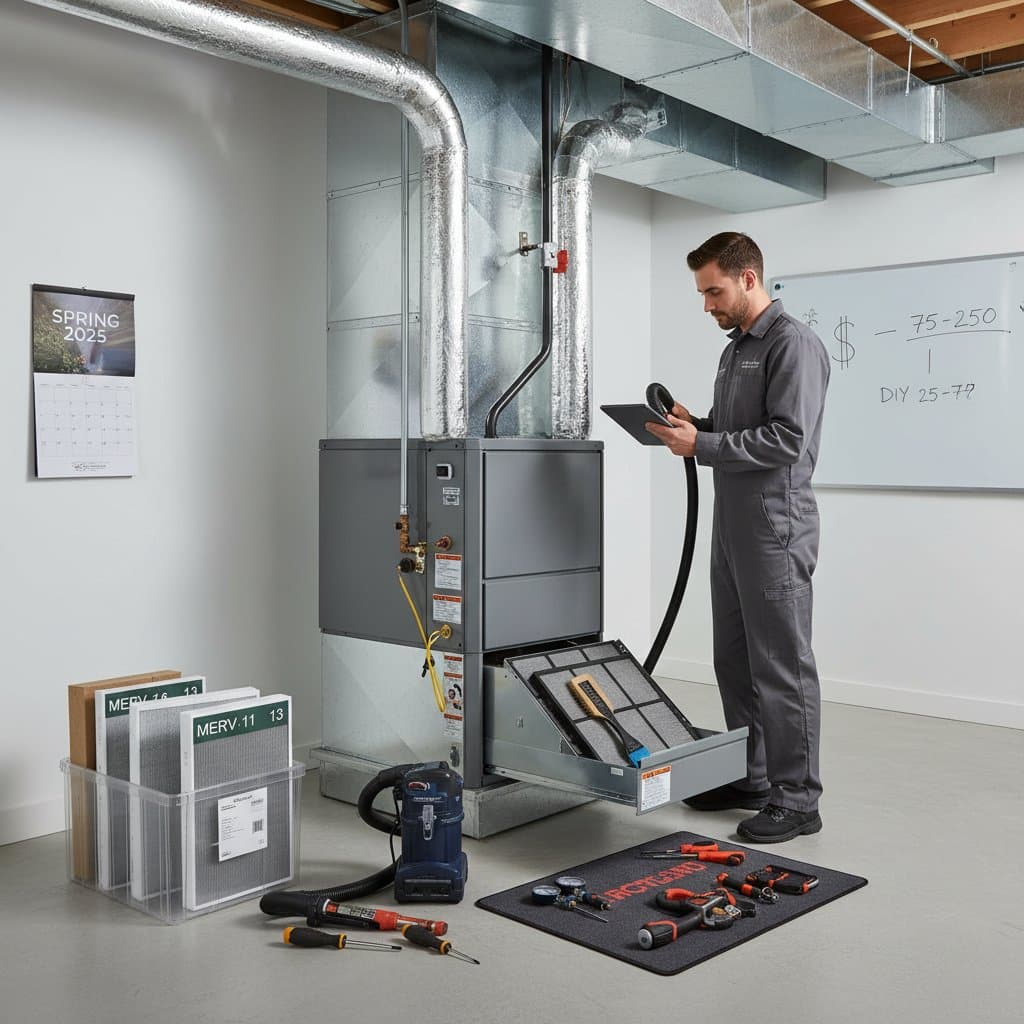
Skilled homeowners may opt for self-maintenance to reduce outlays. Essential purchases cover new filters, cleaning products, and basic implements. Material expenses for a standard DIY session range from 25 to 75 dollars.
Straightforward activities, such as vent wiping, filter installation, and outdoor unit debris removal, prove accessible and low-risk. Professionals alone should manage refrigerants, wiring, or enclosed mechanisms to avert damage or hazards that exceed initial economies.
Independent efforts miss the accuracy of expert diagnostics. Specialists deploy tools like pressure gauges, flow meters, and circuit analyzers to uncover subtle faults. Overlooking minor issues risks costly interventions during peak operation.
Professional Tune-Up Advantages
Experts deliver seasoned knowledge, precise instruments, and safety protocols for optimal efficiency. Data from the Air Conditioning Contractors of America indicates that regular upkeep cuts energy use by up to 15 percent relative to overlooked systems. Labor warranties from many firms reassure clients against prompt post-service complications.
Technicians spot emerging defects proactively. Detecting a deteriorating capacitor or frayed belt in advance thwarts seasonal disruptions. Such foresight preserves finances and minimizes disruptions.
Select the Optimal Tune-Up Approach for Efficiency and Savings
Evaluate system age, personal skills, and budget constraints to decide between DIY and professional care. Early planning secures favorable rates and reliable performance. Consistent maintenance safeguards comfort, lowers operational costs, and extends equipment longevity for sustained home value.