Essential Fall Chimney Inspections for Home Safety
A functional chimney provides essential warmth during winter, yet neglect can introduce serious hazards. Homeowners often ignite the first fire of the season without prior evaluation, risking smoke infiltration, carbon monoxide exposure, or structural fires. Conducting a thorough inspection and cleaning prior to use mitigates these dangers effectively.
This resource outlines critical inspection zones, testing procedures, and professional intervention triggers. It equips individuals readying their residences for cooler temperatures with practical knowledge to balance enjoyment and security.
Primary Inspection Zones
Chimney Cap and Crown
Examine the uppermost components first. The chimney cap serves as a barrier against precipitation, debris, and wildlife intrusion. Inspect for corrosion, loose fasteners, or absent mesh screens that permit entry to pests.
The crown, typically constructed from concrete or masonry, must feature a slight incline directing water away from the flue. Fissures in this surface allow water penetration, leading to expansion and deterioration during freezes. Address repairs or replacements promptly to avert escalation.
Suggested image: Close-up photograph of a chimney cap, annotated to identify the cap, crown, and flue opening.
Flue and Liner Integrity
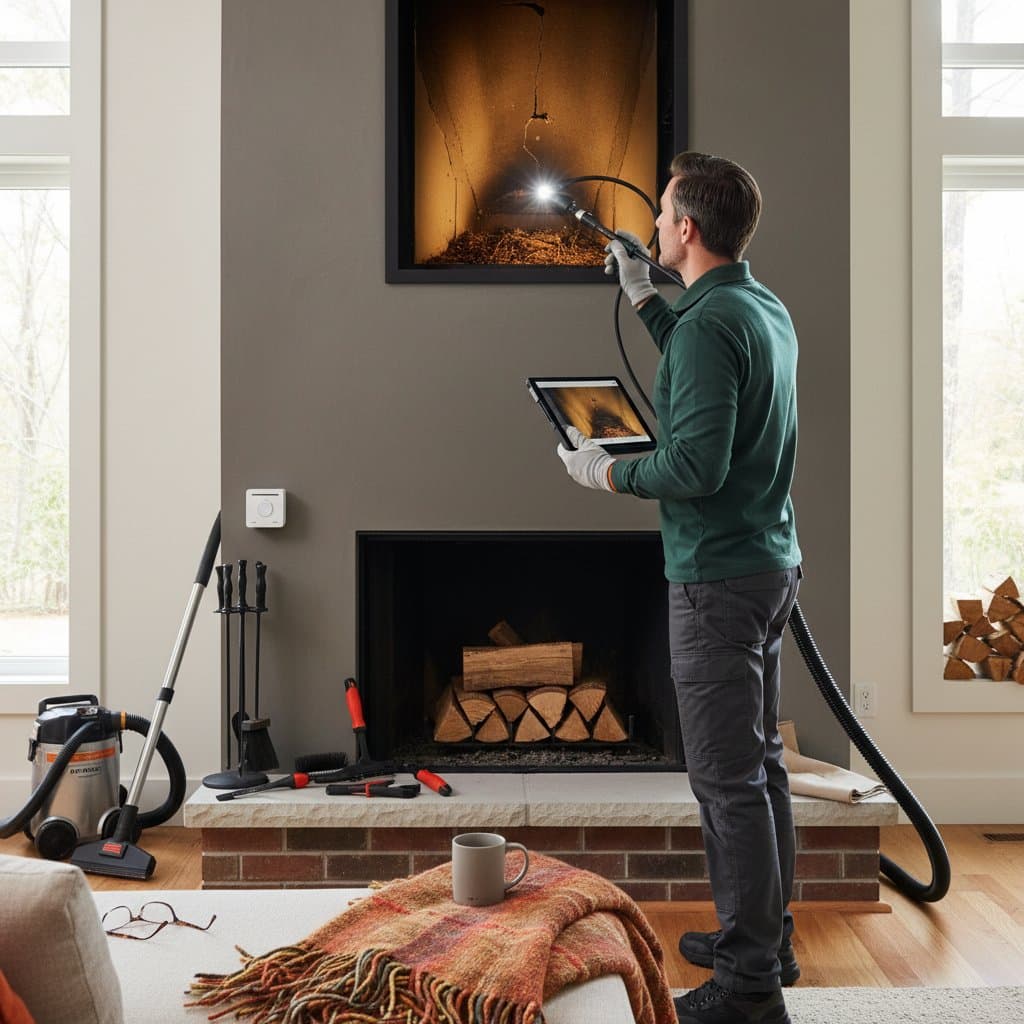
Peer into the chimney using a robust flashlight or angled mirror. Observe for dark, tar-like accumulations indicating creosote deposits. Shiny or substantial layers signal an urgent cleaning requirement, as creosote ignites readily at low temperatures.
Metal liners demand uniformity without perforations or bends that impede draft. Clay tile liners may develop fractures from thermal cycling, compromising containment and efficiency. Engage a qualified technician to deploy a camera for comprehensive internal assessment.
Expert tip: Presence of powdery residue or fragments in the firebox post-burning suggests liner degradation; monitor closely to prevent progression.
Damper Functionality
The damper regulates airflow and seals the chimney when idle. Verify its ability to pivot freely from open to closed positions. Accumulated rust or soot often impedes motion; dislodge debris gently with a stiff, dry brush before retesting.
A secure closure preserves indoor heat and enhances energy conservation. Persistent sticking warrants lubrication or replacement to maintain operational reliability.
Firebox and Hearth Condition
Scrutinize the firebox interior for structural integrity. Bricks or refractory panels exhibiting spalling, efflorescence (white powdery deposits), or blackened streaks indicate thermal fatigue or leakage history. These conditions erode over time and heighten escape risks for embers.
The hearth extension must remain intact, devoid of fissures or compacted ash layers. A solid foundation curbs spark migration to combustible surroundings, safeguarding adjacent materials.
Suggested image: Illustrated diagram labeling fireplace elements, including firebox, damper, smoke shelf, and flue connection.
Smoke Chamber and Shelf Evaluation
Beyond the firebox lies the smoke chamber, where gases transition to the flue. Check for loose mortar joints or bulging walls, signs of settling or water damage. The smoke shelf, a ledge behind the damper, collects falling debris; clear any obstructions to sustain proper venting.
Neglected chambers can harbor nests or excessive soot, reducing draft and promoting backdrafts. A professional probe here detects issues invisible from below.
Cost Analysis and Long-Term Benefits
Investing in chimney maintenance proves economical compared to emergency interventions. Professional inspections typically fall in the lower to moderate expense category, influenced by flue dimensions and deposit severity. More extensive remedies, such as liner relining or crown reconstruction, carry higher initial costs but prolong system durability.
The following table aids budgeting:
| Service Type | Estimated Cost Range | Recommended Frequency |
|---|---|---|
| Basic Inspection | Low to moderate | Annually |
| Comprehensive Cleaning | Moderate | Annually, pre-season |
| Liner Repair | Higher | As identified |
| Crown Replacement | Higher | Every 10-15 years |
Regular upkeep not only averts hazards but also optimizes fuel efficiency, potentially lowering heating bills by up to 20 percent.
Indicators Requiring Expert Assistance
Cease fireplace operation immediately upon detecting deteriorated masonry, room-filling smoke during tests, or unusual chemical smells. These symptoms point to blockages, breaches, or ventilation failures.
Certified chimney sweeps employ specialized tools like power brushes, endoscopic cameras, and hygrometers to uncover concealed flaws. Schedule annually, especially in regions with heavy foliage or harsh winters, to align with manufacturer guidelines.
Proactive Maintenance Strategies
Establish a seasonal routine incorporating these checks. After inspection, perform a burn test with seasoned wood, observing for steady smoke rise and odor-free exhaust. Install carbon monoxide detectors near sleeping areas and the fireplace for ongoing vigilance.
Complement professional services with homeowner habits: burn dry, hardwoods exclusively to minimize creosote; avoid green wood or trash that accelerates buildup. These practices extend chimney lifespan and ensure reliable performance.
Securing Comfort Through Vigilance
Prioritizing chimney evaluation transforms potential perils into assured safety. Homeowners gain confidence in their heating source, enjoying fireside gatherings without apprehension. This preparation fosters not just protection but also sustained home value and operational efficiency.