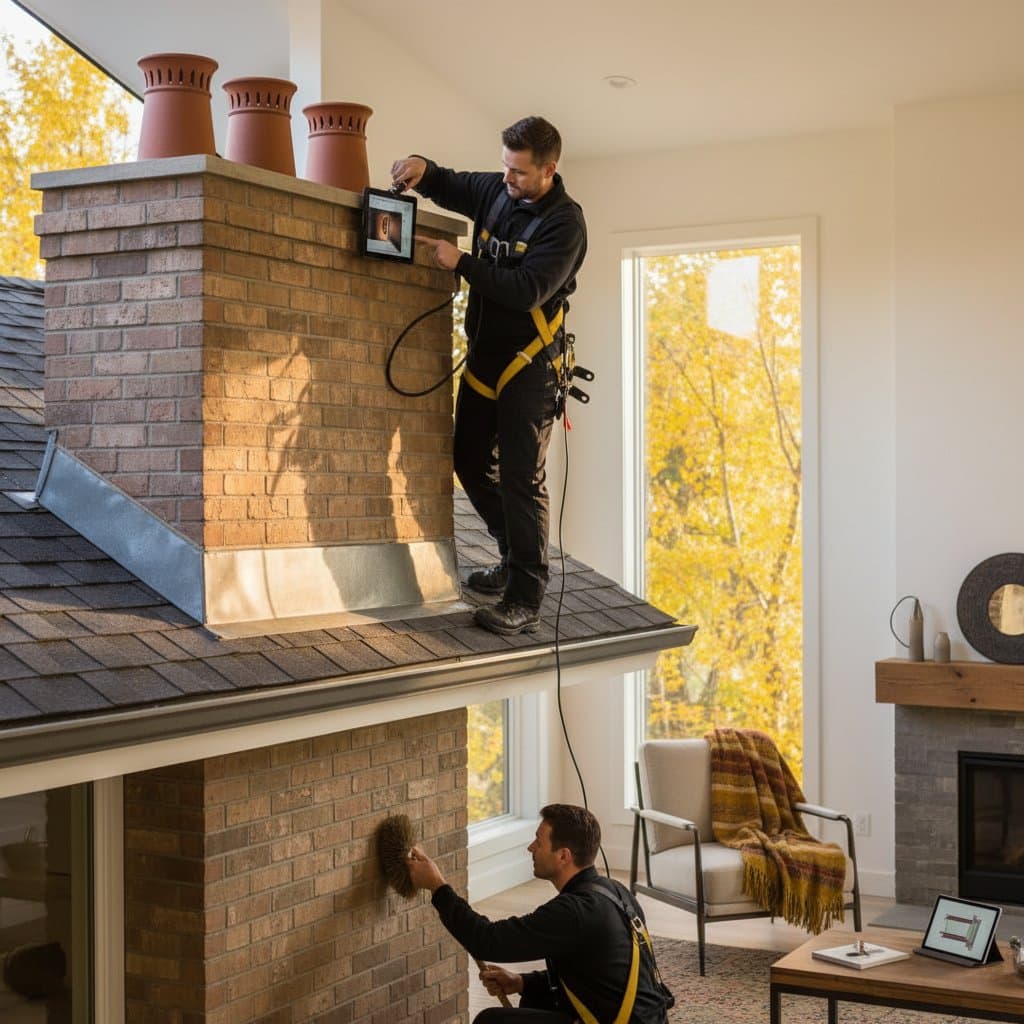
September Chimney Inspections: Preventing Fall Fire Risks
Cool September breezes prompt homeowners to ready their fireplaces for indoor comfort. Schedule a chimney inspection before igniting the first log to maintain warmth and safety while minimizing concealed fire dangers. Overlooking this step invites expensive repairs, smoke infiltration, and potential chimney fires.
This timing aligns perfectly with increased fireplace activity. An inspection uncovers soot layers, structural flaws, or impediments that threaten safety as temperatures decline.
Key Elements of Chimney Maintenance for Fall Safety
A chimney inspection extends beyond a surface view of the fireplace. Technicians examine the flue, cap, liner, and masonry for wear or obstructions. Over years, minor cracks or creosote deposits escalate into major threats.
Creosote forms as a tar-like, flammable byproduct from wood combustion. Even modest accumulations spark readily under intense heat. Debris such as bird nests, fallen leaves, or twigs blocks airflow, redirecting smoke and carbon monoxide indoors.
Routine September maintenance detects and resolves these concerns prior to regular fireplace operation. This practice enhances safety and establishes a reliable upkeep routine.
Consequences of Deferred Maintenance
An unattended chimney presents three primary risks:
- Fire threats arising from creosote layers or compromised liners.
- Smoke infiltration that discolors walls and ceilings.
- Diminished heating performance due to restricted ventilation.
Post-fire structural fixes often exceed the expense of standard cleaning and checks by multiples. Proactive care preserves finances and reduces anxiety over time.
Reasons September Excels for Chimney Inspections
September occupies an advantageous position in the annual cycle for chimney care. Temperate conditions facilitate access, service providers maintain open schedules, and ample time remains for any necessary fixes ahead of winter.
Summer often brings animal nests or debris into chimneys. Precipitation and dampness erode mortar or corrode metal components. A preseason review verifies functionality before sustained usage.
Factors Tied to the Season
- Clearing summer accumulations: Extract nests, foliage, or branches gathered in warmer weather.
- Assessing moisture effects: Spot fissures or seepage from rain or high humidity.
- Testing ventilation: Verify unobstructed airflow and proper smoke expulsion.
- Examining caps and seals: Avoid interior water intrusion from faulty installations.
Tackling these elements promptly averts urgent interventions during peak cold.
Comparing DIY and Professional Chimney Inspections
Homeowners sometimes consider self-inspection options. Basic visual assessments offer value, yet expert evaluations provide superior depth and precision.
Tasks Suitable for DIY
Limited actions include:
- Inspecting for evident obstructions with a light source.
- Wiping minor soot from the firebox area.
- Surveying the chimney cap from below for apparent defects.
Self-directed efforts fail to access profound creosote or internal flue problems.
Benefits of Professional Service
Qualified chimney specialists employ cameras, brushes, and other instruments to scrutinize and cleanse the entire assembly. They identify fissures, voids, and residues invisible without proper gear. Evaluations also confirm adherence to safety regulations and building norms.
Standard professional inspections encompass:
- Surface review of reachable sections.
- Internal scoping via cameras or reflectors.
- Removal of soot and creosote deposits.
- Airflow assessment through smoke or pressure tests.
- Reports detailing required corrections.
Engaging experts guarantees safe, optimal fireplace performance through the season.
Expert Answers to Chimney Inspection Queries
Industry professionals address frequent homeowner concerns.
How frequently does a chimney require inspection?
Annual checks before heating season qualify as the standard recommendation. Infrequent fireplace users still face risks from debris, dampness, or wildlife intrusions.
What indicates a need for chimney cleaning?
Observe weak drafts, room-filling smoke, persistent fireplace smells, or evident soot. Such symptoms signal overdue maintenance.
Is a chimney cap necessary for fireplace use?
Caps prove indispensable. They block precipitation, refuse, and pests while supporting ventilation. Absence invites water harm and infestations.
What contributes to creosote formation?
Combusting green wood or operating with inadequate venting generates dense smoke that adheres and solidifies within the chimney, fostering flammability.
Does chimney cleaning create mess?
Experts deploy vacuums and barriers to contain soot. Contemporary techniques prioritize cleanliness and speed.
How much time does an inspection demand?
Routine evaluations conclude in under sixty minutes, varying by chimney dimensions and state. Cleaning extends the duration as needed.
Do gas fireplaces warrant chimney inspections?
Affirmative. Gas units generate deposits and necessitate vent reviews to exclude leaks or clogs.
What repairs commonly follow inspections?
Typical fixes involve mortar resealing, liner replacements, cap installations, or damper adjustments for secure closure.
Do all chimney fires show obvious signs?
Negative. Certain fires smolder undetected, revealing harm only upon later examination. Inspections reveal precursors early.
How should one ready the home for inspection?
Relocate furnishings from the fireplace vicinity and refrain from recent fires for twenty-four hours. These measures enable safe, effective technician access.
Step-by-Step Guide to Inspection Choices
Weigh self versus expert options through this structured approach.
Step 1: Review Usage Patterns
Frequent fireplace operators benefit from professional cleaning. Infrequent users may suffice with inspection absent significant findings.
Step 2: Gauge Equipment and Expertise
DIY demands brushes, ladders, and safeguards. Absence of these or height discomfort favors professional intervention.
Step 3: Compute Overall Expenses
Balance prospective economies against risks of partial work or errors. Expert fees typically undercut correction costs.
Step 4: Prioritize Safety Measures
Chimney work exposes individuals to particulates and elevation hazards. Trained personnel utilize appropriate protections.
Step 5: Reach a Conclusion
Presence of fractures, dense residues, or draft problems mandates professional cleaning and remediation.
Steps to Ready Your Chimney for Fall
Advance planning streamlines maintenance, whether self-managed or expert-led.
Booking and Research
Reserve slots early in September to sidestep demand surges. This window accommodates pre-winter adjustments.
Documenting History
Retain logs of past services, fixes, and cleanings. Such details aid technicians in spotting patterns or vulnerabilities.
Area Setup
Evacuate the fireplace surround and shield adjacent items. Surface protection simplifies post-work tidying.
Financial Planning
Allocate resources for evaluation plus potential small fixes. Upfront investment outpaces crisis responses to incidents.
Sustaining Fireplace Safety Through Winter
Consistent habits secure your system. After inspection, monitor for new debris or odd odors. Annual reviews reinforce protection, ensuring reliable heat without hazards. This diligence fosters confidence in every flame-lit evening.