Fall Filter Swap: Boost Air Quality with the Right Type
A furnace filter appears as a simple piece of fabric or pleated paper, yet it plays a crucial role in maintaining clean air throughout the home. As temperatures drop and the furnace activates more frequently, a dirty or improperly sized filter forces the system to work harder, potentially leading to dust accumulation and reduced efficiency. Performing a filter swap at the onset of fall ensures smooth operation of the HVAC system, safeguards health, and promotes energy savings. Selecting the appropriate type and size tailored to the system and household needs proves essential.
Why the Fall Filter Swap Matters
Summer brings pollen and dust that accumulate in filters over months, trapping significant debris. Each captured particle heightens resistance to airflow, compelling the furnace fan to exert more effort. This added strain shortens motor lifespan and elevates energy costs. Clean filters excel at capturing allergens, enhancing freshness in the home precisely when windows close against cooler air.
Data from the National Air Filtration Association indicates that up to 40 percent of HVAC service calls stem from poor airflow due to dirty filters. Adopting this routine yields rapid benefits in system performance and reduced maintenance needs.
Quick Answer: How Often to Change Your Filter
In typical households, replace the filter every 60 to 90 days. Households with pets or in dusty environments should target every 30 to 45 days. To assess readiness, hold the filter against light; if light fails to pass through, replacement becomes necessary. Initiate fall with a fresh filter to support efficient operation throughout the heating period.
Understanding Furnace Filter Types
Fiberglass Filters
Fiberglass filters represent the most basic choice, typically one inch thick and low in cost. They effectively capture large dust particles but offer limited defense against smaller allergens. These filters suit short-term applications or rental properties requiring minimal protection.
Best for: Budget-conscious homeowners or short-term occupancy
MERV rating: 1 to 4
Average cost: 1 to 3 dollars per filter
Lifespan: 30 days
Pleated Filters
Pleated filters feature folded polyester or cotton material, providing greater surface area for particle capture. They effectively trap dust, mold spores, and pet dander while preserving airflow. Many homeowners select pleated filters for their optimal balance of performance and affordability.
Best for: Families with pets or mild allergies
MERV rating: 8 to 12
Average cost: 5 to 20 dollars
Lifespan: 60 to 90 days
Electrostatic Filters
Electrostatic filters employ static electricity to draw in particles. Available in disposable and washable varieties, the washable models endure for years with monthly cleaning, provided they dry fully to prevent mold growth.
Best for: Allergy sufferers or eco-conscious homeowners
MERV rating: 8 to 10
Average cost: 15 to 80 dollars
Lifespan: Reusable up to several years
High-Efficiency Filters
High-efficiency filters, such as HEPA-style options, seize fine particles including bacteria and smoke residue. These filters markedly enhance indoor air quality, though they may impede airflow in standard systems without a compatible high-resistance blower.
Best for: Homes with significant allergy or respiratory concerns
MERV rating: 13 to 16 or higher
Average cost: 20 to 100 dollars
Lifespan: 90 to 120 days
| Filter Type | MERV Range | Lifespan | Ideal Use | Average Cost |
|---|---|---|---|---|
| Fiberglass | 1-4 | 30 days | Basic protection | 1-3 dollars |
| Pleated | 8-12 | 60-90 days | Homes with pets or mild allergies | 5-20 dollars |
| Electrostatic | 8-10 | Reusable | Allergy control, eco-friendly | 15-80 dollars |
| High-Efficiency | 13-16+ | 90-120 days | Maximum air quality | 20-100 dollars |
Measuring and Choosing the Right Size
Prior to purchase, extract the existing filter and examine the frame for printed dimensions, such as 16x25x1 or 20x30x2. Verify fit by measuring the intake slot. An undersized filter permits air to circumvent it, allowing dust to enter ducts. In cases of uncertainty, measure the slot's interior in inches and select a matching filter.
Pro tip: Avoid forcing a tight-fitting filter, as bending compromises the seal, diminishes efficiency, and permits particle passage.
How to Replace Your Furnace Filter
-
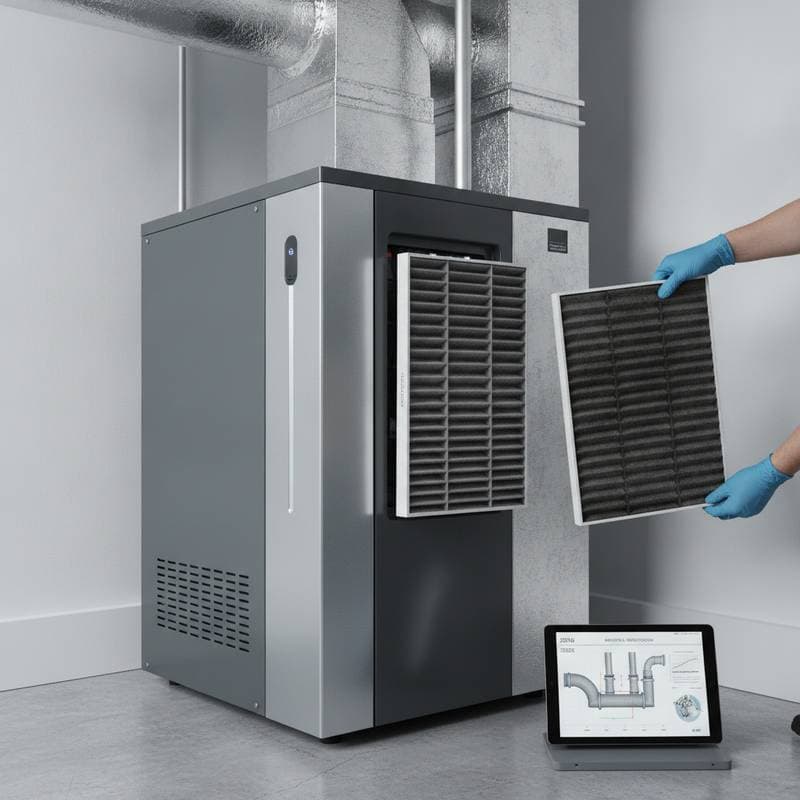
Turn off the HVAC system. This action prevents dust dispersal through ducts during the process.
-
Locate the filter compartment. It typically resides near the blower motor or behind the return air grille.
-
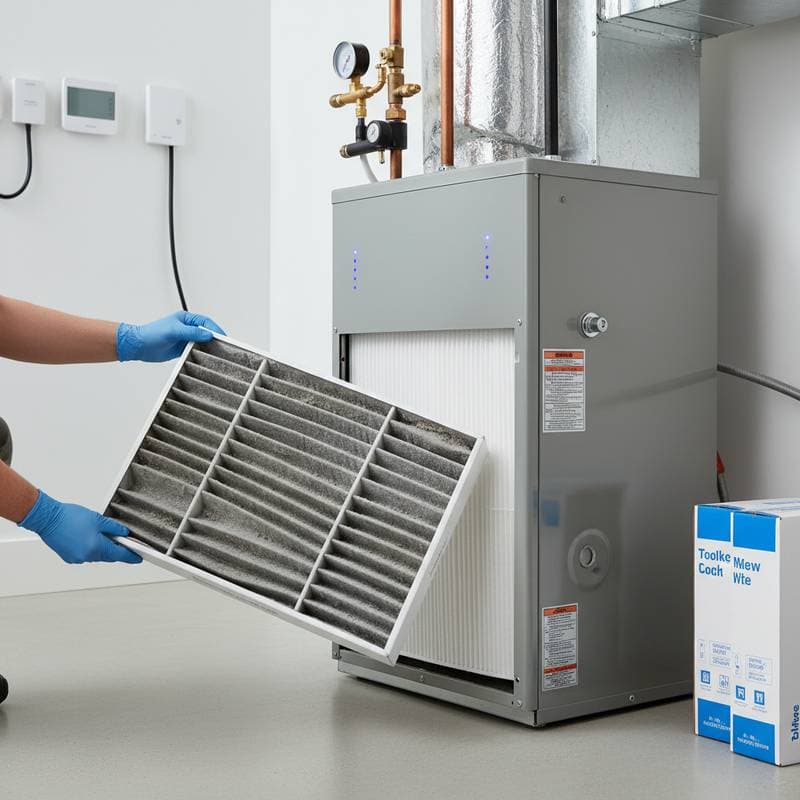
Remove the old filter. Observe the airflow arrow on the frame for directional guidance.
-
Insert the new filter. Align the airflow arrow with the furnace blower's direction.
-
Turn the system back on. Monitor for steady airflow and absence of rattling, which signals an improper seal.
A screwdriver may assist with certain return grilles, alongside a flashlight for compartment inspection. This task demands no specialized tools or expertise, rendering it accessible for DIY homeowners.
Common Mistakes to Avoid
-
Using the wrong size filter. Even a half-inch discrepancy undermines effectiveness.
-
Ignoring airflow direction. Reverse installation hampers efficiency and burdens the system.
-
Letting filters sit too long. Clogged filters risk overheating or coil freezing.
-
Stacking filters. Multiple layers constrict airflow and harm the blower motor.
-
Choosing a filter that is too restrictive. Elevated MERV ratings may provoke airflow issues in aging systems.
Should reduced airflow or odd noises occur post-replacement, extract the filter to inspect fit and rating.
Accessibility and Health Considerations
Clean filters hold particular importance in homes with asthma or allergies. A pleated filter rated MERV 11 or above effectively seizes fine particles like pollen and pet dander that provoke symptoms. For ease of access, washable electrostatic filters reduce replacement frequency. If the furnace proves hard to reach, an eye-level return grille filter housing simplifies maintenance.
Cost and Energy Savings
A clean filter lowers furnace energy use by up to 15 percent. Across a heating season, such reductions translate to substantial utility bill savings. Filters priced between 10 and 20 dollars deliver strong value by harmonizing airflow and filtration. Purchasing in multi-packs cuts individual costs and ensures availability for future swaps.
When to Call a Professional
For older furnaces or evident dust around vents, engage an HVAC technician to evaluate for leaks or duct sealing issues. Professionals assess airflow and suggest filters suited to blower capacity. Certain systems necessitate custom filters, which experts can measure and install accurately.
Building a Reliable Maintenance Routine
Establish reminders for filter checks at seasonal transitions to sustain system health. Track replacement dates in a home maintenance log to prevent oversights. Pair filter swaps with broader HVAC care, such as vent cleaning, for comprehensive efficiency. This consistent approach minimizes repairs, extends equipment life, and maintains optimal air quality year-round.