Prepare Your AC for Summer and Save on Energy Costs
As temperatures rise and humidity builds, a reliable air conditioner ensures comfort in your home. Many homeowners discover system issues only during the first heat wave. A proactive tune-up before summer arrives prevents failures, reduces energy consumption, and enhances performance. This guide details key inspection and cleaning steps, along with guidance on when to seek expert assistance.
Benefits of Regular AC Maintenance
Air conditioners gradually lose efficiency due to accumulated dust, pollen, and debris on filters and coils. Minor refrigerant leaks diminish cooling capacity, while worn components lead to inefficient operation. These issues accumulate over time, straining the system during peak demand.
Proper maintenance restores efficiency, allowing the unit to operate with up to 15 percent less energy. Technicians report that consistent care extends equipment life and minimizes expensive repairs. Homeowners gain peace of mind knowing their system performs reliably when needed most.
Gather Tools and Ensure Safety
Safety remains paramount before any maintenance work. Shut off power at the circuit breaker and verify the outdoor unit disconnects completely. Assemble these tools for the process:
- Screwdriver set
- Soft brush or fin comb
- Garden hose with adjustable nozzle
- Replacement air filter sized to match the existing one
- Mild detergent or no-rinse coil cleaner
- Level and wrench for securing components
Allocate one to two hours for the tune-up. Halt work immediately if you detect refrigerant leaks, structural damage, or electrical faults, and consult a licensed technician.
Step 1: Service the Air Filter
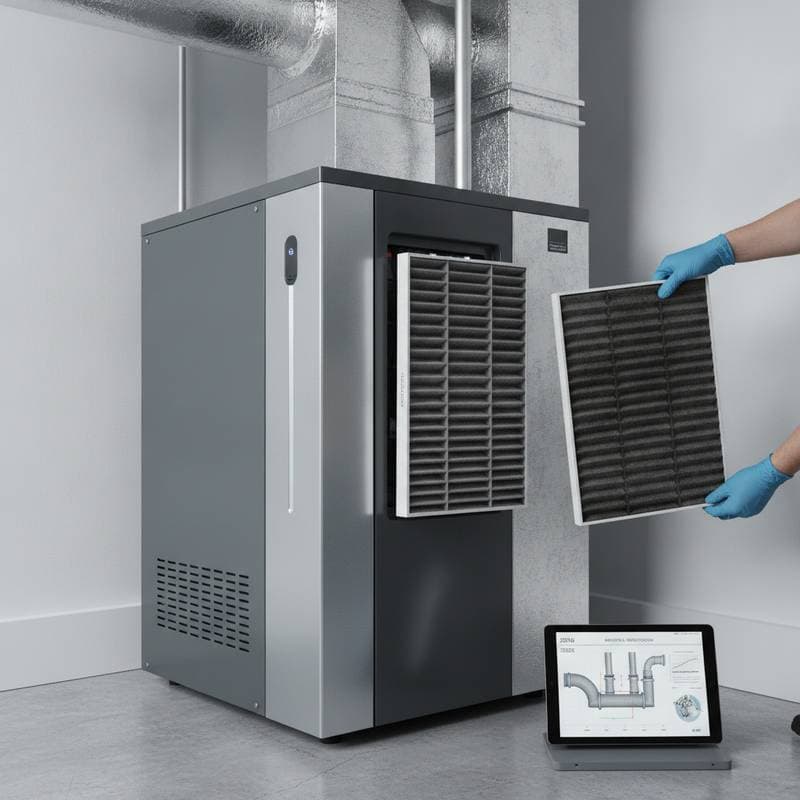
A clogged filter restricts airflow and forces the system to consume more energy. Remove the filter and examine it against light; replace it if visibility is obstructed.
For washable filters, rinse with lukewarm water, dry thoroughly, and reinstall. Select disposable filters that align with manufacturer guidelines. During cooling season, inspect and service filters every one to three months.
Step 2: Clean the Outdoor Condenser
The condenser unit expels heat from the refrigerant outdoors, but debris hinders this function. Deactivate power, then remove the top grille to access the interior.
- Sweep out leaves, twigs, and clippings from the cabinet.
- Direct a gentle hose spray through the coils from inside outward.
- Use a fin comb to realign any bent fins carefully.
Refrain from high-pressure sprays to protect delicate fins. Afterward, confirm the unit rests level to avoid stress on lines and blades.
Step 3: Examine Indoor Evaporator Coils
Evaporator coils inside the home draw heat and moisture from the air. Dust accumulation promotes mold or ice formation on these surfaces. Access the coils via the blower compartment panel and assess for visible residue.
Apply a foam-based coil cleaner and permit it to drain into the pan. Gently wipe away debris with a soft cloth. This step maintains heat transfer and prevents efficiency losses.
Step 4: Unclog the Condensate Drain
Blockages in the drain line result in leaks or unpleasant odors from standing water. Identify the line exiting the indoor unit and attach a wet-dry vacuum to clear obstructions.
Introduce a cup of distilled vinegar to inhibit future deposits. Inspect the drain pan for corrosion or stains, which signal the need for replacement. Clean maintenance averts water damage to surrounding areas.
Step 5: Review Electrical Components and Thermostat
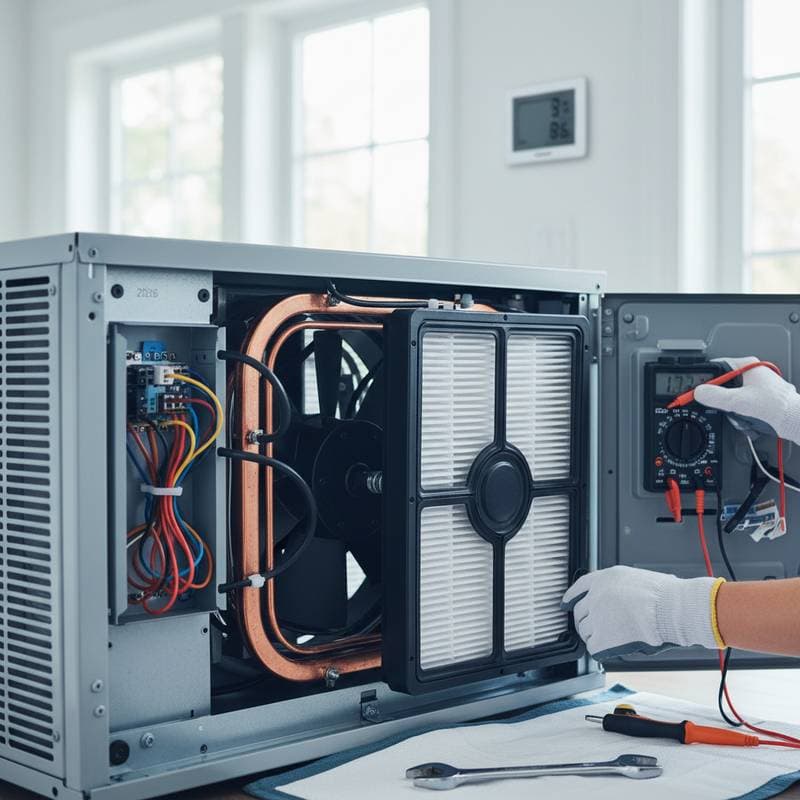
Frayed wires or loose terminals compromise system stability. Open the outdoor unit panel to check connections for corrosion or damage; secure any that feel loose.
Inspect the thermostat indoors, replacing batteries as required and testing sensor accuracy. For programmable models, adjust settings via the app to optimize performance.
Step 6: Lubricate Accessible Parts
Certain older units feature oil ports on motors and fans. Add two to three drops of electric motor oil per port without excess. This practice minimizes wear and operational noise.
Contemporary sealed units typically require no lubrication, yet verify fans rotate freely. Smooth movement indicates healthy components.
Step 7: Run a System Test
Reconnect power and activate the unit. Monitor the initial cycle for abnormal noises like grinding or rattling. Cool air should emerge from vents steadily after startup.
Measure the temperature drop across supply and return vents; expect 15 to 20 degrees Fahrenheit. Lesser differentials suggest refrigerant or airflow problems, warranting professional evaluation.
Indicators for Professional Service
Homeowners can manage basic tasks, but complex issues demand expert intervention. Engage a technician for these concerns:
- Ice buildup on coils or lines
- Reduced airflow after filter service
- Burning odors or frequent breaker trips
- Inconsistent room temperatures
- Excessive vibrations or sounds
Experts utilize gauges to assess refrigerant levels, capacitors, and hidden wear. Annual maintenance contracts often include biannual checks, preserving warranties and reducing long-term expenses.
Weighing Costs Against Savings
DIY efforts involve minimal outlay, primarily for filters and cleaners, often under 50 dollars. Professional services vary by region and system complexity, typically ranging from 100 to 200 dollars.
These investments yield returns through energy savings and averted emergencies. Contractors note that routine care can add three to five years to unit longevity, offsetting replacement costs that exceed thousands.
Balancing DIY and Expert Care
Advantages of DIY Maintenance:
- Economical and scheduled at convenience
- Builds familiarity with system status
- Addresses straightforward problems promptly
Advantages of Professional Service:
- Employs diagnostic equipment for thorough analysis
- Handles refrigerant and electrical complexities
- Provides certification for warranty compliance
Combine approaches for optimal results: perform routine cleanings personally and book yearly professional reviews. This strategy sustains efficiency across all components.
Essential Safety Measures
Always isolate power sources prior to inspections. Refrain from opening panels on active units. Employ non-metallic tools near wiring and avoid contact with refrigerant lines.
Don protective gloves and eyewear during cleaning. Licensed handling of refrigerants complies with regulations; leave suspected leaks to professionals.
Optimal Timing for Maintenance
Perform tune-ups in early spring to preempt summer demands. This timing secures prompt service and competitive pricing from providers.
Delaying until heat intensifies leads to backlogs and higher fees. Proactive scheduling guarantees readiness for extended operation.
Pitfalls to Sidestep
Overlook filter checks at your peril, as neglected airflow hikes energy use. Steer clear of forceful water sprays on coils, which bend fins.
Avoid harsh chemicals like bleach in drains, as they corrode pipes. Limit oil application to specified amounts, and integrate professional oversight annually to prevent oversight.
Expert Recommendations for Longevity
- Track Maintenance Records: Log dates for filter changes and inspections in a dedicated journal or app.
- Select Reliable Supplies: Opt for products from established manufacturers to uphold filtration standards.
- Evaluate Insulation Integrity: While accessing components, review ducts and attic barriers; seal leaks to conserve up to 20 percent more energy.
- Secure Building Envelope: Inspect window seals and doors to trap cooled air indoors.
- Adopt Smart Controls: Thermostats with automation adjust settings remotely, further trimming utility expenses.
Sustain Efficiency Year-Round
Routine AC care transforms a potential liability into a dependable asset. It stabilizes costs, ensures comfort, and protects your investment.
Begin today if service lapsed: update the filter, refresh the condenser, and arrange expert verification as necessary. Consistent attention delivers lasting benefits.